Israel National Trail: Five-Day Highlights
Practical, route-specific tips and insights for Israel National Trail: Five-Day Highlights.
Packing list
Filled in for this route from the kit a walk like this needs and the gear its tips mention. Tick things off as you pack.
Water & food
-
In the Negev, water discipline is everything
On the desert days — Ein Avdat, the Ramon Crater, the Eilat Mountains — there is no reliable water between marked points. Carry far more than feels necessary (in warm weather think 4–5 litres per person per day), start at first light, and be walking before the heat.
-
A buried water bottle is someone's life — never touch it
Through-hikers survive the Negev stretches by driving out ahead of time and burying water caches at the overnight points, marked and GPS-logged. If you spot buried or stashed bottles anywhere on the desert days, they are someone’s calculated survival margin, not abandoned gear. The trail’s one absolute rule: never take cached water that isn’t yours.
Best time to go
-
October–November or March–April
Autumn and spring are the trail’s seasons. The desert days are dangerous in high summer (June–September), and in winter flash floods can close the canyons — check forecasts before any wadi day, and never enter a canyon when rain is forecast upstream.
-
Copy the through-hikers' direction logic
Thru-hikers starting in spring walk south-to-north — desert first, before the real heat arrives — while autumn starters go north-to-south and reach the Negev in the cool months. Your highlights trip can steal the same trick: put the Ramon and Eilat days at the cooler end of your window and the green Galilee days at the warmer end. Either way, tradition says the desert end finishes with your boots off in the Red Sea.
Getting there
-
These five days are linked by road, not by trail
This is a highlights itinerary, not a continuous walk: the Galilee days run from Tzfat, the desert days from Sde Boker and Mitzpe Ramon, the finale from Eilat. A rental car is the comfortable option; intercity buses work with more planning.
Permits & fees
-
The trail is free, but the reserves are not
No permit is needed for the trail itself, but sections pass through nature reserves and national parks — Ein Avdat among them — that charge a small entry fee and close before dusk. Time those days so you’re out of the reserve gates before closing.
Navigation
-
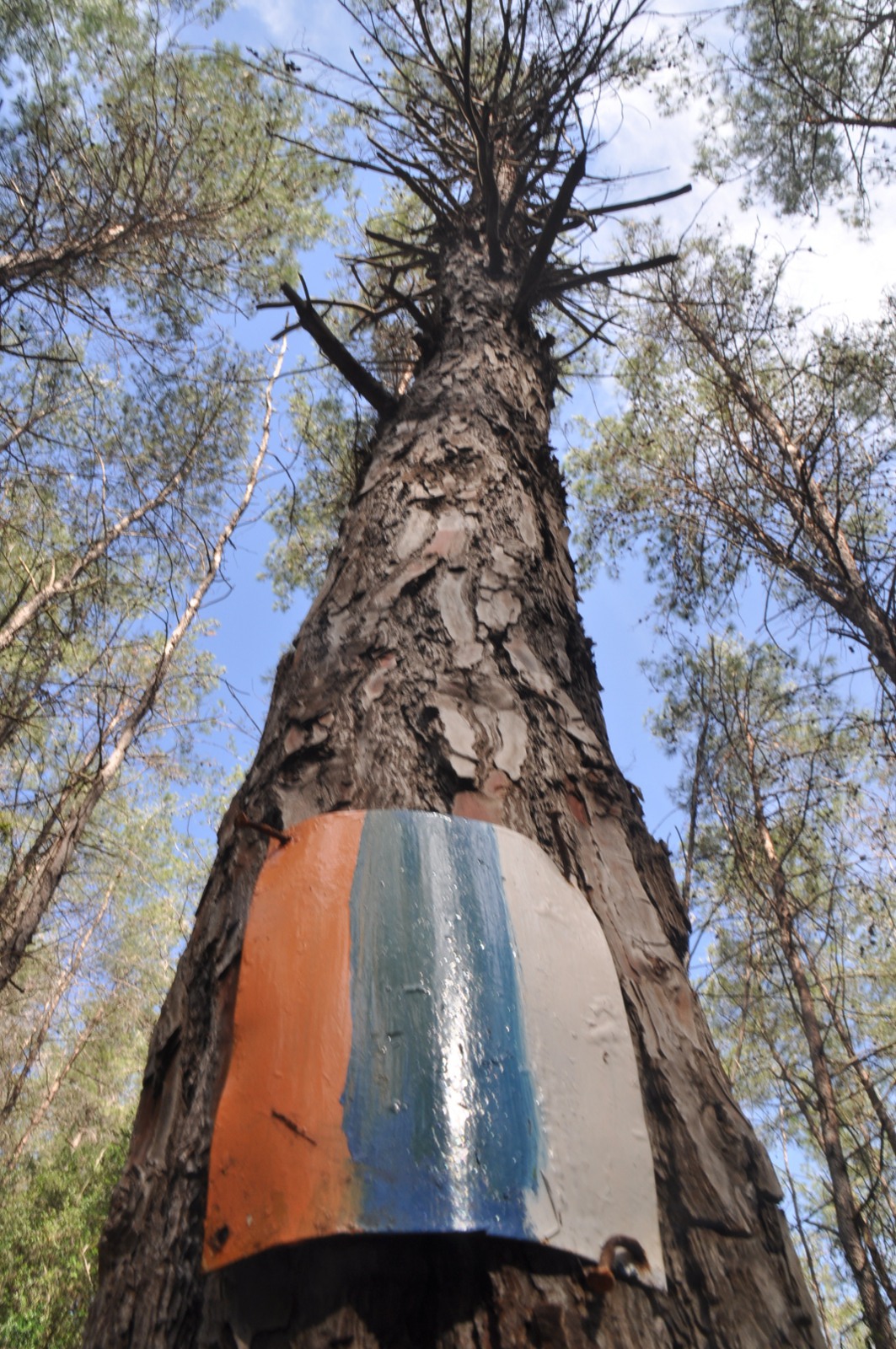
Trust the white-blue-orange stripes
The trail is marked its entire length with the INT’s white-blue-orange blaze. On the highlights days you’ll also cross other marked trails — at junctions, follow the tricolour, not the nearest paint.
Sleeping & booking
-
Book bases in Tzfat, Mitzpe Ramon and Eilat
Trail angels famously host through-hikers, but for a five-day highlights trip it’s simpler to book accommodation in advance in the three base towns and day-hike from them.
Local insights
-
The Ramon Crater is the day to protect
Crossing the makhtesh from Mitzpe Ramon is the most remote day of the five — no services, big exposure, huge reward. Keep it for a day with a good forecast, tell someone your plan, and carry your full water load from the start.
-
Trail angels are real — and they run on etiquette
The INT’s malachei shvil (‘trail angels’) are locals who host through-hikers with a bed, a shower, sometimes dinner — a genuine institution, with current hosts listed on the trail community sites. The code: contact ahead rather than turning up, accept what’s offered without demanding more, and leave a contribution or real help behind. On a five-day highlights trip, book your own beds and leave the angels’ floor space for the through-hikers who need it.
-
The trail's Facebook groups are the live map
The INT community groups and forums carry the intel no guidebook can: which springs are flowing, which reserve trails are closed, where last week’s hikers cached and camped. Post your desert-day plan a few days ahead and you’ll usually get current, specific answers from people who just walked it. In a country this small, the trail grapevine is nearly real-time.
You might also like
-
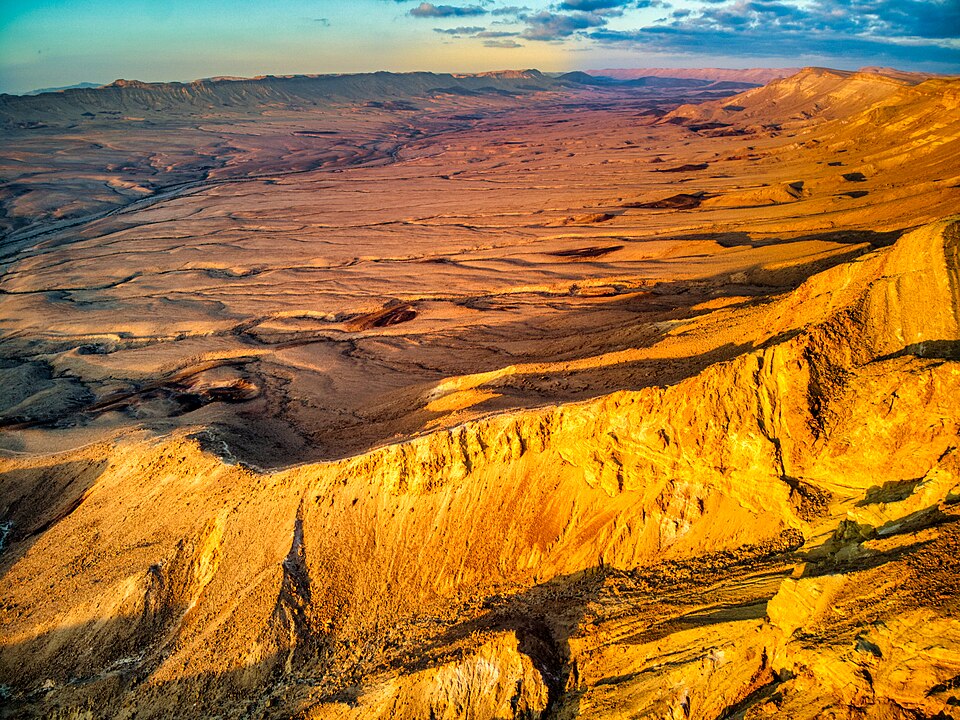 Photo: Hagai Agmon-Snir حچاي اچمون-سنير חגי אגמון-שניר · CC BY-SA 4.0Trek Israel
Makhtesh Ramon — Rim to Crater Floor
One to two days in the world's largest erosion crater: the rim promenade at Mitzpe Ramon, the prismatic stone columns of the Carpentry, the coloured sands of the Ardon valley and the desert spring at Ein Saharonim.
- Duration
- 2 days
- Distance
- 18 km
- Difficulty
- Moderate
-
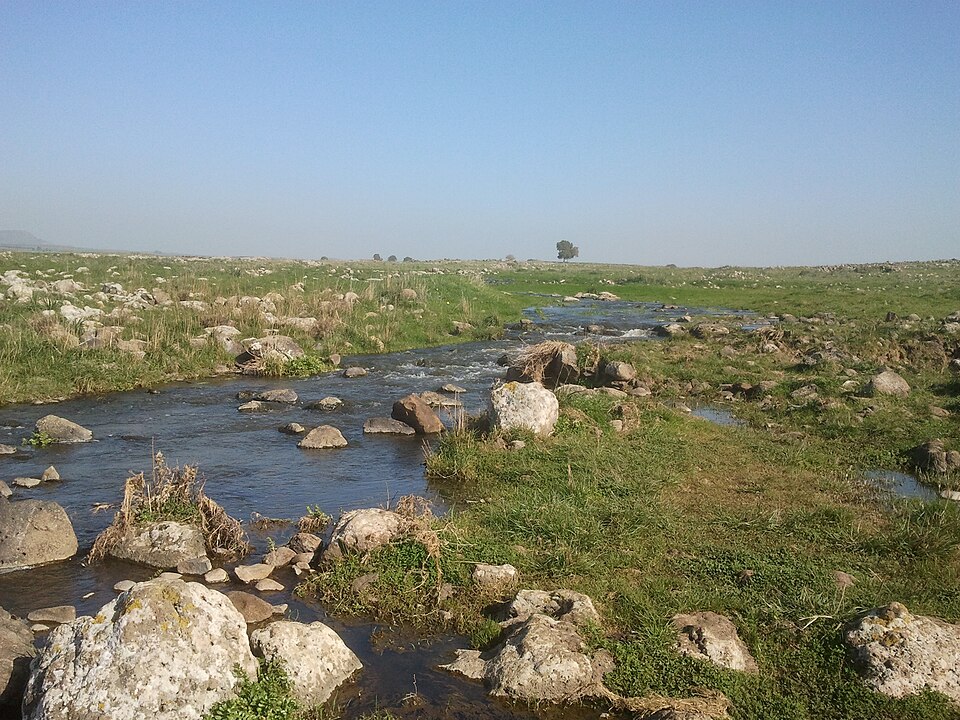 Photo: Hanay · CC BY-SA 3.0Trek Israel
Nahal Yehudiya — The Canyon, the Ladder and the Swim
A hard water route down a basalt canyon in the central Golan: an iron ladder bolted to the cliff drops you into a pool you can only cross by swimming, then the trail runs on past the falls and the hexagonal columns.
- Duration
- 1 day
- Distance
- 5 km
- Difficulty
- Hard
-
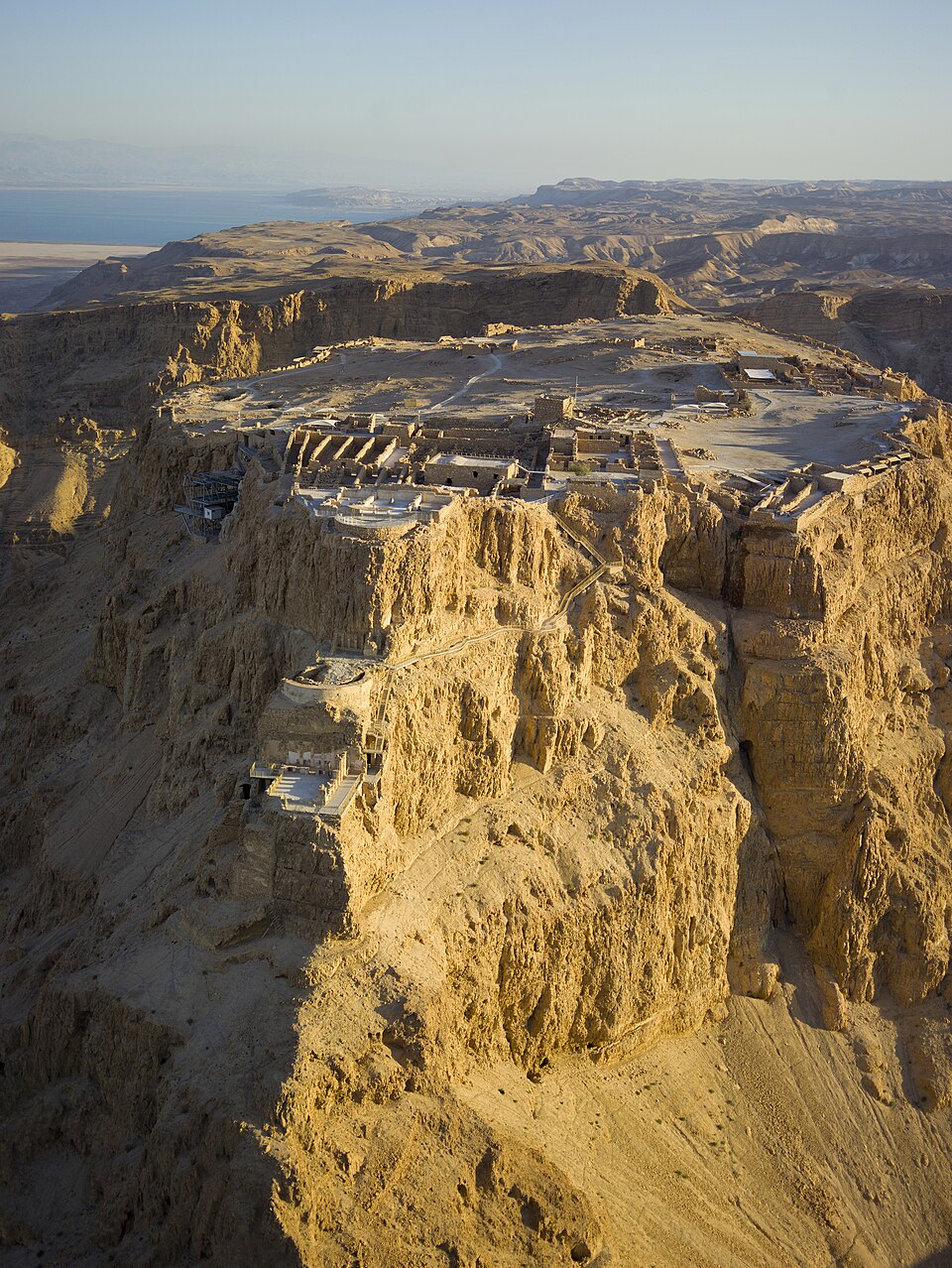 Photo: Godot13 · CC BY-SA 4.0Trek Israel
Masada Snake Path: Sunrise Ascent to the Desert Fortress
A pre-dawn climb up the winding Snake Path from the Dead Sea shore to reach Herod's cliff-top fortress just as the sun breaks over the desert.
- Duration
- 1 day
- Distance
- 4 km
- Difficulty
- Moderate
-
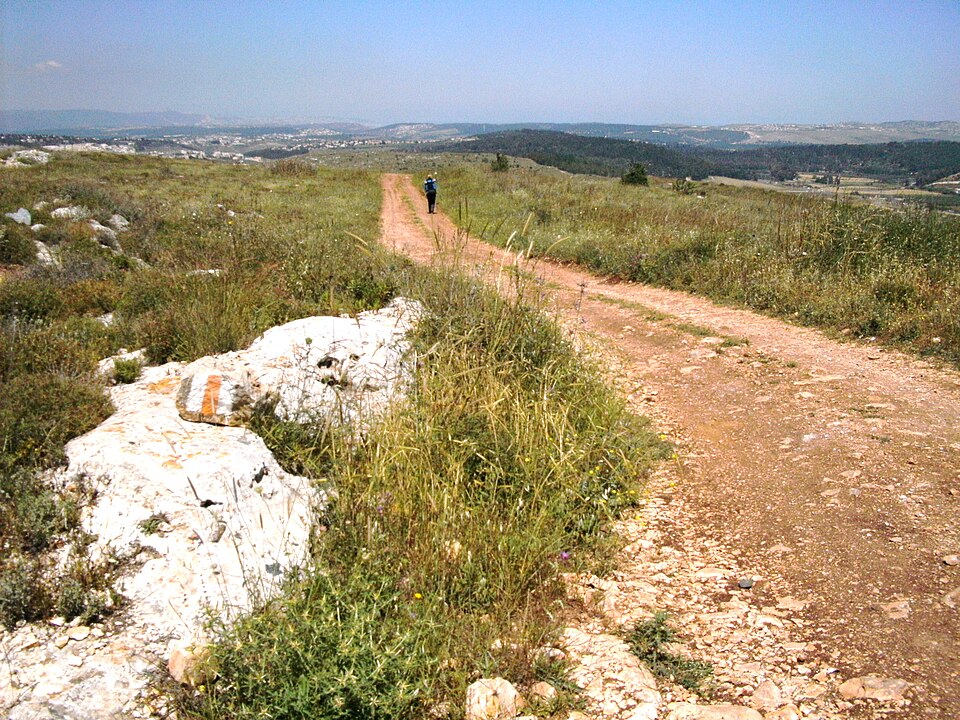 Photo: Zeromancer44 · CC BY-SA 3.0Trek Israel
The Jesus Trail: Nazareth to Capernaum
Four days on foot across the Lower Galilee, from Nazareth over the hills to the Sea of Galilee, tracing a path Jesus may have walked and stringing together ancient towns, panoramic ridges and lakeside holy sites.
- Duration
- 4 days
- Distance
- 65 km
- Difficulty
- Moderate