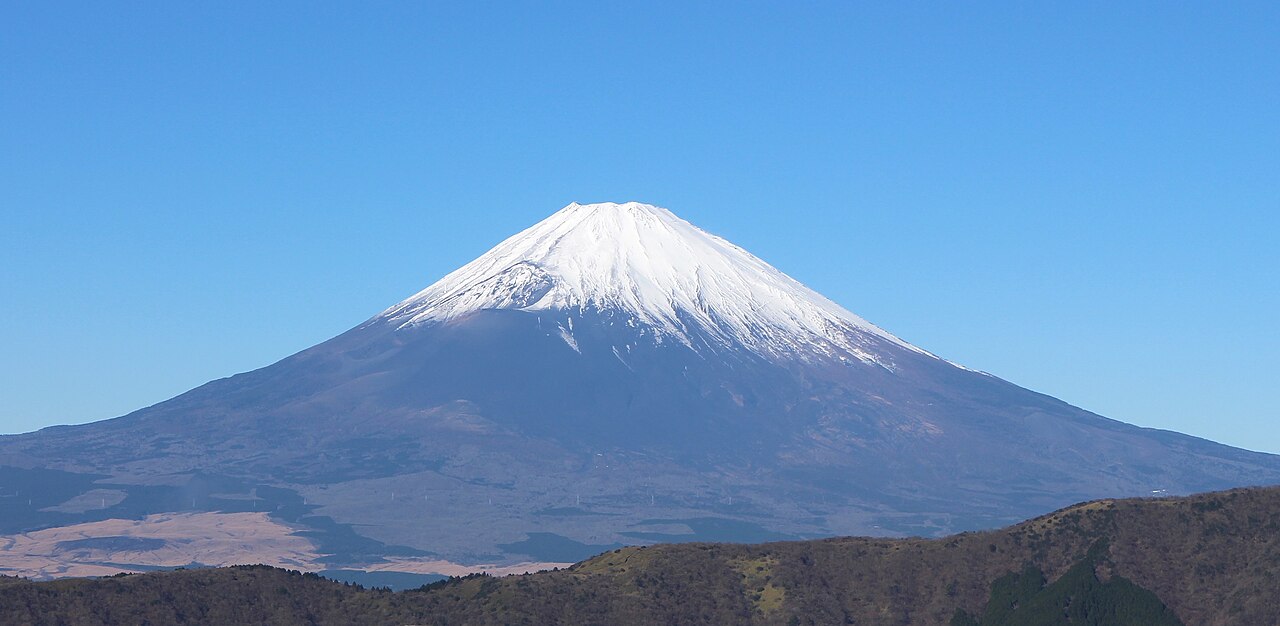
Mount Fuji by the Yoshida Trail
Practical, route-specific tips and insights for Mount Fuji by the Yoshida Trail.
Packing list
Filled in for this route from the kit a walk like this needs and the gear its tips mention. Tick things off as you pack.
Best time to go
-
Only in the official season
The Yoshida Trail’s huts, buses and summit facilities operate from early July to early September. Outside those dates the mountain is closed in every practical sense — no huts, no services, and genuinely hazardous conditions.
Sleeping & booking
-
Book your eighth-station hut well ahead
The two-day rhythm depends on a bunk near 3,100 m, and beds sell out — sleeping on the mountain outside the huts is not an option. The hut booking is also the master key to the current access rules: hut guests are exempt from the daily climber cap and may pass the trail gate after its afternoon closing. Book the hut before anything else, then fit the trail reservation and buses around it.
Getting there
-
Direct buses from Shinjuku do the hard work
In season, buses run straight from Tokyo (Shinjuku) and Kawaguchiko Station to the Fuji Subaru Line 5th Station at 2,305 m. No car needed — and the 5th Station is a far better start than any lower trailhead.
Safety
-
Give your body an hour at the 5th Station
You arrive by bus at 2,305 m in one jump. Spend at least an hour at the 5th Station eating and walking around before starting up — it measurably reduces altitude misery higher on the mountain.
-
Bullet climbing is exactly what the rules now target
The classic all-night, no-sleep dash from the 5th Station to the summit — ‘bullet climbing’ — is officially discouraged, and the afternoon gate closure exists specifically to stop it. It’s also just a bad plan: hypothermia and altitude sickness account for most of Fuji’s rescues. Sleep at the eighth station and you’ll pass the people who didn’t, somewhere around 3,500 m.
Local insights
-
The descent uses a different trail — watch the split
Ascent and descent follow separate paths on the Yoshida route, and partway down the Yoshida and Subashiri descents fork. Miss the signposted split and you end up on the wrong side of the mountain — the classic Fuji mistake.
-
The true summit is a crater loop away
The trail’s own summit gate is not the top of Japan: the highest point, Kengamine at 3,776 m, sits across the crater rim loop. If weather and energy allow after the goraiko sunrise, walk the rim — it’s the actual roof of the country.
-
Buy the wooden stick early and collect the brands
The kongozue — the wooden pilgrim’s staff sold at the 5th Station — gets branded with a hot iron stamp at huts and stations on the way up, each one unique. Started on day one, it climbs the mountain with you and comes home as the best souvenir Fuji sells. You can’t backfill the lower stamps later, so buy the stick before you start, not at the top.
Gear & packing
-
Dress for freezing dawn at altitude
Even in August, waiting for sunrise near the summit is bitterly cold and windy. Warm layers, gloves, a headtorch for the pre-dawn push and cash for the huts cover the essentials.
Permits & fees
-
The gate at the 5th Station is real — reserve your slot
Since 2024 the Yoshida Trail has a physical entry gate with a climbing fee, a daily cap on climbers, and an online reservation system linked from the official Fuji climbing site. The gate also closes from mid-afternoon until the small hours, with hut guests the main exception. The details have shifted each season, so check fujisan-climb.jp for the current fee, cap and gate rules before you lock in dates.
Water & food
-
There is no natural water on the mountain
Fuji’s volcanic cone has no springs or streams on the climbing routes — every drop above the 5th Station is carried or stored, and huts sell drinks at prices that reflect the haulage. Start with at least two litres, refill (for a fee) as you go, and don’t count on taps existing anywhere on the route.
You might also like
-
 Photo: Nekosuki · CC BY-SA 4.0Trek Japan
The Kumano Kodō Nakahechi — Takijiri-oji to Hongū Taisha
Four days on Japan's imperial pilgrimage road, over forested passes and through mountain villages, from the gateway shrine at Takijiri to the great torii at Oyunohara.
- Duration
- 4 days
- Distance
- 41 km
- Difficulty
- Moderate
-
 Photo: אורן פלס · CC BY 2.5Trek Israel
Israel National Trail: Five-Day Highlights
The most beautiful five days of the 1,100 km Israel National Trail — the Galilee ridges, Mount Carmel, the Wilderness of Zin, the Ramon Crater and the Eilat Mountains down to the Red Sea.
- Duration
- 5 days
- Distance
- 92 km
- Difficulty
- Hard
-
 Photo: 663highland · CC BY 2.5Trek Japan
Mount Kōya: Okunoin, the Garan and a night in a temple
A day on the sacred mountain of Shingon Buddhism — the great cemetery avenue to Kōbō Daishi's mausoleum, the founder's temple complex, the head temple, and a night in a monks' lodging.
- Duration
- 1 day
- Distance
- 6 km
- Difficulty
- Moderate
-
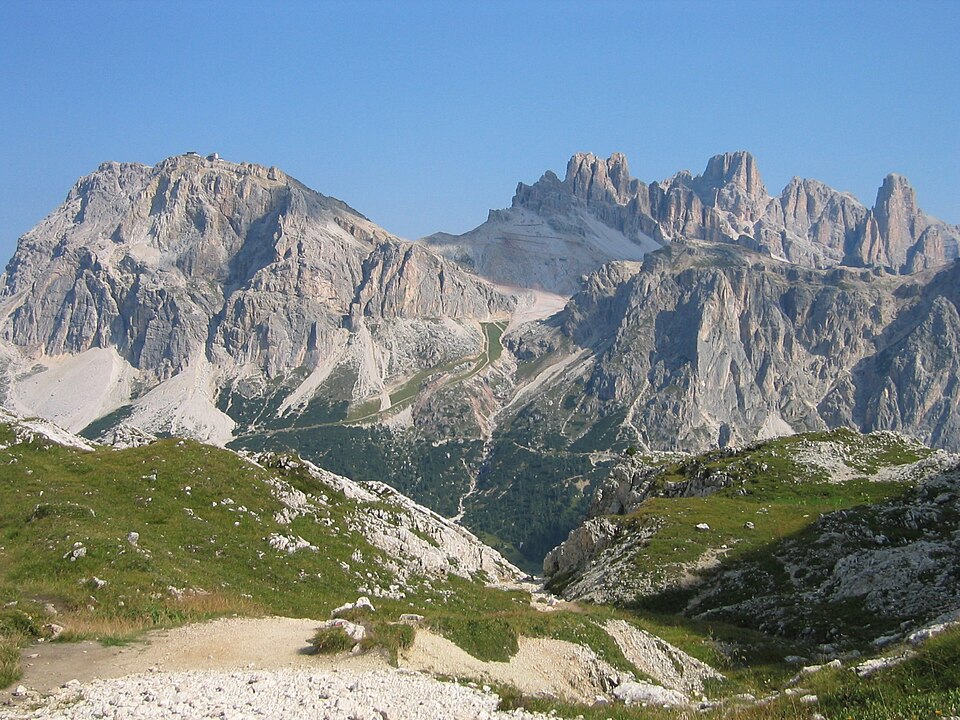 Photo: Clemens Stockner · Public domainTrek Italy
Alta Via 1 — The Classic Dolomites High Route
A six-day rifugio-to-rifugio highlights traverse of the Dolomites, from the emerald water of Lago di Braies over WWI passes and beneath the great walls of Civetta and Pelmo down towards Belluno.
- Duration
- 6 days
- Distance
- 120 km
- Difficulty
- Hard