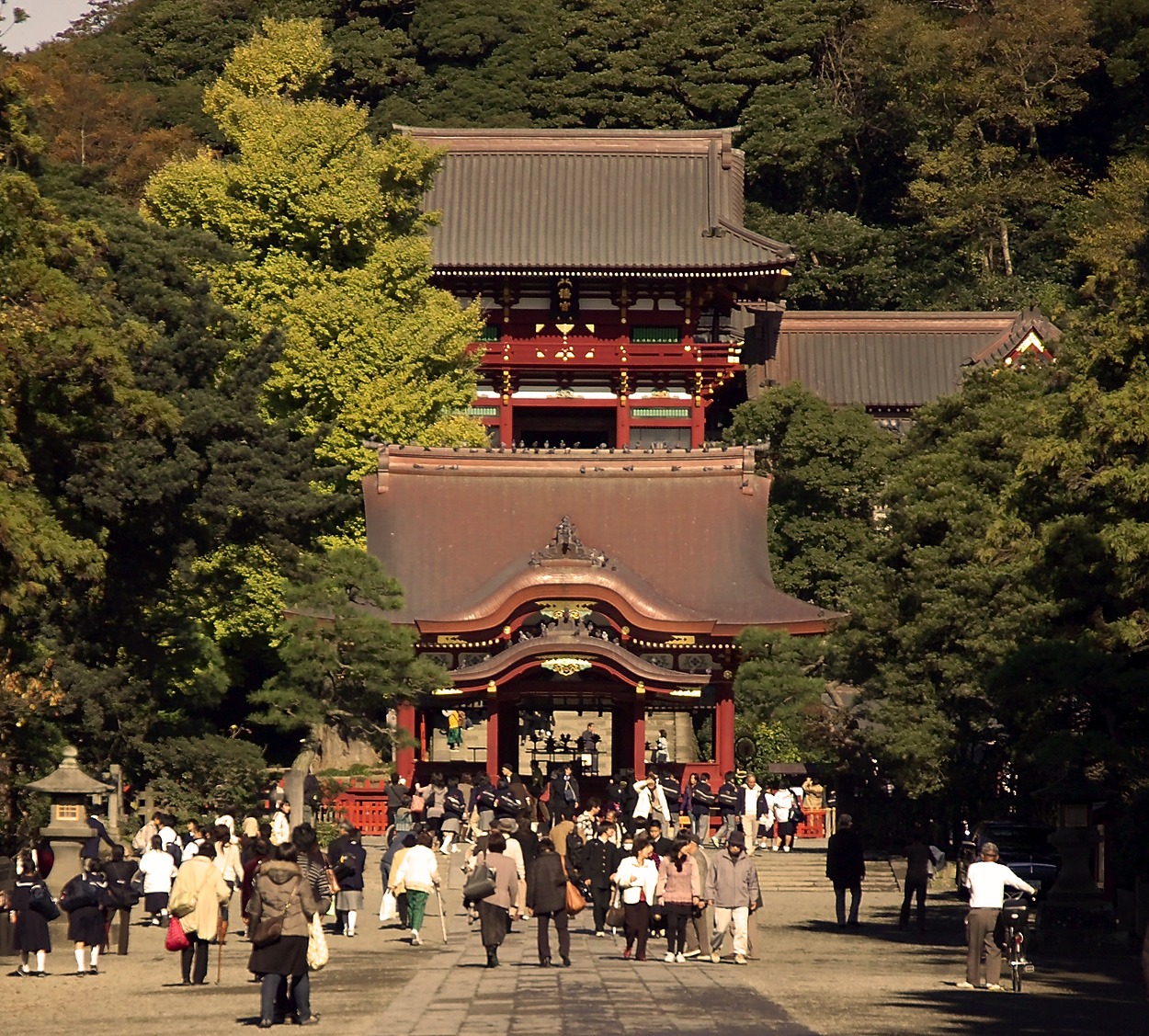
Two temples in the Hase quarter, a wooded ridge walk with several steep pitches, a cave shrine in a valley, and a finish along the shrine approach into town.
Segments
-
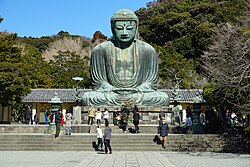 The Great Buddha at Kōtoku-in
Hase Station → Kōtoku-in
Paved streets
The Daibutsu is a bronze Amida Buddha of about 13 metres, cast in 1252 and sitting in the open air ever since the hall that once covered it was lost. For a token extra fee you can step inside the hollow statue and see the casting seams from within. Allow about half an hour.
About this place
Kōtoku-in (高徳院) is a Buddhist temple of the Jōdo-shū sect in the city of Kamakura in Kanagawa Prefecture, Japan. Its mountain name is Daii-zan (大異山), and its common temple name is Shōjōsen-ji (清浄泉寺).
Read more on Wikipedia -
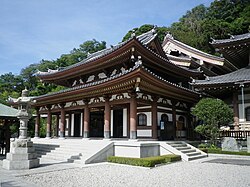 Hase-dera
Kōtoku-in → Hase-dera
Paved streets and temple steps
A hillside temple built around a towering gilded statue of the eleven-headed Kannon, said to be among the largest wooden statues in Japan. Below it a small grotto is packed with Benzaiten carvings, and the terrace looks out over Yuigahama beach. Allow about an hour.
About this place
Hase-dera , commonly called the Hase-kannon (長谷観音), is one of the Buddhist temples in the city of Kamakura in Kanagawa Prefecture, Japan, famous for housing a massive wooden statue of Jūichimen Kannon, an eleven-headed manifestation of the Bodhisattva Kannon.
Read more on Wikipedia - The Daibutsu hiking trail
Trailhead above Kōtoku-in → Ridge junction above Sasuke valley
Forest ridge path, roots and steep pitches
Return past the Great Buddha to the trailhead a few hundred metres up the road, and climb onto the wooded ridge that shelters Kamakura from the north. The path rolls along the crest under trees, with several steep sections and side spurs dropping to small shrines and temples. Slippery and muddy after rain.
-
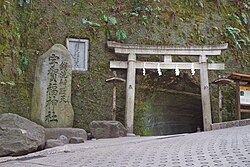 Zeniarai Benzaiten
Ridge junction → Zeniarai Benzaiten Ugafuku Shrine
Steep descent and a tunnel approach
Drop off the ridge and enter through a rock tunnel into a shrine tucked in a hollow of the cliffs. Visitors wash coins and notes in the spring water in the cave, in the belief the money will multiply. Small, smoky with incense, and one of the most atmospheric corners of the town.
About this place
Zeniarai Benzaiten Ugafuku Shrine , popularly known as Zeniarai Benten, is a Shinto shrine in Kamakura, Kanagawa Prefecture, Japan. It is a small shrine, but the second most popular spot in Kamakura after Tsurugaoka Hachimangū. Zeniarai Benzaiten is popular among tourists because the waters of a spring in its cave are said to be able to multiply the money washed in it. The object of worship is a syncretic kami that fuses a traditional spirit called Ugafukujin (宇賀福神) with the Buddhist goddess of Indian origin Sarasvati, known in Japanese as Benzaiten. The shrine is one of the minority in Japan that still shows the fusion of native religious beliefs and foreign Buddhism, which was normal before the Meiji restoration. Zeniarai Benzaiten used to be an external massha of Ōgigayatsu's Yazaka Daijin (八坂大神), but became independent in 1970 under its present name.
Read more on Wikipedia -
 Tsurugaoka Hachimangū
Zeniarai Benzaiten → Tsurugaoka Hachimangū
Residential streets and shrine approach
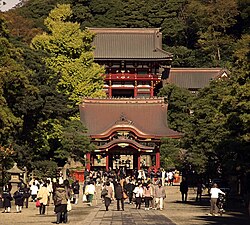
Walk down through quiet residential lanes to Kamakura's most important Shinto shrine, founded by Minamoto no Yoritomo and raised on a stone stairway above its ponds. It hosts the town's biggest festivals, including yabusame horseback archery in spring and autumn. Free to enter.
About this place
Tsurugaoka Hachimangū (鶴岡八幡宮) is the most important Shinto shrine in the city of Kamakura, Kanagawa Prefecture, Japan. The shrine is a cultural center of the city of Kamakura and serves as the venue of many of its most important festivals with two museums.
Read more on Wikipedia - Komachi-dōri
Tsurugaoka Hachimangū → Kamakura Station
Pedestrian shopping street
Finish down Komachi-dōri, the narrow lane of snack stalls, craft shops and sweet shops that runs parallel to the shrine's grand avenue back to the station. Grill your own senbei rice cracker, or queue for soft-serve, before the train home.
Comments
Sign in to join the conversation.
No comments yet — be the first.