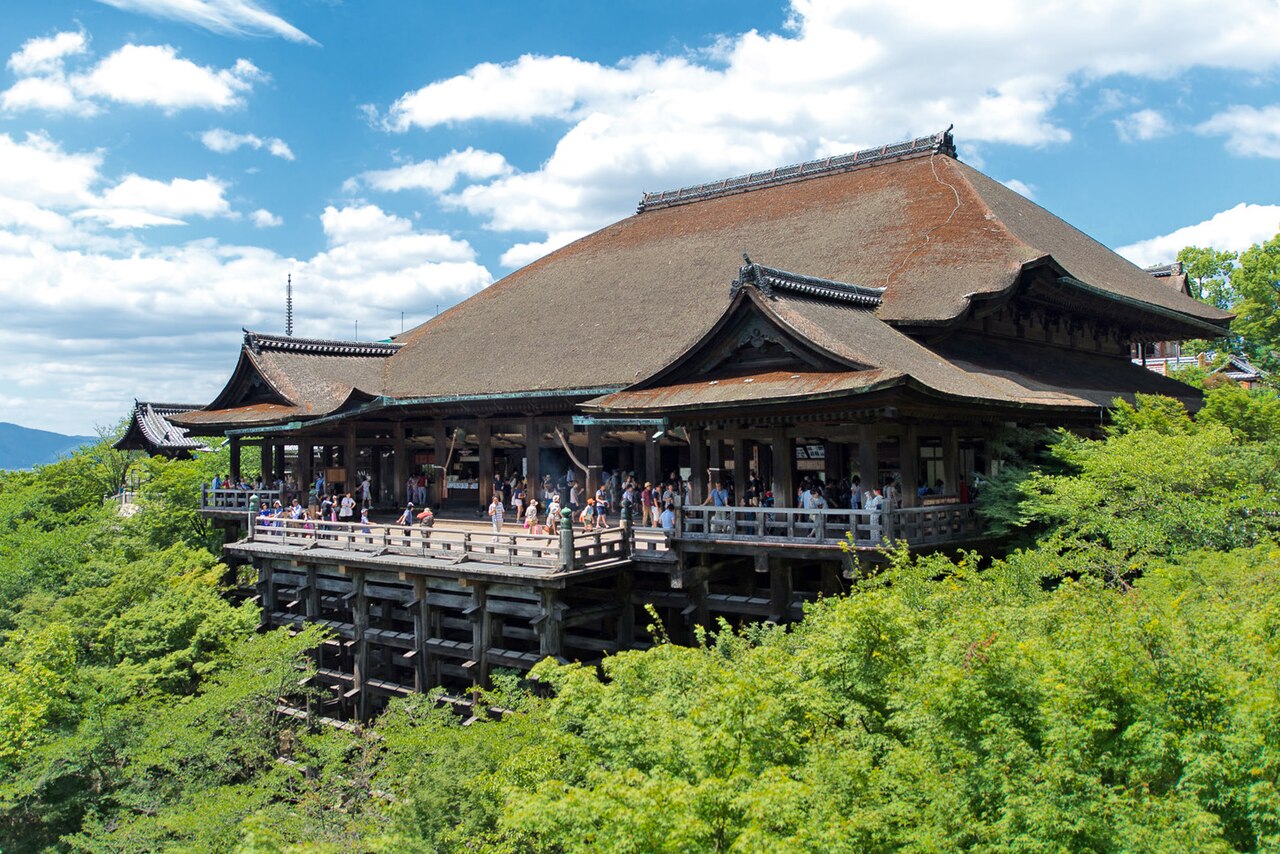
From a hilltop temple down through old streets, past shrines and gates, and out along a famous tree-lined canal.
Segments
- Kiyomizu-dera
Gojo-zaka bus stop → Kiyomizu-dera main hall
Temple approach and stone steps
A UNESCO World Heritage temple whose great wooden stage juts out over the hillside on tall pillars, giving a wide view over Kyoto. Below it, drink from the Otowa waterfall's three streams. Allow about an hour.
-
 Sannenzaka & Ninenzaka lanes
Kiyomizu-dera → Kodai-ji
Preserved stone-stepped streets
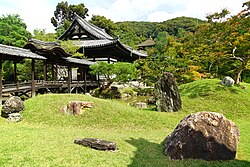
Descend two preserved stone-stepped streets lined with wooden machiya shops, teahouses and sweet stalls — the most photographed lanes in the city — to the quiet temple of Kodai-ji and its bamboo grove.
About this place
Kōdai-ji (高台寺) is a Buddhist temple located in the Shimogawara neighborhood of Higashiyama-ku, Kyoto, Japan. It belongs to the Kenninji branch of the Rinzai school of Japanese Zen. Its sangō prefix is Jubuzan (鷲峰山), and its Main image is a statue Shaka Nyorai. Its precincts were designated a National Historic Site in 1966. The gardens of Kōdai-ji were designed by Kobori Enshū and are a nationally designated Place of Scenic Beauty.
Read more on Wikipedia Photo: 663highland · CC BY-SA 4.0 -
 Maruyama Park & Yasaka Shrine
Kodai-ji → Yasaka Shrine
Park paths
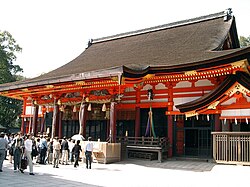
Cross Kyoto's favourite cherry-blossom park to the vermilion Yasaka Shrine, free to enter and home to the summer Gion Matsuri. Its western gate opens onto the edge of the old geisha district.
About this place
Yasaka Shrine , once called Gion Shrine , is a Shinto shrine in the Gion District of Kyoto, Japan. Situated at the east end of Shijō-dōri, the shrine includes several buildings, including gates, a main hall and a stage. The Yasaka shrine is dedicated to Susanoo in the tradition of the Gion faith as its chief kami, with his consort Kushinadahime on the east, and eight offspring deities on the west. The yahashira no mikogami include Yashimajinumi no kami, Itakeru no kami, Ōyatsuhime no kami, Tsumatsuhime no kami, Ōtoshi no kami, Ukanomitama no kami, Ōyatsuhiko no kami, and Suseribime no mikoto.
Read more on Wikipedia Photo: Wikimedia Commons · CC BY-SA 3.0 -
 Chion-in & Shoren-in
Yasaka Shrine → Shoren-in
Temple lanes
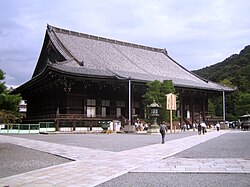
Pass beneath the colossal Sanmon gate of Chion-in — the largest wooden temple gate in Japan — then reach the serene imperial temple of Shoren-in, known for its garden and giant camphor trees.
About this place
Chion-in in Higashiyama-ku, Kyoto, Japan is the headquarters of the Jōdo-shū founded by Hōnen (1133–1212), who proclaimed that sentient beings are reborn in Amida Buddha's Western Paradise by reciting the nembutsu, Amida Buddha's name.
Read more on Wikipedia Photo: Lombroso · Public domain -
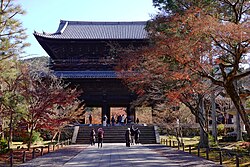 Nanzen-ji & Eikan-do
Shoren-in → Eikan-do
Temple grounds and streets
Nanzen-ji spreads across a wooded hillside behind a towering gate and a striking Meiji-era brick aqueduct. Nearby Eikan-do is one of Kyoto's finest spots for autumn maples.
About this place
Nanzen-ji , or Zuiryusan Nanzen-ji, formerly Zenrin-ji , is a Zen Buddhist temple in Kyoto, Japan. Emperor Kameyama established it in 1291 on the site of his previous detached palace. It is also the headquarters of the Nanzen-ji branch of Rinzai Zen. The precincts of Nanzen-ji are a nationally designated Historic Site and the Hōjō gardens a Place of Scenic Beauty. The temple was destroyed in a fire in 1895 and rebuilt in 1909.
Read more on Wikipedia Photo: 663highland · CC BY-SA 4.0 -
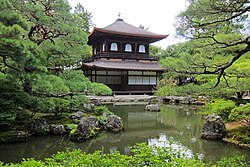 The Philosopher's Path to the Silver Pavilion
Nanzen-ji area → Ginkaku-ji
Canal-side path
Follow the canal-side Philosopher's Path, two kilometers of cherry and maple trees named for a professor who walked it daily, ending at the moss and raked-sand gardens of the Silver Pavilion.
About this place
Ginkaku-ji , officially named Jishō-ji , is a Zen temple in the Sakyo ward of Kyoto, Japan. It is one of the constructions that represent the Higashiyama Culture of the Muromachi period.
Read more on Wikipedia Photo: Oilstreet · CC BY 2.5
Comments
Sign in to join the conversation.
No comments yet — be the first.