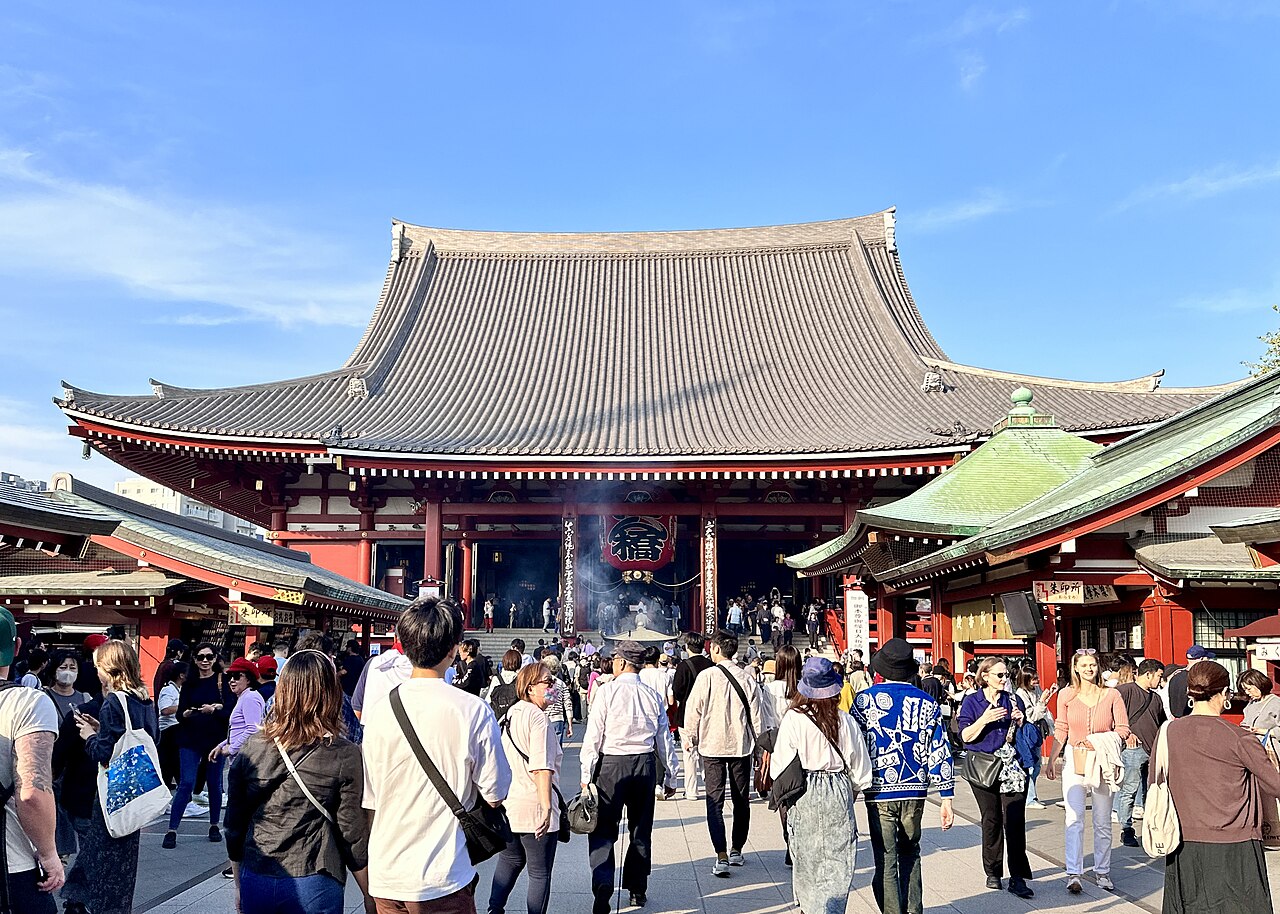
A single, mostly straight line north-to-south through the old eastern city, from Asakusa to Ueno.
Segments
-
 Kaminarimon & Nakamise-dōri
Asakusa Station → Nakamise shopping street
City streets
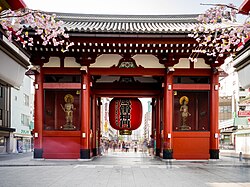
Begin under the Kaminarimon, the vast 'Thunder Gate' and its four-metre red lantern, first raised in 942 and rebuilt in 1960 by the founder of Panasonic. Beyond it runs Nakamise-dōri, one of Japan's oldest shopping streets, lined with stalls selling rice crackers, folding fans and freshly steamed sweets. About 20 minutes.
About this place
The Kaminarimon is the outer of two large entrance gates that ultimately leads to the Sensō-ji in Asakusa, Tokyo, Japan. The gate, with its lantern and statues, is popular with tourists. It stands at 11.7 m tall, 11.4 m wide and covers an area of 69.3 m2. The first gate was built in 941, but the current gate dates from 1960, after the previous gate was destroyed in a fire in 1865.
Read more on Wikipedia Photo: Ajay Suresh from New York, NY, USA · CC BY 2.0 - Sensō-ji Temple
Nakamise shopping street → Sensō-ji main hall
Temple precinct
Pass through the Hōzōmon gate to the Main Hall of Tokyo's oldest temple, founded in 628 to enshrine a tiny golden Kannon said to have been pulled from the Sumida River by two fishermen. Waft the incense smoke over yourself for good health, then admire the five-storey pagoda alongside. About 45 minutes.
-
 Through Kappabashi Kitchen Street
Sensō-ji → Kappabashi Dōgugai
City streets
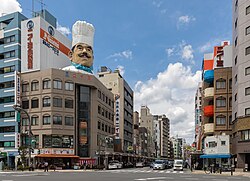
Walk west into Kappabashi, Tokyo's wholesale street for everything a restaurant needs — knives, ceramics, lanterns and the astonishingly realistic plastic food models displayed in shop windows across Japan. A browser's paradise, and a good place to buy a keepsake. About 30 minutes.
About this place
Kappabashi-dori, also known just as Kappabashi or Kitchen Town, is a street in Tokyo between Ueno and Asakusa which is almost entirely populated with shops supplying the restaurant trade. These shops sell everything from knives and other kitchen utensils, mass-produced crockery, restaurant furniture, ovens, and decorations, through to esoteric items such as the plastic display food found outside Japanese restaurants. The street is also an off-beat tourist destination.
Read more on Wikipedia Photo: Basile Morin · CC BY-SA 4.0 -
 To Ameya-Yokochō market
Kappabashi Dōgugai → Ameya-Yokochō
City streets
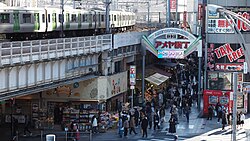
Continue south-west to Ameya-Yokochō, the raucous open-air market strung beneath the JR tracks near Ueno. Once a post-war black market, 'Ameyoko' now packs some four hundred stalls hawking dried seafood, spices, cheap trainers and skewers eaten on the spot. About 30 minutes with a snack stop.
About this place
Ameya-Yokochō , often shortened to Ameyoko (アメ横), is an open-air market in the Taito Ward of Tokyo, Japan, located next to Ueno Station.
Read more on Wikipedia Photo: Ka23 13 · CC BY 4.0 -
 Into Ueno Park
Ameya-Yokochō → Shinobazu Pond
Park paths
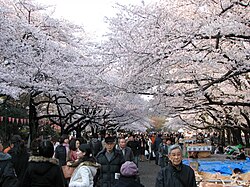
Climb the steps into Ueno Park, opened in 1873 as one of Japan's first public parks and famous for over a thousand cherry trees. Skirt Shinobazu Pond, whose summer lotus beds hide a small island shrine, and pass the statue of Saigō Takamori walking his dog. About 30 minutes.
About this place
Ueno Park is a spacious public park in the Ueno district of Taitō, Tokyo, Japan. The park was established in 1873 on lands formerly belonging to the temple of Kan'ei-ji. Amongst the country's first public parks, it was founded following the Western example as part of the borrowing and assimilation of international practices that characterizes the early Meiji period. The home of a number of major museums, Ueno Park is also celebrated in spring for its cherry blossoms and hanami. In recent times the park and its attractions have drawn over ten million visitors a year, making it Japan's most popular city park.
Read more on Wikipedia Photo: Bernard Gagnon · CC BY-SA 3.0 -
 The Tokyo National Museum
Shinobazu Pond → Tokyo National Museum
Park paths
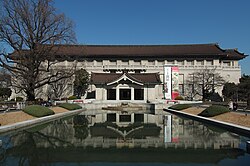
End at the grand halls of the Tokyo National Museum, the country's oldest and largest, holding the world's greatest collection of Japanese art — samurai armour, swords, ceramics and Buddhist sculpture. Even an hour here is a fitting close to a walk through old Tokyo.
About this place
The Tokyo National Museum or TNM is an art museum in Ueno Park in the Taitō ward of Tokyo, Japan. It is considered the oldest national museum and the largest art museum in Japan. The museum collects, preserves, and displays a comprehensive collection of artwork and cultural objects from Asia, with a focus on ancient and medieval Japanese art and Asian art along the Silk Road. There is also a large collection of Greco-Buddhist art. As of April 2023, the museum held approximately 120,000 Cultural Properties, including 89 National Treasures, 319 Horyuji Treasures, and 649 Important Cultural Properties. As of the same date, the Japanese government had designated 902 works of art and crafts as National Treasures and 10,820 works of art and crafts as Important Cultural Properties, so the museum holds about 10% of the works of art and crafts designated as National Treasures and 6% of those designated as Important Cultural Properties. The museum also holds 2,651 cultural properties deposited by individuals and organisations, of which 54 are National Treasures and 262 are Important Cultural Properties. Of these, 3,000 cultural properties are on display at one time, with each changing for between four and eight weeks. The museum also conducts research and organizes educational events related to its collection.
Read more on Wikipedia Photo: Wiiii · CC BY-SA 3.0
Comments
Sign in to join the conversation.
No comments yet — be the first.