← All routes
City walk Basque Country — Bilbao, Spain

Bilbao: Guggenheim to Casco Viejo Along the Nervión

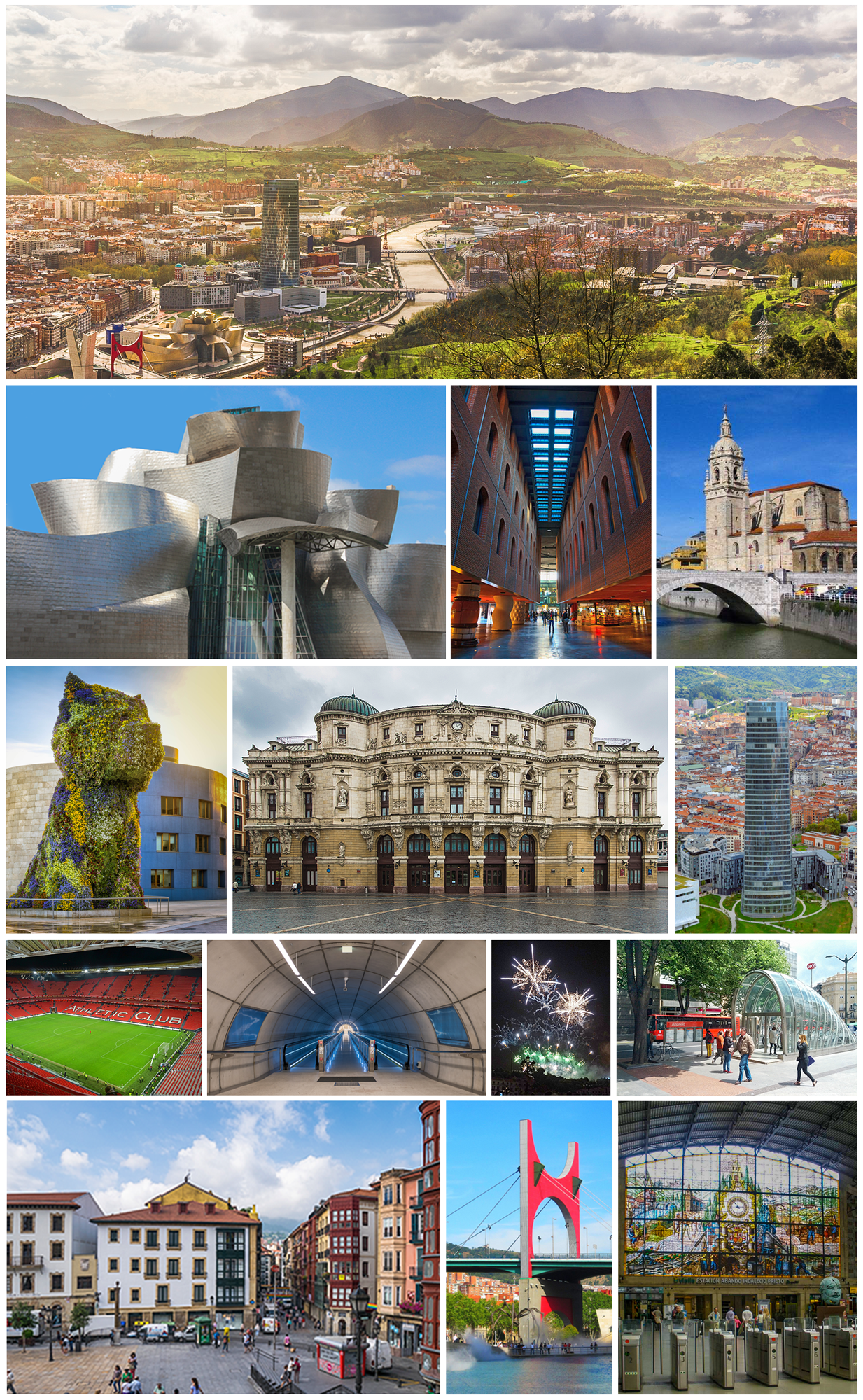
A flat, easy day tracing Bilbao's reinvention — from Gehry's titanium museum along the river to the seven medieval streets and the pintxo bars of Plaza Nueva.

Bilbao: Guggenheim to Casco Viejo Along the Nervión
Photo: Tommie Hansen, Ardfern, Tomas Fano, 0Igor González Martín, Jesús Ignacio Bravo Soler, Pedro J Pacheco, Irekia/Gobierno V · CC BY-SA 4.0
Duration
1 days
Distance
4 km
Difficulty
Easy
Best season
May–September, the driest window; Bilbao is Atlantic and rain is possible in any month

Bilbao is the standard example of a city that talked its way out of industrial collapse, and the walk from the Guggenheim to the old town is the argument in physical form. The Nervión was a working estuary lined with shipyards and furnaces; when that economy died, the city spent the 1990s turning the riverbank into a promenade and put a Frank Gehry building at the end of it. It worked well enough that people now use ‘the Bilbao effect’ as shorthand.

What makes the day satisfying is that the new city and the old one are a half-hour’s stroll apart. You start in titanium and end in a 14th-century street grid eating pintxos off a bar top. The route is about four kilometres, flat almost the whole way, and follows the river — it is genuinely hard to get lost.

Getting there. Bilbao Airport is about 20 minutes from the centre by the A3247 bus. From elsewhere in Spain, trains and long-distance buses arrive centrally; the Metro’s Zazpikaleak/Casco Viejo station puts you at the walk’s far end if you want to run it in reverse.

Permits & tickets. The Guggenheim needs a ticket and it is worth booking a slot ahead in summer; the outdoor sculptures, including Puppy, are free to see at any time. The riverside, the bridges, Casco Viejo, the Ribera market and Plaza Nueva all cost nothing.

Good to know:

Day 1

Titanium to the seven streets

Guggenheim Museum Bilbao → Plaza Nueva 4 km
Navigate this day

A riverside line from the Guggenheim down the Nervión, across Calatrava’s white bridge and into the old town.

Segments

  1. The Guggenheim and Puppy
    The Guggenheim and Puppy 0.6 km 📍 Map

    Moyua or Abando → Guggenheim Museum Bilbao

    City streets

    Frank Gehry's museum of modern and contemporary art opened on 18 October 1997, inaugurated by King Juan Carlos I with a show of 250 works, and it is one of the largest museums in Spain. Circle the outside first — the titanium skin was designed to catch the estuary's changeable light, and it does. Guarding the entrance is Puppy, Jeff Koons's giant West Highland terrier planted with flowering bedding, replanted twice a year; it was meant to be temporary and the city refused to let it go. Inside, Richard Serra's vast steel spirals in the long gallery are the one thing not to skip. Allow about 2.5 hours.

    About this place

    The Guggenheim Museum Bilbao is a museum of modern and contemporary art in Bilbao, Biscay, Spain. It is one of several museums affiliated to the Solomon R. Guggenheim Foundation and features permanent and visiting exhibits of works by Spanish and international artists. It was inaugurated on 18 October 1997 by King Juan Carlos I of Spain, with an exhibition of 250 contemporary works of art. It is one of the largest museums in Spain.

    Read more on Wikipedia ↗

    Photo: Naotake Murayama · CC BY 2.0

  2. Down the Nervión riverside
    Down the Nervión riverside 1 km 📍 Map

    Guggenheim Museum Bilbao → Campo Volantín promenade

    Paved riverside promenade

    Walk downstream along the water. The Nervión runs through Bilbao to the Cantabrian Sea, and below its meeting with the Ibaizabal it becomes the Estuary of Bilbao — the reason there was a port here at all. This bank was industrial within living memory; now it is a landscaped promenade with Maman, Louise Bourgeois's bronze spider, near the museum and the red arches of La Salve bridge overhead. Easy, flat, about 20 minutes at a wander.

    About this place

    Nervión is a river that runs through the town of Bilbao, Spain into the Cantabrian Sea. Its lowermost course, downstream of its confluence with the Ibaizabal River, is known as the Estuary of Bilbao.

    Read more on Wikipedia ↗

    Photo: The original uploader was Leland at English Wikipedia. · CC BY-SA 3.0

  3. The Zubizuri bridge
    The Zubizuri bridge 0.5 km 📍 Map

    Campo Volantín promenade → Zubizuri

    Bridge deck and promenade

    Santiago Calatrava's tied-arch footbridge — Zubizuri is Basque for 'white bridge' — links the Campo Volantín right bank with Uribitarte on the left. The curved deck slung under a single leaning arch is the photograph everybody takes. Its glass walkway was famously slippery in the rain and the city later added a covering, which is a very Bilbao story: a beautiful object, then an argument about the weather. About 15 minutes.

    About this place

    The Zubizuri, also called the Campo Volantin Bridge or Puente del Campo Volantin, is a tied arch footbridge across the Nervion River in Bilbao, Spain. Designed by architect Santiago Calatrava, the bridge links the Campo Volantin right bank and Uribitarte left bank of the river.

    Read more on Wikipedia ↗

    Photo: The original uploader was Leland at English Wikipedia. · CC BY-SA 3.0

  4. Into Casco Viejo and the Siete Calles
    Into Casco Viejo and the Siete Calles 0.9 km 📍 Map

    Zubizuri → Casco Viejo

    Narrow paved lanes

    Cross into the medieval neighbourhood known as Casco Viejo in Spanish, Zazpikaleak or Alde Zaharra in Basque, and Las Siete Calles — the Seven Streets — after the original core of parallel lanes that made up the walled town. It is part of the Ibaiondo district and it is small, dense and best walked without a plan: shops that have been in the same family for generations, the Gothic Santiago Cathedral, and the bar-lined streets that give the quarter its name. About 45 minutes to wander.

    About this place

    Las Siete Calles or Casco Viejo in Spanish or Zazpikaleak or Alde Zaharra in Basque are different names for the medieval neighbourhood of Bilbao, part of the Ibaiondo district. The walled section of the town existed until the end of the 19th century and was known by the names Seven Streets or Old Town, respectively.

    Read more on Wikipedia ↗

    Photo: dalbera from Paris, France · CC BY 2.0

  5. The Ribera market
    The Ribera market 0.4 km 📍 Map

    Casco Viejo → Mercado de la Ribera

    Narrow paved lanes

    On the bank of the Nervión right beside Casco Viejo, the Mercado de la Ribera covers about 10,000 square metres, which has been claimed as the largest covered market in Europe. The stalls are mostly fresh produce — fishmongers, butchers, greengrocers — plus a section for local farmers' goods. Come for the fish counters even if you are not cooking: this is where the Basque obsession with raw ingredients stops being an abstraction. About 30 minutes.

    About this place

    The Mercado de la Ribera is a market square in Bilbao, the capital of the Basque Province of Viscay in the north of Spain. It is on the right bank of the Nervion River, next to Casco Viejo. Its built area of 10,000 square metres (110,000 sq ft) makes it the biggest covered market in Europe. Inside it, there are stalls that sell different products, mostly fresh produce. There are fish markets, butchers and green grocers. There is also a part of the market for the local farmers' products.

    Read more on Wikipedia ↗

    Photo: PA · CC BY-SA 4.0

  6. Pintxos on Plaza Nueva
    Pintxos on Plaza Nueva 0.6 km 📍 Map

    Mercado de la Ribera → Plaza Nueva

    Narrow paved lanes

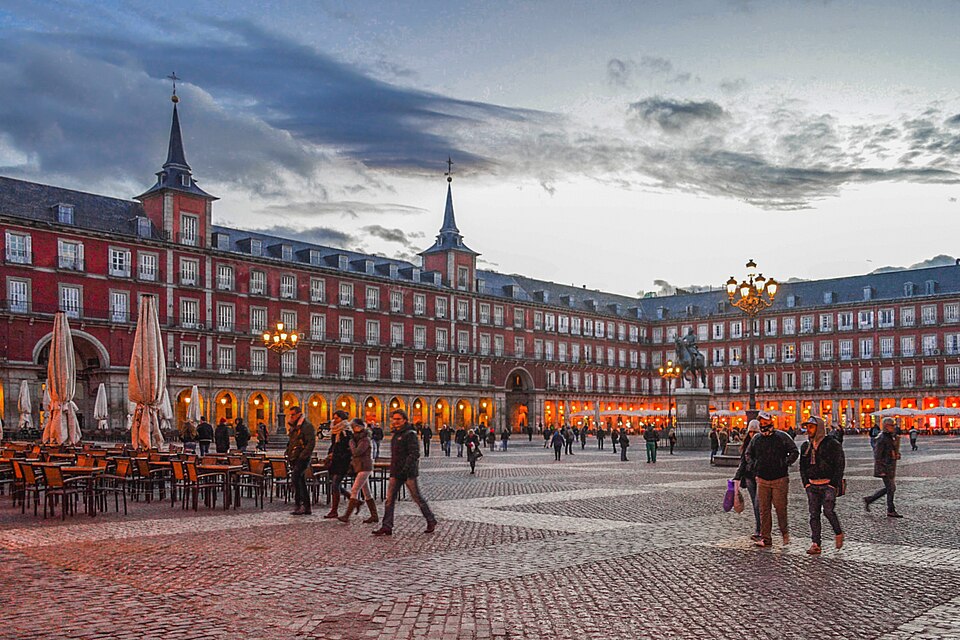
    End in the neoclassical square designed in 1821 and opened in 1851, enclosed by arcaded buildings and entered through arches the locals call cuevas — caves. Its name simply distinguishes it from the old square that once stood where the Ribera market went up. Under the arcades is Bilbao's best concentration of pintxo bars: the small snacks traditional across northern Spain and taken most seriously here. Order one at a time, stand up, have a txakoli or a zurito, and move to the next bar.
    About this place

    The Plaza Nueva or Plaza Barria of Bilbao is a monumental square of neoclassical style, designed in 1821 and inaugurated in 1851. Its name comes from the previously existing Plaza Vieja or Old Square in the place where the Ribera Market was built. The square is enclosed by arcaded buildings and accessed by arches known as cuevas (caves).

    Read more on Wikipedia ↗

    Photo: No machine-readable author provided. Martin253~commonswiki assumed (based on copyright claims). · Public domain

Comments