
Blog
Tour du Mont Blanc or Alta Via 1
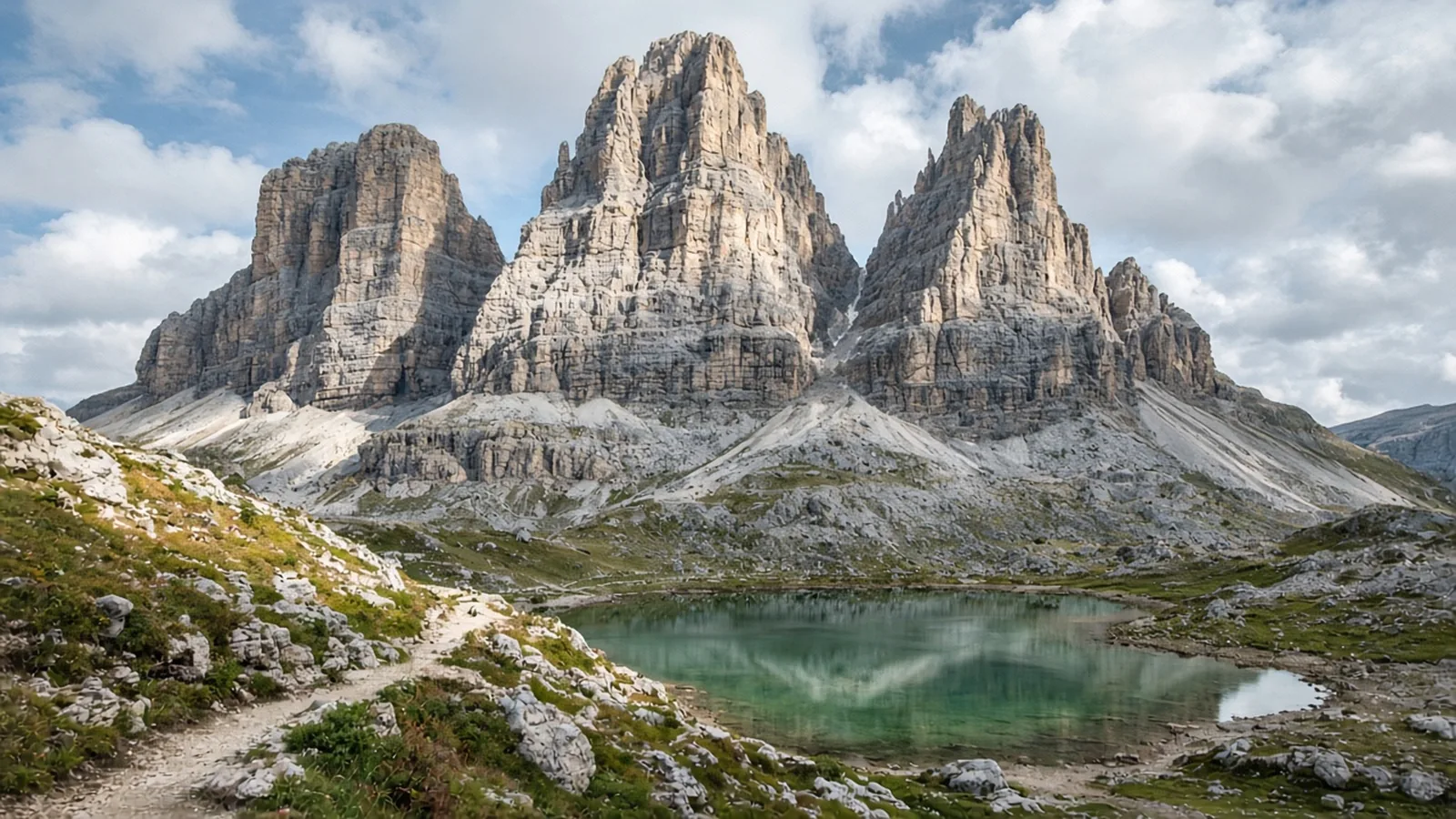
In short
Choose the Tour du Mont Blanc for a three-country circuit of about 170 km and 10,000 m, from mid-June to mid-September. Choose Alta Via 1 for about 120 km and 6,500 m of Dolomite rifugios, from late June through September. Both are graded hard, and both need huts booked before you fly.
Pick the circuit if you want three countries. Pick the Dolomites if you need September.
Both of these are hard hut tours. Neither is the “easier famous one.” The Tour du Mont Blanc is the longer commitment: about 170 km and about 10,000 m of ascent, through France, Italy and Switzerland, on an itinerary of seven days that most walkers stretch to somewhere between 7 and 11. Alta Via 1 is the Dolomite line: about 120 km and about 6,500 m, six days, rifugio to rifugio, in Italy only. The height gain is smaller. The grade on the page is still hard.
Choose the TMB if the point is the Mont Blanc massif and you can give it the days and the refuge bookings. Choose Alta Via 1 if you want the limestone walls, a shorter distance, and a season that still includes the later part of September, after the TMB has stopped. If you want a gentle introduction to hut life, you want a different trail.
What each week actually is
The Tour du Mont Blanc on this page is the anti-clockwise loop from the Chamonix valley, back to the same valley, sleeping in refuges and village guesthouses rather than carrying a tent. It is waymarked. It does not ask for technical climbing. What it asks for is the willingness to climb for a long time, day after day, and to take the weather at altitude seriously when it turns. Valley towns and cable cars mean you can shorten a stage or wait out a storm. They are how you manage the week. They are not how you avoid planning it.
A high traverse on the route can hold snow into early summer, so a June start is a conditions question, not just a booking question. July and August are when the page tells you to book the refuges well ahead, because that is when the trail is busiest. You are walking a circle around one massif and crossing a border often enough that the day changes country. That is the pleasure of it, and it is also why the logistics feel larger than a single-valley hut tour.
Alta Via 1 is a north-to-south highlights traverse, from the water of Lago di Braies, over passes, under the walls of Civetta and Pelmo, down toward Belluno. The full line is about 120 km, and this itinerary puts it into six days for strong walkers. You do not carry a tent. Each night is a staffed rifugio: a bunk and a hot meal, with half board the usual arrangement. The approachability is the bed. The day itself is still alpine: steep climbs, exposed crossings, long stony descents. The northern trailhead is reached by bus from Dobbiaco. The finish is near Belluno, with trains on toward Venice. Cash, a sleeping-bag liner and earplugs are the unglamorous kit list, because the hut is a dormitory, not a hotel you can negotiate with at 6 pm.
Tour du Mont Blanc and Alta Via 1.
The season is where people choose the wrong one
The TMB is listed from mid-June to mid-September. Alta Via 1 is listed from late June to September, once the rifugios are open and the high passes are clear of snow. Those sentences look similar until you are holding tickets.
Early June is too early for both. Mid-June can be the TMB, and it can still be early for the Dolomite huts. Late June is the first overlap, and it is the honest start if you want either trail without arguing with the page. July and August are in season for both, and they are the weeks when a bed is the scarce object. If your only free week is then, book first and fly second. Which mountain you prefer is a real question. Whether a refuge will have you is the question that cancels the trip.
September is where the two calendars split. The first half can still be the TMB. Mid-September is the end of that season. Alta Via 1 continues through September, and the rifugios run roughly to late September. A walker who says “early autumn in the Alps” and means the last week of the month is describing Alta Via, not the Tour. October is neither. Both seasons have closed. That month is a different map: Where to walk in October. The opening weeks, when you should not pretend the passes are bare, are Where to walk in June. The busy middle is Where to walk in July. The split month is Where to walk in September.
How the days feel, and who they suit
On the TMB the signature is repetition of a big day: a long climb, a pass, a drop to a refuge, and the knowledge that tomorrow looks like that again. Ten thousand metres over the week is the figure to sit with. Spread over 7 days it is a hard daily average. Spread over 11, which is what many walkers do, it is still a hard holiday, just one you can recover inside. The three countries are not a slogan. France, Italy and Switzerland are the route. If what you want from the week is that circuit, and the variety of valleys around one great mountain, this is the walk. If the idea of organising a chain of refuges in the peak weeks makes you hope something will be free when you arrive, this is the walk that will punish that hope.
On Alta Via 1 the signature is the wall in front of you and the hut at the end of the day. Six thousand five hundred metres is not a soft option next to 10,000. It is less, over fewer kilometres, on a highlights pace that the page already calls strong. The First World War ground is part of the route, at Lagazuoi and Cinque Torri, and a headtorch matters if you take the tunnel descent. Afternoon storms are the weather pattern, so the day starts early. This suits a walker who wants one country, a clear line from a famous lake to a valley town, and the Dolomite scenery specifically, rather than the Mont Blanc tour in a different accent.
Neither page is written for someone who has not spent full days on their feet with a pack. The grades are hard. The beds make them possible without a camping kit. The beds do not make them moderate.
A plain way to decide
Take the Tour du Mont Blanc if all three of these are true: you want the Mont Blanc circuit, you can walk for at least a week and possibly closer to 11 days, and your dates fall between mid-June and mid-September with refuges already held.
Take Alta Via 1 if you want the Dolomites, you are content with a hard six-day highlights line of about 120 km, and you like that the season still has September in it after the TMB’s mid-month ending. Book the rifugios the same way you would book the French and Swiss huts. A Dolomite high route without a bed is not a flexible plan.
Do not take either one as training for the other in the same week. Do not take the GR20 in Corsica as a stand-in because it is also a hard European hut trail in the same months: that grade is expert, and the terrain is a different sport. And do not slide either booking into October because the word “Alps” still sounds good in autumn. By then the pages have moved on.
Questions
- Which is harder, the Tour du Mont Blanc or Alta Via 1?
- Both are graded hard. The TMB is longer, about 170 km and 10,000 m, usually taking 7 to 11 days. Alta Via 1 is about 120 km and 6,500 m over six days. Less ascent is not a moderate grade.
- When can you walk each of them?
- The Tour du Mont Blanc is mid-June to mid-September. Alta Via 1 is late June to September, once the rifugios are open and the passes are clear of snow. Early June is too soon for both. October is too late for both.
- Do you need to camp?
- No. The TMB is refuges and village guesthouses. Alta Via 1 is staffed rifugios, usually on half board. Book ahead in July and August. A high route without a bed is not the flexible version of either walk.
- Which one still works in late September?
- Alta Via 1. Its season runs through September. The Tour du Mont Blanc stops at mid-September, so the second half of the month is no longer its season.
Sources
Routes in this post
-
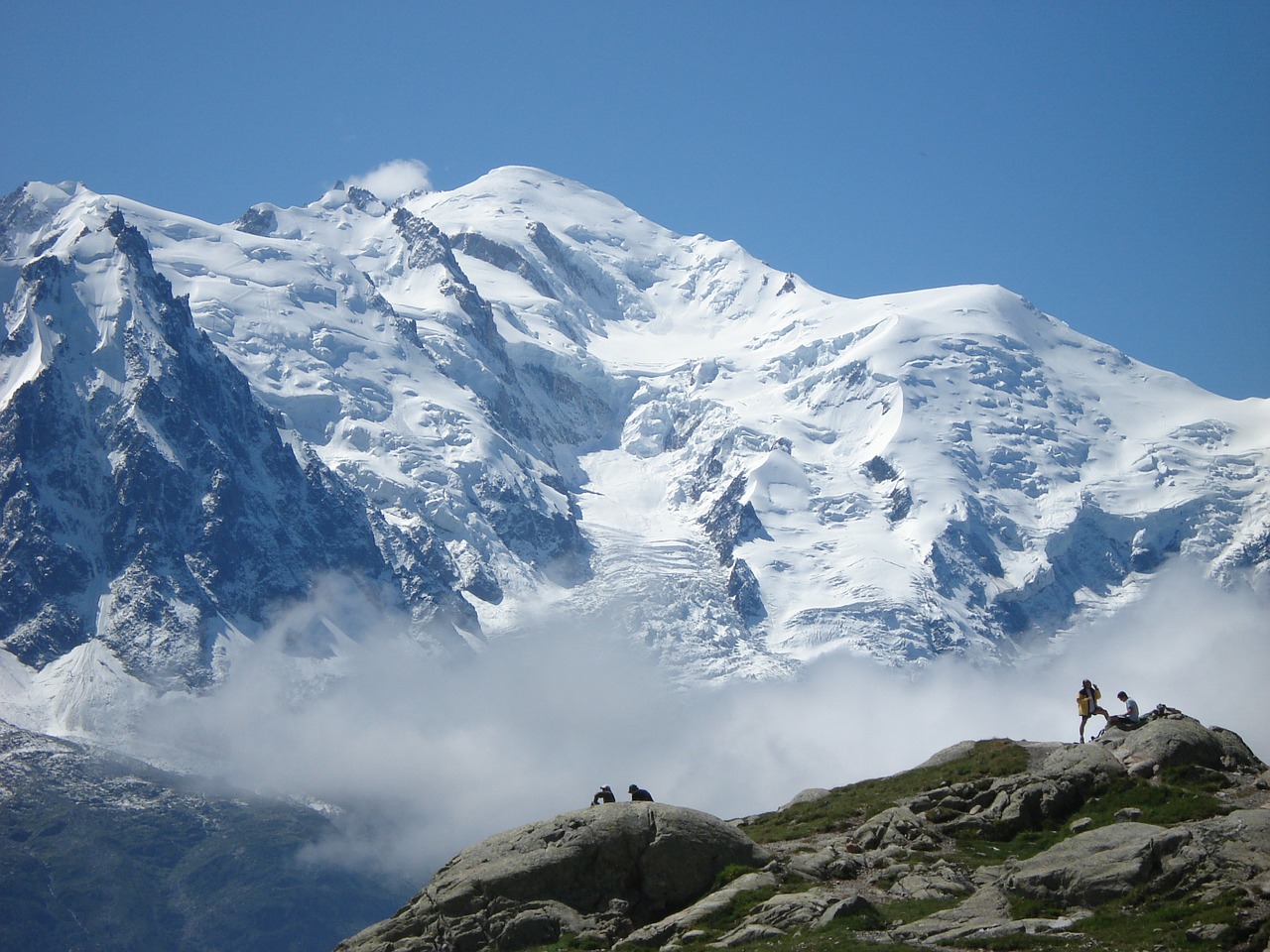 Photo: Hseugut · CC BY-SA 4.0Trek France, Italy, Switzerland
Tour du Mont Blanc
A circular alpine classic looping 170 km around the Mont Blanc massif through France, Italy and Switzerland.
- Duration
- 7 days
- Distance
- 170 km
- Difficulty
- Hard
-
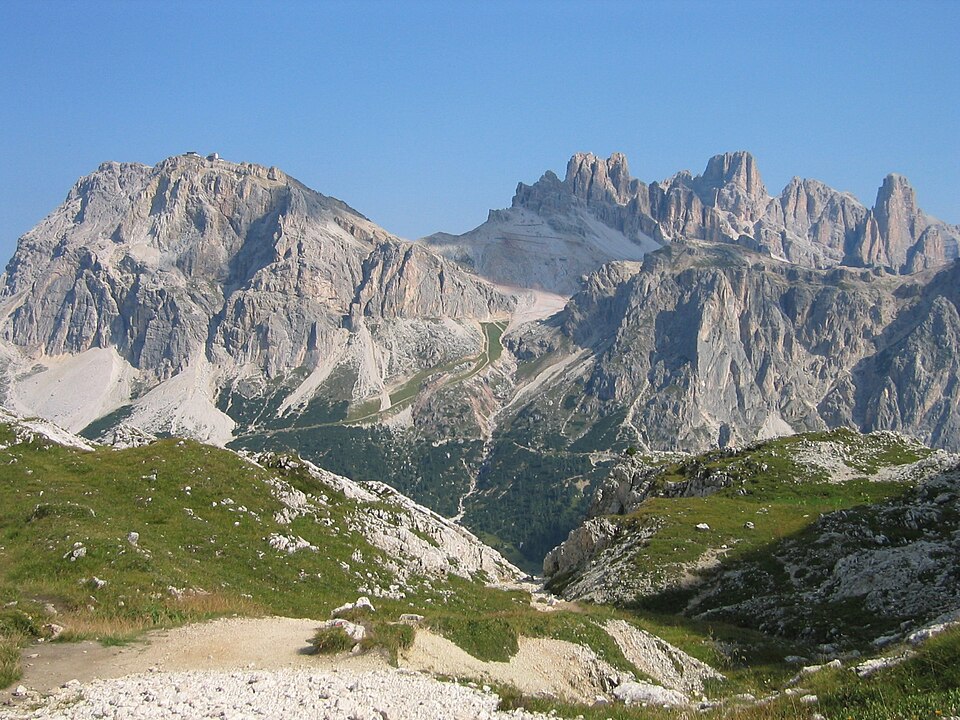 Photo: Clemens Stockner · Public domainTrek Italy
Alta Via 1 — The Classic Dolomites High Route
A six-day rifugio-to-rifugio highlights traverse of the Dolomites, from the emerald water of Lago di Braies over WWI passes and beneath the great walls of Civetta and Pelmo down towards Belluno.
- Duration
- 6 days
- Distance
- 120 km
- Difficulty
- Hard