
Blog
Camino Frances or the Portuguese Coastal Route
In short
Choose the French Way highlights for seven sampled stages, about 168 km, from May to September. Choose the Portuguese coastal highlights for six sampled stages, about 142 km, in April to June and September to October. Both are moderate. The certificate rules are in the short-route guide, not restated here.
The inland highlights, or the Atlantic ones
Both of these are graded moderate, and both are highlights rather than the full pilgrimage. The French Way page is seven iconic stages, about 168 km and about 2,800 m of ascent. The coastal Portuguese page is six stages, about 142 km and about 1,800 m. Neither set is one continuous week on the path. Trains and buses join the days. If you wanted a single unbroken line from a border to the cathedral, you want a longer trip than either of these pages.
Choose the French Way highlights if you want the classic inland road and your dates sit in May to September. Choose the coastal Portuguese highlights if you want the Atlantic, and you prefer a calendar that names September and October as well as April to June. The certificate, the short start that people use to qualify, and the rules around it live in the Camino season guide. This page will not repeat them.
The French Way highlights
The full French Way is some 769 km from the French side of the Pyrenees to Santiago, and walking all of it takes about a month. This route lifts out seven of the days people mean when they say the Camino: the mountain crossing, the long middle, the approach to Galicia, the arrival. You can walk them as a taster or string more of the real road between them. They are not, by themselves, a seven-day through-hike.
The season is late spring to early autumn, May to September. Winter is the season to avoid on the Pyrenees crossing in particular. September is the last month inside that range, so it is a fair time and also the end of it. July and August are inside the listed season too, and they are when the pilgrim hostels fill. Arriving early for a bed is the summer skill. The highest point of the whole route is about 1,515 m, near the Iron Cross. That is not alpine height, and it is still a real climb on the day you cross it. Yellow arrows and the scallop mark the way. You rarely need the map for navigation. You do need a plan for where you sleep.
No permit is required to walk. That sentence is the whole of the paperwork this article will give you. Everything about the certificate at the cathedral is in the guide linked above. If you are walking in 2027, the year itself changes the crowding: see the Holy Year page before you treat September as a normal September.
The coastal Portuguese highlights
At Porto the Portuguese Way splits. The central route goes inland. The coastal route keeps the Atlantic on its left, on boardwalks, in fishing harbours and along beaches, then crosses the Minho by ferry and rejoins the inland road at Redondela. The whole coastal line is about 260 km, and most pilgrims take 11 to 14 days. This page is six of the good days: the exit from Porto, the shipbuilding towns, the approach to Viana do Castelo, the ferry, the merge above the Ria de Vigo, and a final stage into Santiago. Sampled days, not a continuous six-day march. Regional trains run the corridor.
The good months are April to June and September to October. July and August are hot and busy. The sea breeze is the real argument for the coast in summer, because it stays cooler than the inland Portuguese route, and even then the page does not call high summer a good window. September is the start of the second good window. October continues it. That is a longer autumn than the French Way’s listed season, which stops when September stops.
The coast does not hug the shoreline the entire way. It drifts inland and back. Expect that, or the day will feel like a broken promise rather than the route that was written. Waymarking is the same yellow arrow and shell, plus the shore boardwalks where they exist. No permit is required to walk this either.
Season is the clean way to separate them
Put the months side by side. April: coastal Portuguese, not the French Way’s listed range. May and June: both. July and August: the French Way still lists them, with crowded beds; the coastal page calls them hot and busy and points you at other months. September: both. October: coastal Portuguese, and no longer the French Way’s stated season.
That October gap is the decision for a lot of people. If the only week you have is in October, the coastal highlights are the page that names the month. The French Way highlights are the page that has finished its season sentence. If the week is in May, choose on the landscape, not the calendar: inland stages and the Pyrenees memory, or the Atlantic and the ferry. The month-by-month setting for September, when both are in play, is Where to walk in September.
A plain way to decide
Walk the French Way highlights if you want the famous inland stages, you understand they are a selection from a month-long road, and you can go between May and September. Avoid a winter crossing of the Pyrenees. In a Holy Year, book the bed earlier than the month alone would suggest.
Walk the coastal Portuguese highlights if you want the ocean, a shorter highlights set with less ascent, and a season that includes April to June and September to October. Do not pick it only because someone called it flatter. About 1,800 m over the six days is still a walking week, graded moderate, and the days are samples.
Walk the full roads if the samples feel like a compromise. The pages are honest that they are samples. And read the certificate guide before you design a short start around a rule this article has deliberately left alone.
Questions
- Are these continuous week-long walks?
- No. Both pages are highlights: seven French Way stages, about 168 km, and six coastal stages, about 142 km. The full French Way is some 769 km. The full coastal route is about 260 km. Trains and buses link the sampled days.
- When is each one in season?
- The French Way lists May to September, and says to avoid the Pyrenees in winter. The coastal Portuguese route lists April to June and September to October. July and August are hot and busy on the coast, even with the sea breeze.
- Which one can you walk in October?
- The coastal Portuguese highlights. October is inside their second good window. The French Way's listed season stops at September, so October is outside that range.
- Where are the Compostela rules?
- In the short-route season guide, which covers the certificate and the usual short starts. This comparison does not restate them. If you are walking in 2027, also read the Holy Year page before you book beds.
Sources
Routes in this post
-
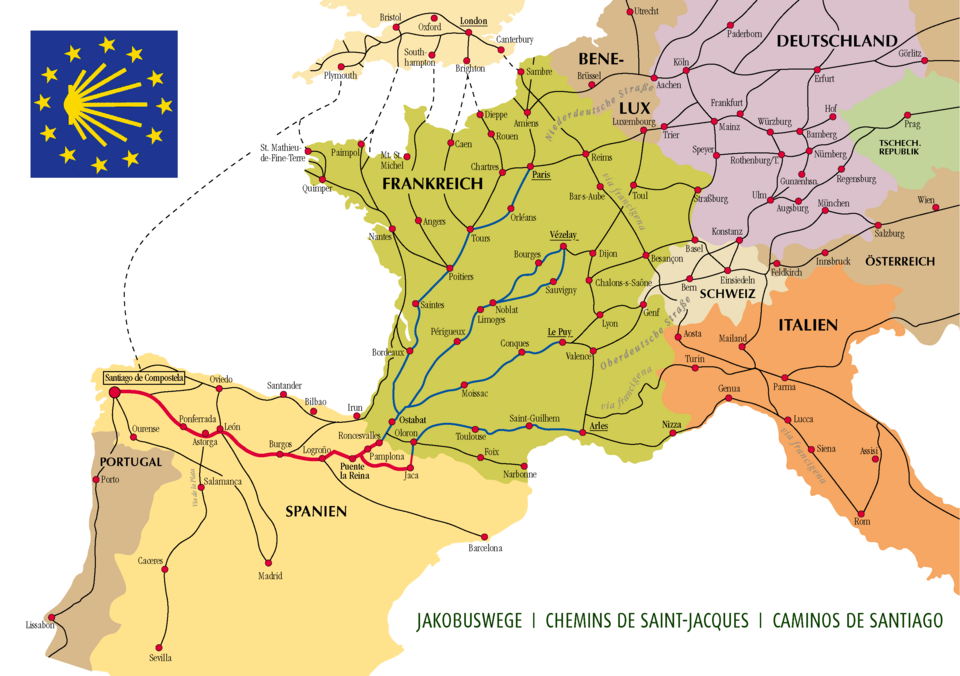 Photo: Manfred Zentgraf, Volkach, Germany · CC BY-SA 3.0Trek France & Spain
The Camino Francés: Seven Iconic Stages to Santiago
A highlights walk along the famous French Way, from crossing the Pyrenees to the Iron Cross and Galicia's green hills, ending at the cathedral of Santiago de Compostela.
- Duration
- 7 days
- Distance
- 168 km
- Difficulty
- Moderate
-
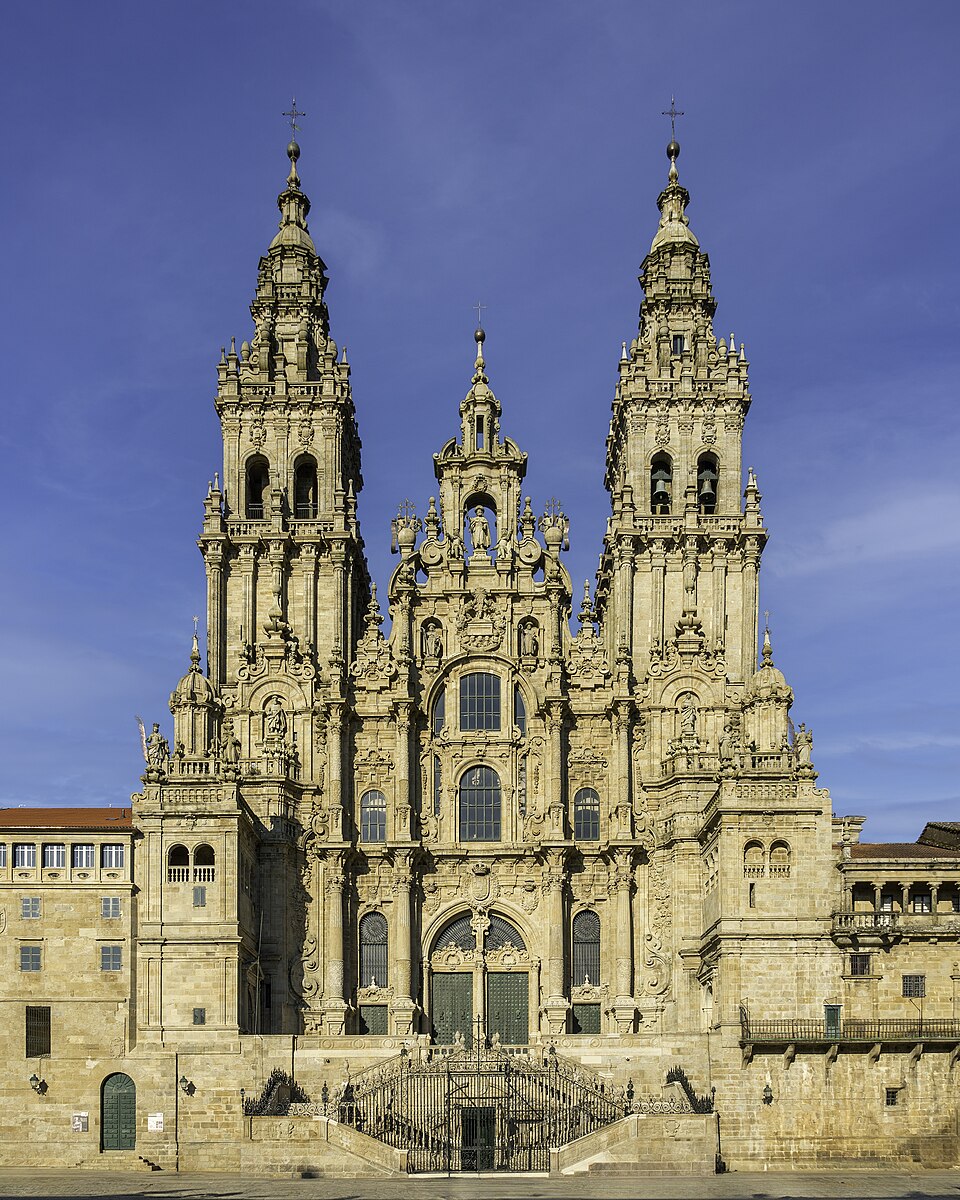 Photo: Fernando · CC BY-SA 4.0Trek Portugal & Spain
Camino Portugués — the Coastal Way Highlights
Six sampled stages of the Caminho da Costa, from Porto's boardwalks up the Atlantic shore to the Minho ferry, across into Galicia and on to the Obradoiro square at Santiago.
- Duration
- 6 days
- Distance
- 142 km
- Difficulty
- Moderate