
Blog
Camino de Santiago for Beginners: The Short Route, the Best Season and the 2027 Holy Year
In short
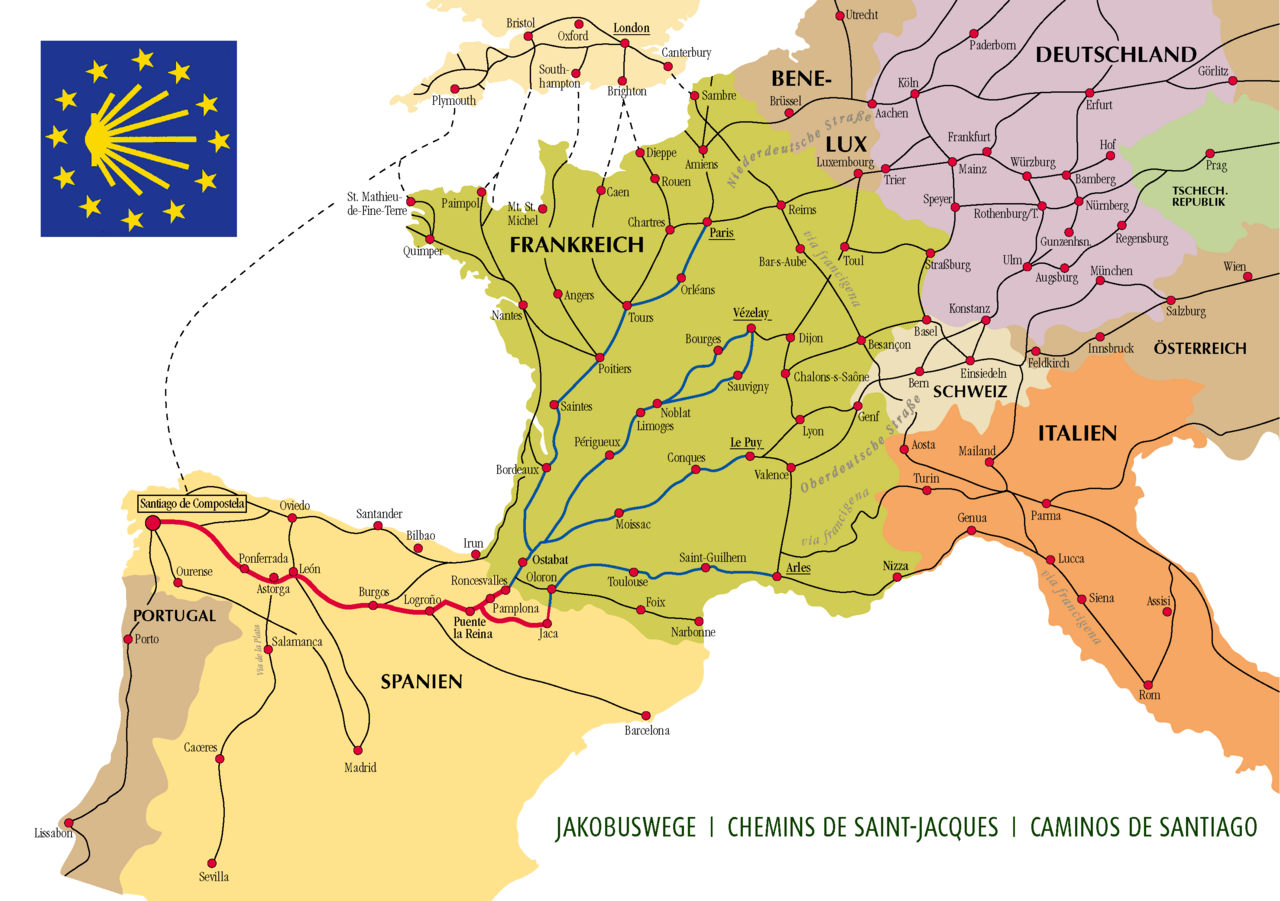
The usual short Camino is the last stretch of the French Way, from Sarria to Santiago de Compostela: about 114 km that most walkers finish in 5 to 7 days. It is also the most popular way to earn the Compostela certificate, because it meets the rule of walking at least the last 100 km. The most comfortable seasons are spring (April to June) and autumn (September and October). 2027 is a Holy Year, so book your beds earlier than usual.
The short answer
If you have one week and this is your first Camino, Sarria is the safe choice. The Santiago Ways guide rates the stretch easy to moderate, with good waymarking and plenty of albergues (pilgrim hostels), restaurants and pharmacies the whole way. Most people walk 18 to 25 km a day.
It is not a technical route and you do not need hiking experience, but you do walk several days in a row. The usual problems are blisters, building fatigue and long stages, so do some practice walks before you go and bring comfortable shoes you have already worn in.
If you would rather have more quiet, or the sea, look at the Portuguese Way. Below: three one-week options, a month-by-month guide, what the Holy Year changes, and how the certificate works.
Three options for one week
1. Sarria to Santiago (French Way)
- Distance: about 114 km, a little more or less depending on variants and where you sleep.
- Time: 5 to 7 walking days. Santiago Ways recommends 6 or 7 days for first-timers.
- Usual stages: Sarria, Portomarín, Palas de Rei, Arzúa, O Pedrouzo, Santiago. The long day is Palas de Rei to Arzúa, about 29 km, and it splits easily.
- Best for: atmosphere, lots of services and simple planning.
- Downside: it is the most popular starting point, so it gets crowded, especially in summer and in a Holy Year.
More: the French Way on Waymark and French Way tips.
2. Tui to Santiago (Portuguese Way)
- Distance: 118.8 km according to the official Camino de Santiago site of Galicia, rated medium-low difficulty.
- Time: usually 6 walking days, via O Porriño, Pontevedra, Caldas de Reis and Padrón.
- Best for: a distance similar to Sarria, medium-low difficulty and historic towns such as Pontevedra.
- Note: Tui is the first Spanish town after the route crosses the Miño river from Portugal, and a common starting point for the Compostela.
3. The Portuguese Coastal Way from Porto
- Distance: the whole Coastal Way from Porto to Santiago is about 260 km, and most walkers take 11 to 14 days. In other words, it does not fit into one week end to end.
- How to do it in a week: one option is a selection of stages, like our Coastal Way highlights route, which links six of the best days by train and bus. That is a taster, not a continuous walk, so it does not qualify for the certificate. The other option is to start in Vigo, which sits roughly at the 100 km mark. If the certificate matters to you, check that your starting point meets the distance.
- Best for: sea views, boardwalks and cooler air in summer.
The differences in brief
Sarria is the easiest to plan and the most crowded. Tui is a similar length on a different, less famous route. The coast is the most beautiful if you love the sea, but it takes more planning to fit into a week.
When to go: month by month
- January to March: winter. You can walk, but some services are more limited and the weather is less predictable.
- April to June: one of the best seasons, with more pleasant weather and a good balance between atmosphere and comfort.
- July and August: the busiest months. Long days and a lively atmosphere, but also heat, high demand and many walkers. On the Portuguese coast the sea breeze helps.
- September and October: the other best season, with fine scenery and smaller crowds than summer.
- November and December: winter again, with the same caveats as early in the year.
Between May and September, book accommodation ahead, especially in Portomarín, Palas de Rei, Arzúa and O Pedrouzo.
Holy Year 2027: what it means in practice
A Holy Year (Año Santo, or Xacobeo) happens whenever 25 July, the feast of Saint James, falls on a Sunday. In 2027 it does. According to the official Camino site of Galicia, the year opens on the evening of 31 December of the year before, when the archbishop opens the Holy Door of the cathedral, and the door stays open for 12 months. So: from 31 December 2026 to the end of 2027.
What it changes for walkers:
- Crowds: expect a busy year, especially on the last 100 km from Sarria. Book beds early, particularly for spring and autumn.
- Around 25 July: these are the peak days, with fireworks on the evening of 24 July. 25 July is also a public holiday in Galicia, so expect closures in Santiago and big crowds at the cathedral.
- A quieter road: the Portuguese Way, and the coastal route in particular, leads to the same Holy Door with less crowding than the French Way.
- If you can choose: April to June or September and October give the best balance of weather and space.
Dates and details: Camino Holy Year 2027.
The Compostela: pilgrim passport, stamps and 100 km
The Compostela is the certificate the cathedral in Santiago issues to people who complete the walk. According to the Pilgrim’s Reception Office (Oficina del Peregrino), these are the rules:
- Pilgrim passport (Credencial): get it at the Pilgrim’s Office or from authorized bodies such as parish churches, Camino associations and albergues. There is also a digital credential app.
- 100 continuous km on foot: on the same recognized route, with the final stage ending at the cathedral. By bicycle the requirement is 200 km.
- Two stamps a day: at least two per day over the last 100 km. Stamps are available at albergues, churches, hotels, town halls and many other places along the way.
- In stages is fine: if you split the walk across several trips, the sections must be in geographical and chronological order, with a dated stamp at the start and end of each stage.
Note that, according to the Pilgrim’s Office, the Compostela is given to those who walk for religious or spiritual reasons. The office also offers a separate certificate of distance. You collect the certificate at the office in Santiago with a QR queue ticket, and the office warns that at busy times same-day collection cannot be guaranteed. In a Holy Year, do not book your flight home for the same evening.
Flights and getting to Sarria from Israel
You do not need a complicated route, but plan an arrival day before you start walking.
- Nearby airports: Santiago de Compostela, A Coruña and Vigo. Santiago Ways notes that Santiago is usually the most practical for international arrivals.
- Train to Sarria: there are rail connections from Santiago, A Coruña, Ourense, Lugo and Madrid. Many walkers fly to Madrid or Santiago and continue by train.
- The day before: arrive in Sarria a day early to rest, collect your pilgrim passport and sort your pack.
- For the Portuguese Way: Porto has an international airport with a metro line into the city.
We do not list airlines or prices here, because they change. Search for a flight from Israel to one of these airports, direct or with a connection, for your dates, and leave a spare day in case of delays.
Questions
- What is the shortest Camino route?
- The usual short route is Sarria to Santiago on the French Way, about 114 km, which meets the 100 km requirement for the certificate. A similar short option is Tui to Santiago on the Portuguese Way, 118.8 km.
- How many days does the Camino from Sarria take?
- Most walkers finish in 5 to 7 days. For beginners, 6 or 7 days is recommended, at 15 to 20 km a day.
- When is the best time to walk the Camino?
- Spring (April to June) and autumn (September and October). July and August are hot and crowded, and in winter some services are reduced.
- What do you need to get the Compostela certificate?
- A pilgrim passport, at least the last 100 continuous km on foot to the cathedral in Santiago, and at least two stamps a day on that stretch. The certificate is given to those who walk for religious or spiritual reasons.
- What is a Holy Year on the Camino and when is it?
- A Holy Year is a year in which 25 July, the feast of Saint James, falls on a Sunday. The next one is 2027: the Holy Door of the cathedral opens on 31 December 2026 and stays open all year. Expect crowds and book beds early.
Sources
- Santiago Ways, Camino Francés from Sarria guide
- Pilgrim's Reception Office, The Compostela
- Pilgrim's Reception Office, The Credencial
- Pilgrim's Reception Office, FAQs
- Camino de Santiago in Galicia (Xunta), The Compostela Holy Year
- Camino de Santiago in Galicia, The Portuguese Way
- Camino de Santiago in Galicia, The Portuguese Coastal Way
- Turismo de Galicia, Camino Portugués desde Tui
- Waymark Routes, Camino Portugués Coastal Way Highlights
- Waymark Routes, Camino Holy Year 2027
Routes in this post
-
 Photo: Manfred Zentgraf, Volkach, Germany · CC BY-SA 3.0Trek France & Spain
The Camino Francés: Seven Iconic Stages to Santiago
A highlights walk along the famous French Way, from crossing the Pyrenees to the Iron Cross and Galicia's green hills, ending at the cathedral of Santiago de Compostela.
- Duration
- 7 days
- Distance
- 168 km
- Difficulty
- Moderate
-
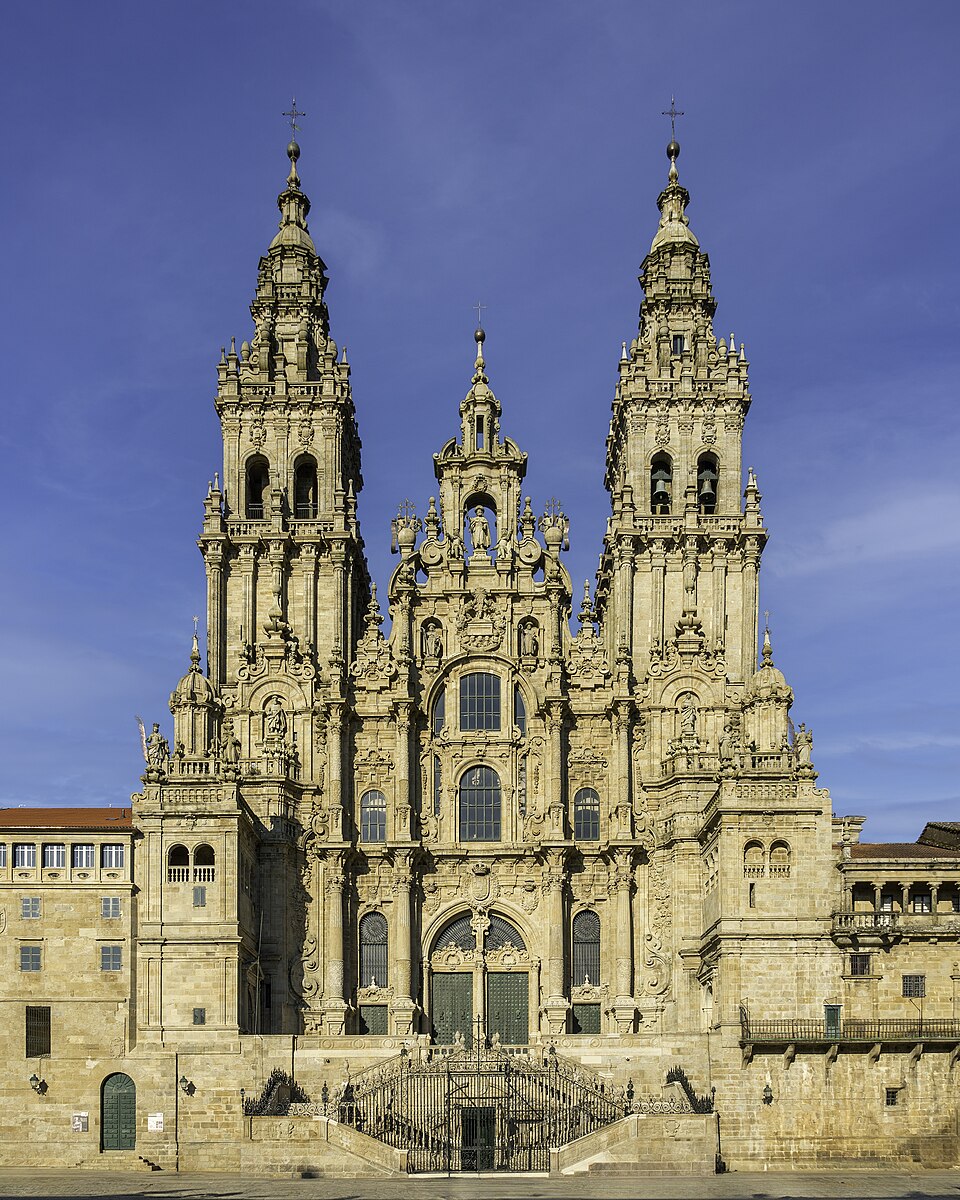 Photo: Fernando · CC BY-SA 4.0Trek Portugal & Spain
Camino Portugués — the Coastal Way Highlights
Six sampled stages of the Caminho da Costa, from Porto's boardwalks up the Atlantic shore to the Minho ferry, across into Galicia and on to the Obradoiro square at Santiago.
- Duration
- 6 days
- Distance
- 142 km
- Difficulty
- Moderate