← All routes
City walk Jerusalem — Mahane Yehuda & Nachlaot, Israel

Mahane Yehuda and Nachlaot: The Shuk by Day and by Night

Jerusalem's market at full volume, the courtyard lanes of Nachlaot behind it, and the shutter portraits that only appear after closing time.

Mahane Yehuda and Nachlaot: The Shuk by Day and by Night
Photo: Emilio García from Parla, Spain · CC BY-SA 2.0
Duration
1 days
Distance
3.5 km
Difficulty
Easy
Best season
March–May and September–November

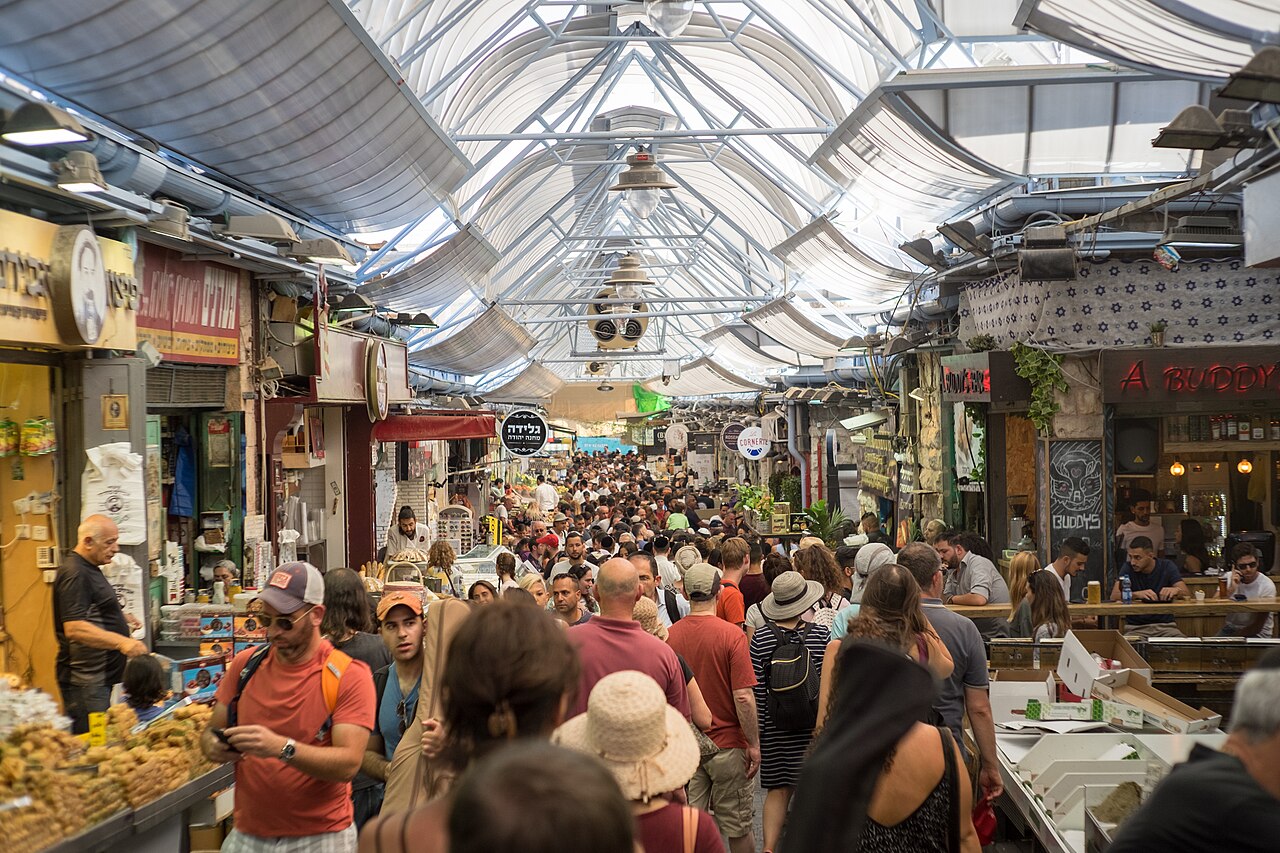
Mahane Yehuda is the loudest, most concentrated hour in Jerusalem. More than 250 vendors work two parallel spines — the covered Eitz Chaim lane and the open-air Mahane Yehuda street — selling produce, fish, cheese, spices, halva and rugelach to an estimated 200,000 people a week.

Then the stalls shut, the metal shutters come down, and painted faces appear on them. The same alleys fill with bar crowds until the small hours. Behind the market, Nachlaot’s lanes are close and quiet, an entirely different city one street over.

Getting there. The Jerusalem Light Rail red line stops at Mahane Yehuda on Jaffa Road, directly across from the market entrance.

Timing is everything on this route. Food vendors work roughly Sunday to Thursday, 8:00 to about 19:00, and Friday from 8:00 until around 15:00. The market closes for Shabbat — from Friday afternoon until Saturday night there is no market to see. Come Sunday to Thursday, and if you want both the shuk and the bar scene, arrive in the late afternoon and stay through the changeover.

Good to know:

Day 1

The market, the courtyards, and the shutters

Mahane Yehuda light rail stop → Eitz Chaim Street 3.5 km
Navigate this day

A loop from Jaffa Road into the market, out through Nachlaot, and back for the changeover from market to bars.

Segments

  1. Into the shuk 0.3 km 📍 Map

    Mahane Yehuda light rail stop → Mahane Yehuda Street

    City streets

    The market grew up in the late Ottoman period as an informal cluster of stalls and was formalised under the British Mandate. Enter from Jaffa Road and take the open-air Mahane Yehuda street first: produce stacked shoulder-high, vendors calling prices over each other, and the narrow gap down the middle that everyone somehow fits through. Give it 45 minutes without a plan.

  2. Eitz Chaim and the Iraqi market 0.4 km 📍 Map

    Mahane Yehuda Street → Eitz Chaim Street

    Covered market lanes

    Cut across to the covered lane, Eitz Chaim, and then into the side alleys. The section west of the main market was built in 1931 by about 20 traders who had been working from temporary wooden stalls; it came to be known as the Iraqi Market after the Iraqi Jewish traders who took shops there. This is where the spice merchants, the halva slabs and the old bakeries are. About 45 minutes.

  3. Nachlaot's courtyards and synagogues
    Nachlaot's courtyards and synagogues 1.2 km 📍 Map

    Eitz Chaim Street → Ohel Moshe

    Narrow lanes and steps

    Cross the road and the volume drops away. Nachlaot is a cluster of 32 neighbourhoods that grew up around the market from the 1870s onward, when Jerusalem's Jews first built outside the Old City walls. The plan is a courtyard one: houses turned inward around shared yards, reached through gates and alleys barely wide enough for two. It holds a large number of small synagogues, many founded by a single community — Aleppan, Iraqi, Persian, Yemenite — and still in use. Ohel Moshe, laid out in 1882, is the best-preserved of the courtyards. About 60 minutes wandering.

    About this place

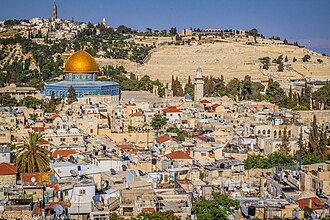
    Nachlaot is a cluster of 32 neighbourhoods, many of them courtyard neighborhoods in central Jerusalem surrounding the Mahane Yehuda Market. It is known for its narrow, winding lanes, old-style housing, hidden courtyards and many small synagogues.

    Read more on Wikipedia ↗

    Photo: User:Footballkickit · CC BY 3.0

  4. Jaffa Road
    Jaffa Road 1 km 📍 Map

    Ohel Moshe → Jaffa Road

    Pedestrian street

    One of Jerusalem's oldest and longest streets, running east to west from the Old City walls out toward the Tel Aviv highway. The central stretch is now a pedestrian and light rail corridor — the tram slides through at walking pace with no barrier between it and the crowd. Walk a section for the transition: from the courtyards, out onto the city's main commercial artery, and back toward the market as the light goes. About 30 minutes.

    About this place

    Jaffa Road, also called Jaffa Street is one of the longest and oldest major streets in Jerusalem. It crosses the city from east to west, from the Old City walls to downtown Jerusalem, the western portal of Jerusalem and the Jerusalem–Tel Aviv highway. It is lined with shops, businesses, and restaurants. It joins with Ben Yehuda Street and King George Street to form the Downtown Triangle central business district. Major landmarks along Jaffa Road are Tzahal Square, Safra Square, Zion Square, Davidka Square, the triple intersection (Hameshulash) at King George V Street and Straus Street, the Ben Yehuda Street pedestrian mall, the Mahane Yehuda market, and the Jerusalem Central Bus Station. Most of Jaffa Road has been redeveloped as a car-free pedestrian mall served by the Jerusalem Light Rail. The Jerusalem–Yitzhak Navon railway station is located directly adjacent to the Central Bus Station.

    Read more on Wikipedia ↗

    Photo: User:Ranbar · CC BY-SA 3.0

  5. The painted shutters and the bar scene
    The painted shutters and the bar scene 0.6 km 📍 Map

    Jaffa Road → Eitz Chaim Street

    Covered market lanes

    Come back after the stalls close and the market is a gallery. From January 2015 the British-Israeli street artist Solomon Souza began spray-painting portraits onto the shop shutters at night — biblical figures, rabbis, writers, Israeli cultural figures. By July 2016 he had painted more than 250 of the market's roughly 360 shutters. The same alleys now hold over 20 bars and at least 10 restaurants, most of them in units that sold vegetables eight hours earlier. The turnover from market to bar happens in the space of about an hour, and watching it is the point. Stay as long as you like.
    About this place

    Solomon Souza is a British-Israeli street artist. He is best known for spray painting portraits of contemporary and historical figures on the metal shutters of the Mahane Yehuda Market in Jerusalem, turning them into an after-hours attraction.

    Read more on Wikipedia ↗

    Photo: Utilisateur:Djampa · CC BY-SA 4.0

Comments