
Blog
Israel Desert Walks in the Cool Season
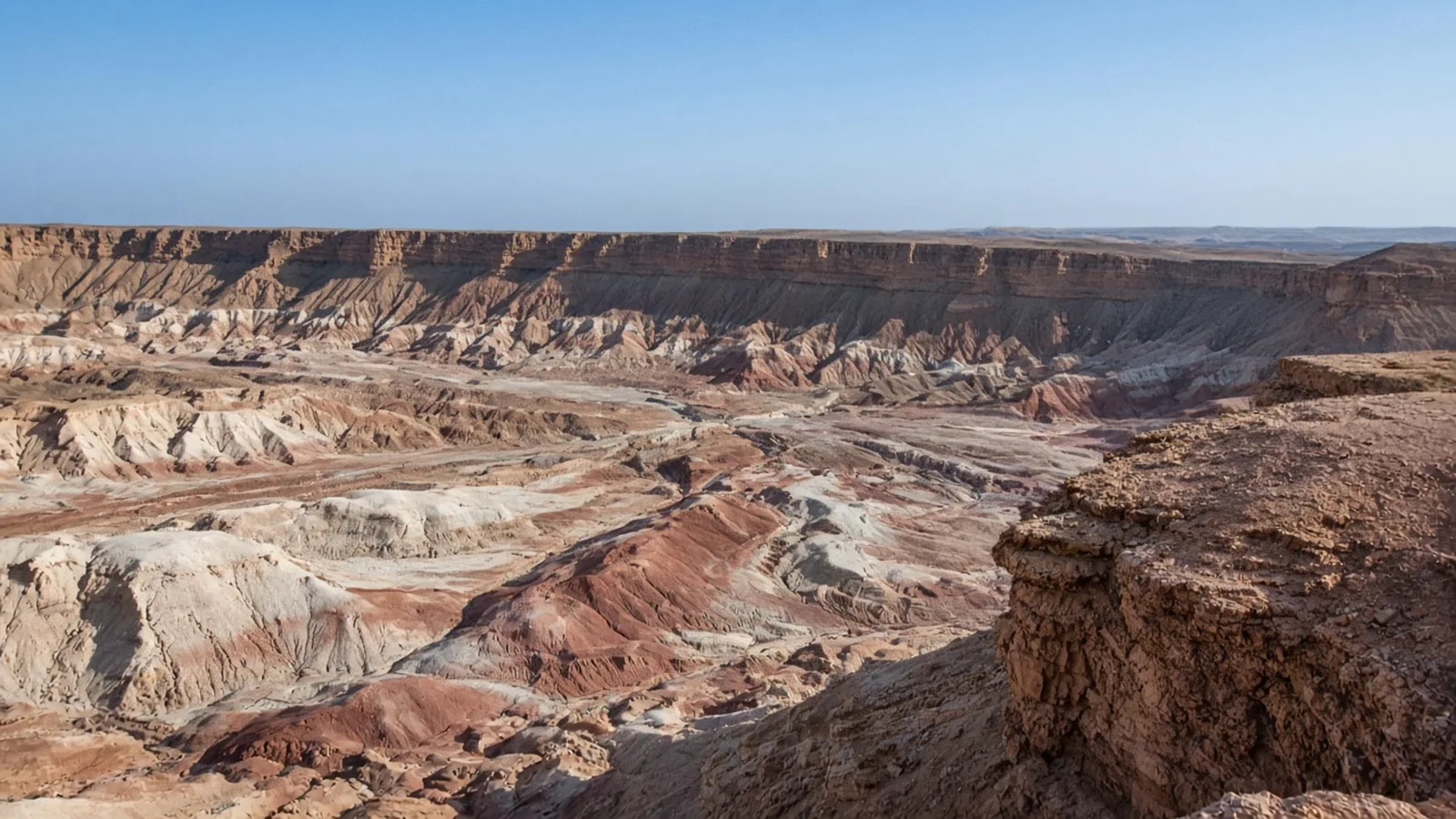
In short
Walk these desert routes from October to April. Makhtesh Ramon is 1 to 2 days, 18 km and 400 m, graded moderate. Ein Avdat is 5 km and 220 m, with a flash-flood rule. The Masada Snake Path is a pre-dawn 4 km and 350 m. Timna is 10 km and 250 m. Ein Gedi is 4 km and 200 m, graded easy. The pages call summer heat dangerous. They do not call it inconvenient.
October to April is the season
These five walks share a calendar. Waymark lists October to April for each of them. That is the cool season of the Negev, the Arava, and the Dead Sea escarpment. It is also the season in which the route pages stop describing the heat as a nuisance and start describing it as dangerous.
The grades are mostly moderate. Ein Gedi is easy. None of that grading is a summer permission. A moderate desert path in July is the hazard the pages name, on the crater floor, in a chalk canyon, on the Snake Path, in the Arava, and in the Ein Gedi gorge. Plan the walks inside October to April. Start early even then. Carry more water than the distance suggests. If the forecast puts rain over the highlands, the canyons close in your head before a ranger closes the gate.
October and April are the shoulders. January is deep in the good window. The Galilee has its own seasons, and they do not match this one: see Galilee day walks.
Makhtesh Ramon: one day on the rim, two days on the floor
Makhtesh Ramon is listed as 2 days, 18 km and 400 m of ascent, graded moderate. The season is October to April, and the page says spring and autumn are ideal. The same page says to avoid midsummer, because heat on the crater floor is genuinely dangerous.
The makhtesh is an erosion cirque, about 40 km long, 2 to 10 km wide, and some 500 m deep. Mitzpe Ramon sits on the northern rim at about 860 m. You can see the view in a single day from the rim. Two days is the version that drops onto the floor, which is the Waymark route: the place stops being a viewpoint and becomes a walk. In July and August the page’s own advice is to consider staying on the rim entirely.
Carry at least 5 litres of water per person per day. Ein Saharonim is the only natural water in the crater, and it is not a drinking supply. There is nothing to refill from once you are out there. No permit is required for the marked trails. Being inside the reserve after dark, outside a marked campground, can draw a fine. Some areas border army firing zones and open only at weekends or by advance coordination. Check before you commit to a line.
Buses reach Mitzpe Ramon from Beersheba. Inside the crater a car, or your legs, is the transport. Eighteen kilometres and 400 m is a moderate desert walk only while the air is cool enough to keep walking. The page does not offer a lighter reading of July.
Ein Avdat: five kilometres, and a flood rule
Ein Avdat is 5 km and 220 m, graded moderate, in the Wilderness of Zin south of Sde Boker. The season is October to April. Winter and early spring are best, when the pools are full and the light is long. The page says to avoid May to September, because the gorge traps heat.
The flood rule is separate from the heat rule, and it is absolute on the page. Never enter the canyon when rain is forecast anywhere over the Negev highlands. Flash floods close the park. A blue sky at the trailhead is not the forecast that matters. The forecast over the highlands is the one that fills a chalk canyon.
The walk itself is a white gorge with a spring that does not stop, a fall of about 15 m into a pool about 8 m deep, and ibex on the ledges. The pools are off limits. Rangers enforce that. There is a lower entrance, which gives you the streambed, and an upper entrance that is a viewpoint only. In high season the park runs one-way, north to south: enter low, walk up, climb the ladders to the rim, and have a car or a lift at the upper gate. Without that, walk in and back the same way. Gates typically close mid-afternoon. Last entry is earlier. Passover week queues on the ladders.
Five kilometres still wants more water than the number suggests. There is no shade on the rim, and none of the water in the canyon is for drinking.
The Masada Snake Path starts in the dark
The Masada Snake Path is 4 km and 350 m, graded moderate. The season is October to April. The page says summer is dangerously hot, and it says to start before dawn.
The path folds up the eastern face from the Dead Sea side to Herod’s fortress plateau. The classic plan is to climb in the dark and reach the top for sunrise, when the light hits the Dead Sea and the mountains of Moab. The gate opens one hour before sunrise for that reason. Check the seasonal hours. The gate is closed in extreme heat, which is the park refusing the walk, not a suggestion to come back at noon.
Carry at least 2 to 3 litres per person. There is no water on the trail. A headlamp is part of the kit for the pre-dawn start, along with a hat and proper shoes. The cable car is the descent if your knees want it. The Snake Path is the eastern climb, about 20 minutes south of Ein Gedi on Route 90.
Timna is a full day in the Arava
Timna Park is 10 km and 250 m, graded moderate, in one day. The season is the cool season, October to April. The page says to avoid the extreme summer heat of the Arava.
The park sits about 30 km north of Eilat, a valley of red sandstone that shifts to yellow, orange, grey, and black, with ancient copper workings, the Arches, and Solomon’s Pillars. The Waymark day links the Mushroom, the mines, the Arches, the Pillars, and the lake, about 6 to 7 hours on foot. Carry at least 3 litres per person, a hat, and sun cover, and start early. The Arches use fixed iron ladders and rungs. They are straightforward, and they are a poor idea if heights are already a problem. An artificial lake near the exit is the rest and refill. Ten kilometres at 250 m is a moderate grade in the cool season. The Arava in summer is the extreme heat the page tells you to avoid, and the word extreme is the page’s word.
Ein Gedi is the easy walk, in the same season
Ein Gedi, the Nahal David circuit, is 4 km and 200 m, graded easy. The season is October to April. The summer line on the page matches Masada’s: dangerously hot, and start early in the morning even when you are inside the season.
The canyon is the oasis: reeds, ferns, the David Waterfall, ibex, and hyraxes, a few kilometres from the Dead Sea. Swimming is allowed in the pools below the waterfall. The stream is not drinking water. There is an entrance fee, and admission stops a few hours before closing. A bus from Jerusalem, Beersheba, or Eilat can drop you at the gate. The lower trail is busy by mid-morning, so the early start is about heat and about the queue.
Easy is the right grade for the footing and the distance. It is not a permission to move the walk into July. Four kilometres of shade still sits in a desert that the page calls dangerously hot in summer. Treat Ein Gedi as the short cool-season morning beside Masada, not as the walk that “should be fine” when the others are not.
Shorter famous walks in other countries are collected in short walks of ten kilometres or less. Ein Gedi is on that list too. The season rule travels with it.
A cool-season week, written against the heat
A sensible October-to-April chain is the Ramon rim or the two-day floor route, Ein Avdat on a dry forecast, a pre-dawn Snake Path, Timna if you are already near Eilat, and Ein Gedi as the short green morning. Carry the water each page names: 5 litres a day on the Ramon floor, 2 to 3 litres on the Snake Path, 3 litres at Timna.
The pages do not soften the other half of the year. Ramon calls the crater-floor heat genuinely dangerous and, in July and August, points you to the rim. Ein Avdat says avoid May to September, and never enter on a highland rain forecast. Masada, Timna, and Ein Gedi call the summer heat dangerous, extreme, or both. A discounted hotel in August is not a rebuttal.
If the dates you hold are May through September, choose a different map. The Galilee has a few shaded walks that stay open, and Nahal Yehudiya wants the warm months because it is a swim. The desert circuit in this article does not.
Questions
- When is the cool season for these desert walks?
- October to April. That is the listed season for Makhtesh Ramon, Ein Avdat, the Masada Snake Path, Timna, and Ein Gedi. Spring and autumn are the ideal ends of it. Midsummer on the Ramon crater floor is described as genuinely dangerous.
- Can you walk Ein Avdat if rain is forecast?
- No. The page says never enter the canyon when rain is forecast anywhere over the Negev highlands. Flash floods close the park. The walk itself is 5 km and 220 m, graded moderate, and the pools are off limits.
- How should you start the Masada Snake Path?
- Before dawn. The gate opens one hour before sunrise so you can reach the plateau for sunrise. The route is 4 km and 350 m, graded moderate. Summer is dangerously hot, and the gate closes in extreme heat. Carry at least 2 to 3 litres. There is no water on the trail.
- Is Ein Gedi easier than the other desert walks?
- It is the only one graded easy: 4 km and 200 m, in October to April. The summer warning is the same kind of sentence as on Masada. The heat is dangerously hot, and a cool-season start is still an early start.
Sources
Routes in this post
-
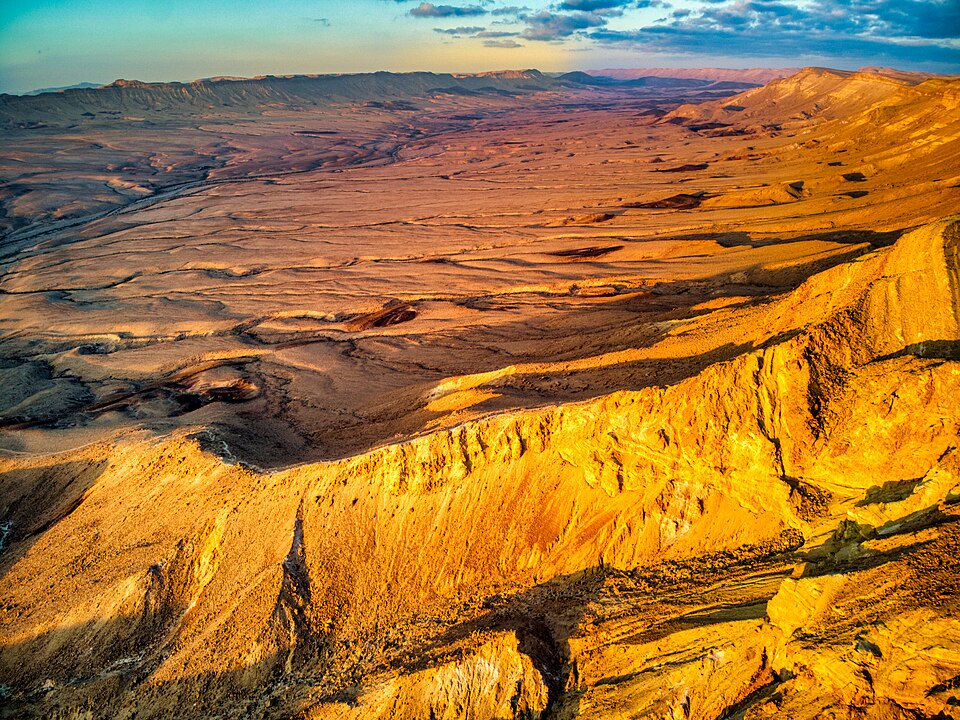 Photo: Hagai Agmon-Snir حچاي اچمون-سنير חגי אגמון-שניר · CC BY-SA 4.0Trek Israel
Makhtesh Ramon — Rim to Crater Floor
One to two days in the world's largest erosion crater: the rim promenade at Mitzpe Ramon, the prismatic stone columns of the Carpentry, the coloured sands of the Ardon valley and the desert spring at Ein Saharonim.
- Duration
- 2 days
- Distance
- 18 km
- Difficulty
- Moderate
-
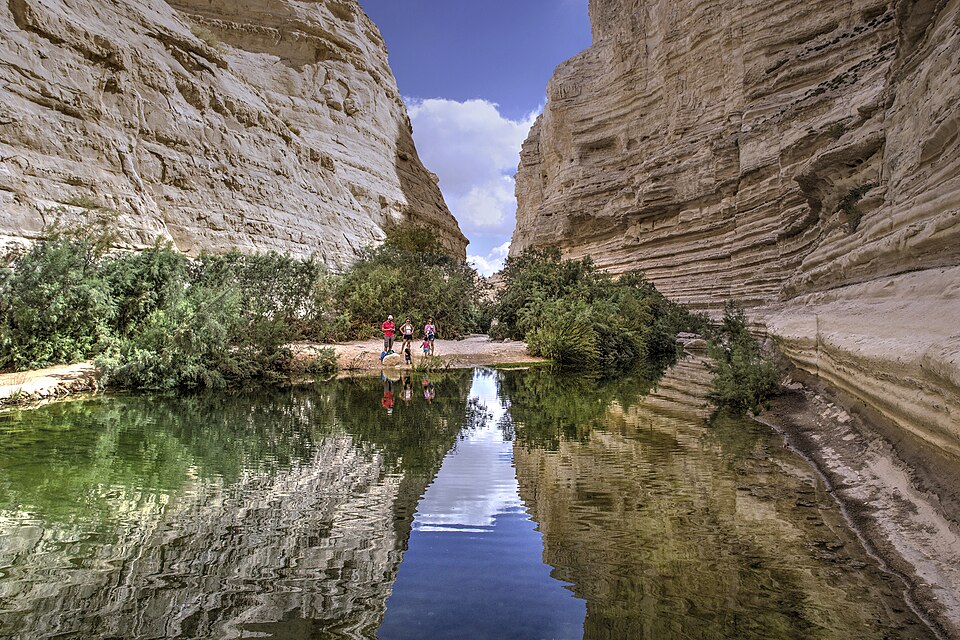 Photo: Hanan epstein · CC BY-SA 4.0Trek Israel
Ein Avdat: The White Canyon of Zin
A short, vertical day in the Negev — a white chalk gorge with a 15-metre waterfall, spring-fed pools, Byzantine monks' caves and a ladder climb out onto the rim above the Wilderness of Zin.
- Duration
- 1 day
- Distance
- 5 km
- Difficulty
- Moderate
-
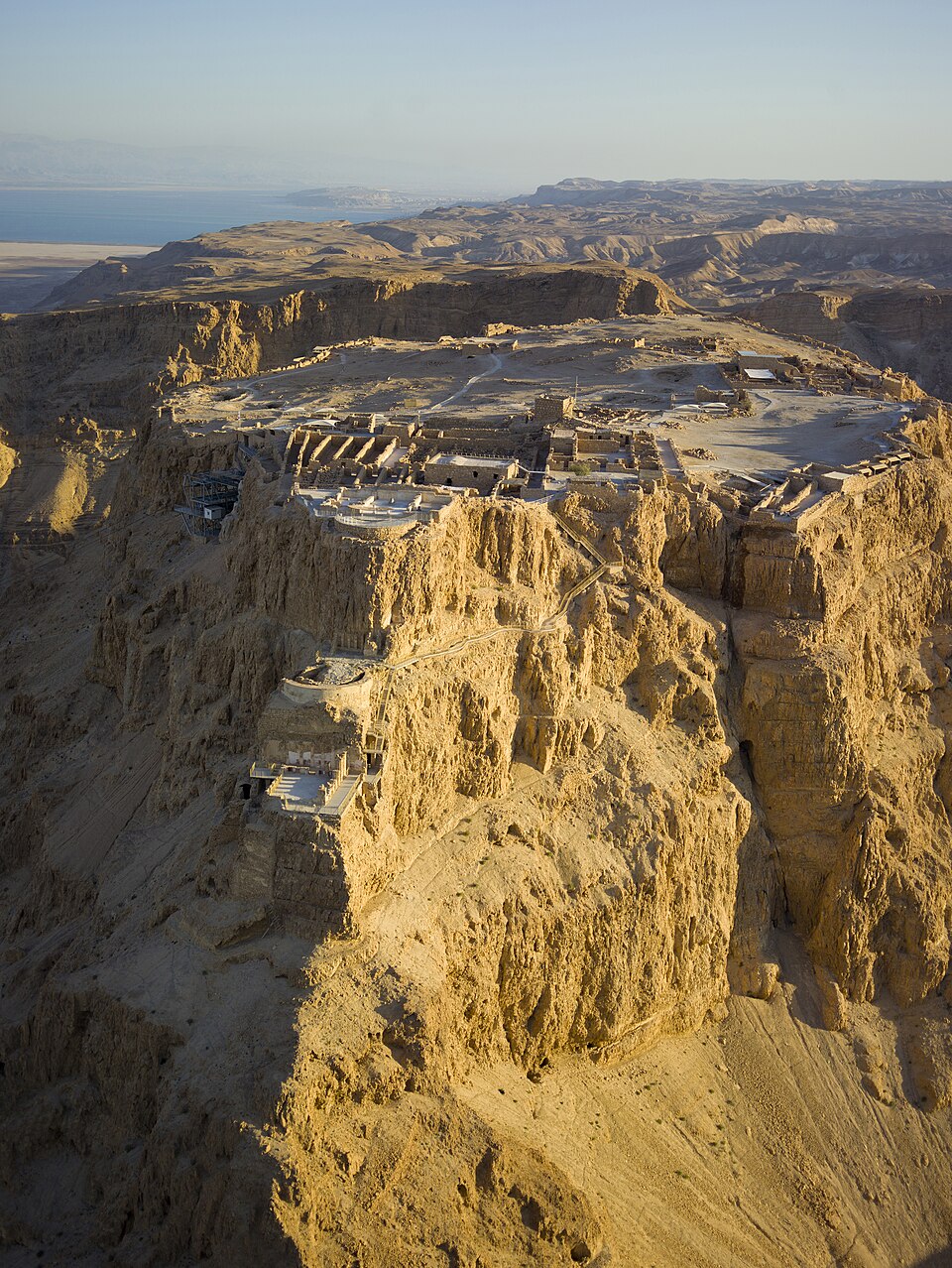 Photo: Godot13 · CC BY-SA 4.0Trek Israel
Masada Snake Path: Sunrise Ascent to the Desert Fortress
A pre-dawn climb up the winding Snake Path from the Dead Sea shore to reach Herod's cliff-top fortress just as the sun breaks over the desert.
- Duration
- 1 day
- Distance
- 4 km
- Difficulty
- Moderate
-
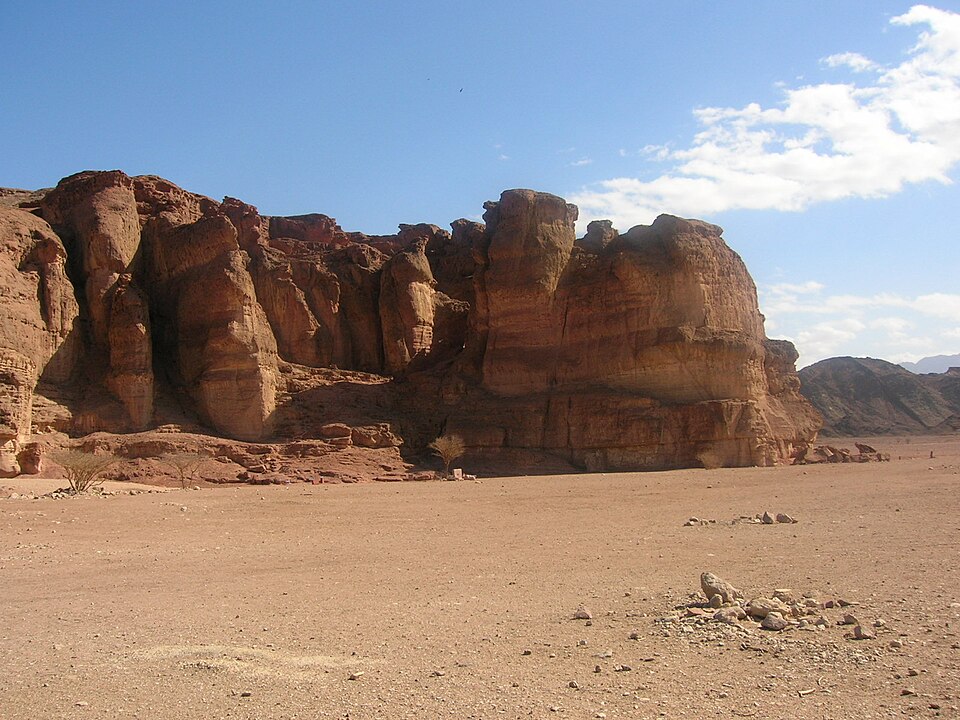 Photo: Little Savage · Public domainTrek Israel
Timna Park — Copper, Sandstone and Solomon's Pillars
A full day threading the red sandstone of the southern Negev: the Mushroom, the Arches, ancient Egyptian copper mines and rock carvings, and the towering Solomon's Pillars.
- Duration
- 1 day
- Distance
- 10 km
- Difficulty
- Moderate
-
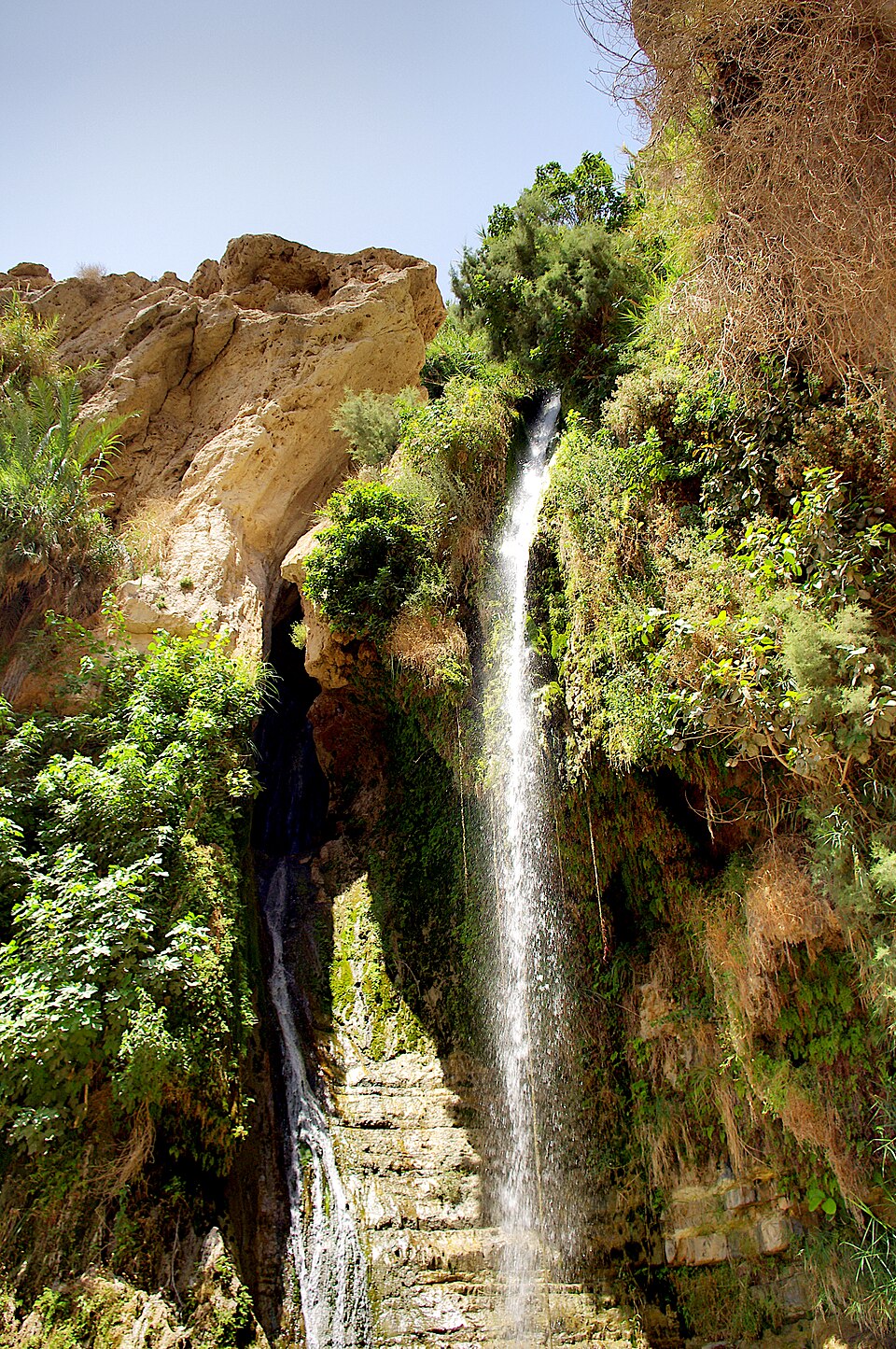 Photo: Jan Helebrant · CC0Trek Israel
Ein Gedi Nature Reserve: Nahal David and the David Waterfall
A short, water-rich hike up a desert canyon to the David Waterfall, then higher to a hidden cave, a spring and a 5,000-year-old temple above the Dead Sea.
- Duration
- 1 day
- Distance
- 4 km
- Difficulty
- Easy