
Blog
Grand Canyon Rim-to-Rim in Three Days
In short
Grand Canyon rim-to-rim is a hard three-day walk of 38 km and 1,450 m, from the North Rim down the North Kaibab to Phantom Ranch and up Bright Angel to the South Rim. The North Rim season is roughly mid-May to mid-October. Go in late spring or early autumn, and do not try it in one hot summer day.
Three days, north to south, and not in the July heat
Rim-to-rim is a hard three-day crossing: 38 km and 1,450 m of ascent, down the North Kaibab Trail from the North Rim, along Bright Angel Creek to Phantom Ranch, then up the Bright Angel Trail to the South Rim. The North Rim and the corridor are open roughly mid-May to mid-October. The months on the route are May to October. Late spring and early autumn are the weeks to go. The inner canyon in summer is extreme heat, with long stretches of no shade, and the Park Service warns against doing the crossing in a single day in that heat. This itinerary is three days because the climb out is the work. Feeling strong at the river is not information. Most rescues are strong walkers who descended fast and had nothing left for the climb.
The two rims are about 16 km apart on foot and about four and a half hours apart by road. Start on the North Rim so the big descent comes first and the finish is the more accessible South Rim. The whole plan hangs on a seat on the Trans-Canyon Shuttle, or a car staged at each end. Book that before you lock anything else. The shuttle has historically run in the North Rim season and fills well ahead. The day hikes in the same region are a different trip: Southwest canyon day hikes.
Water, heat, and the booking that actually constrains you
Overnight trips need a backcountry permit. Beds at Phantom Ranch are allotted by a lottery run in the 15th month before your stay. Unclaimed spots are released to general sale about a year out, which is the second chance. Capacity has also been reduced during renovation, so read the current lottery rules, and keep Bright Angel Campground as the fallback if the beds are gone. This page does not quote lodge prices. The concession sets them, they move, and a guessed number would be a fiction.
The 2025 Dragon Bravo Fire burned the historic Grand Canyon Lodge and much of the North Rim forest. The rim has been reopening in stages since, with reduced services and no in-park lodging on that side. The trails came back before the amenities. Read the park’s current North Rim operations page before an itinerary assumes a meal, a bed, or a full visitor service at the top.
Corridor taps run off the ageing Transcanyon Waterline. It breaks, it is being replaced, and stations are switched on and off through the season. The park posts a live water status page. Check it the day you start, plan the day around the taps that are actually running, and carry a filter or treatment as the backstop. Carry more water than feels reasonable anyway, and drink it. You can leave a chilly forested rim near 2,500 m and be in desert heat at the river the same day. Sun protection, electrolytes and layers all belong in the pack, often all of them in the same afternoon.
In summer the standing advice is to avoid walking between mid-morning and late afternoon. The Box, the narrow stretch of the North Kaibab above Phantom Ranch, is a heat trap: the walls radiate stored heat all afternoon. Experienced canyon hikers take the advice literally. They walk by headlamp around 4 am, take a long break at Cottonwood or Havasupai Gardens, and finish in the evening cool. On any day hike below the rim, set a hard turnaround time. Down is optional. Up is mandatory.
The three days
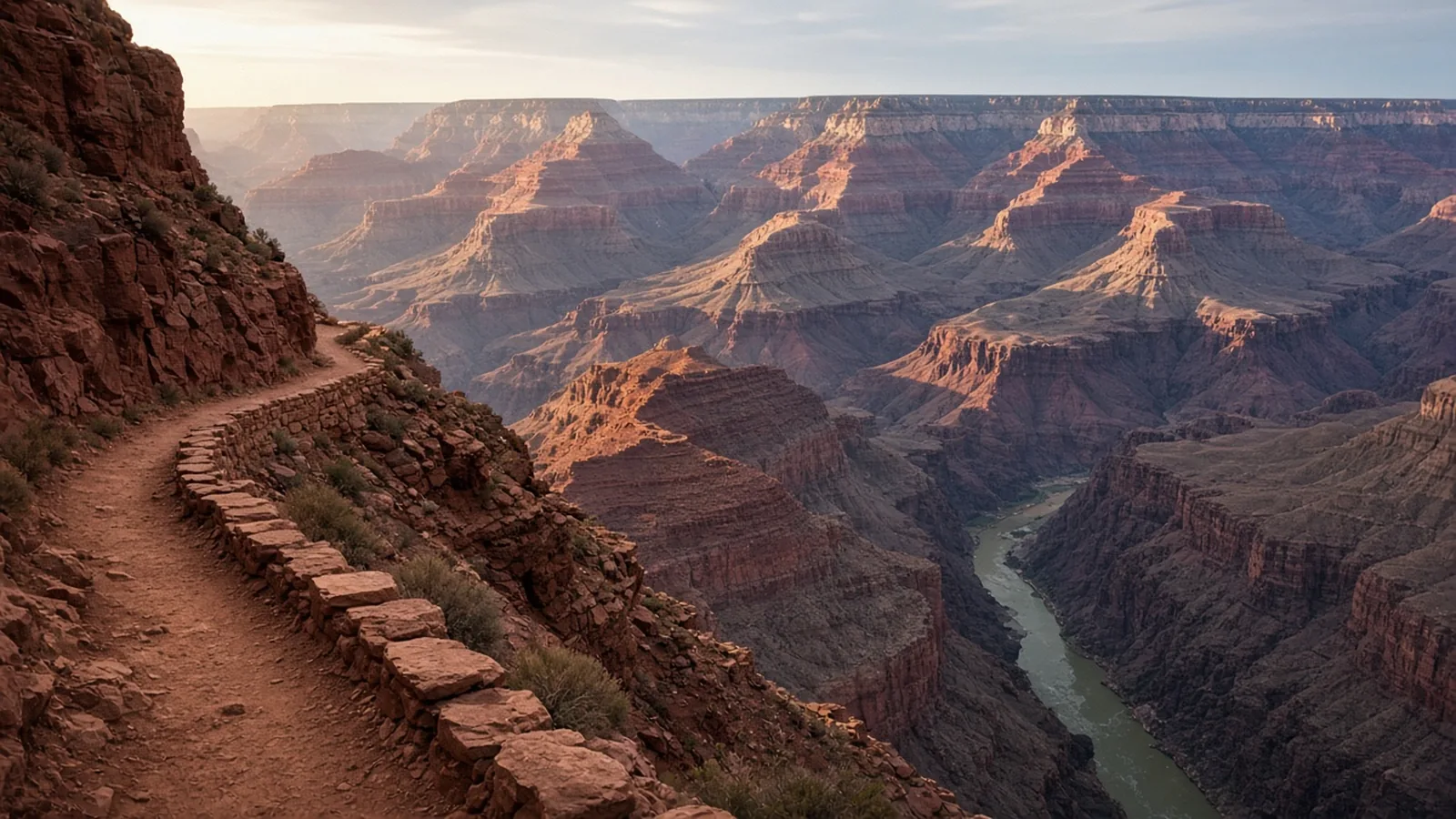
Day one is the North Kaibab trailhead, at 2,510 m, to Cottonwood Campground. About 11 km, mostly steeply downhill, losing over 1,200 m. You drop through fir and aspen to Supai Tunnel, which is blasted through the cliff and has water and the first real view. Then the trail is cut into the wall to Roaring Springs, where water bursts from the rock, the source that supplies both rims. Then Bright Angel Creek leads down, hotter and drier, to Cottonwood, the usual first camp. The knees take this day. The shade is better early. Do not treat the small ascent figure as an easy day. The descent is the load.
Day two is Cottonwood to Phantom Ranch, about 11 km of gentler descent. A short spur reaches Ribbon Falls, a mossy cascade worth the stop. Then the trail enters The Box, sheer rock close on both sides, and comes out at Bright Angel Campground and Phantom Ranch beside the Colorado. This is the day that looks kind on a map and punishes a late start. Be through The Box before the walls have been baking.
Day three is Phantom Ranch to the South Rim, about 16 km, gaining over 1,300 m, and it is the longest day. Cross the Colorado on the Silver Bridge, climb to the River Resthouse, then the Devil’s Corkscrew and Garden Creek to Havasupai Gardens, formerly Indian Garden: water, a restroom, campsites, and the midpoint of the ascent. The last 6.5 km switchback past the Three-Mile and Mile-and-a-Half Resthouses to the Bright Angel trailhead in Grand Canyon Village, at about 2,090 m. In warm months, start before dawn. The page’s stage time is on the order of eight hours of actual climbing once you add the pieces. Believe the climb, not the morning you felt at the river.
When to go, and when to wait
Aim at the cooler ends of the North Rim season. May after the rim opens, June early if the heat is still reasonable, then September and October before the rim closes in the middle of the month. July and August are inside the open window and they are the weeks the page tells you to treat as a heat problem, not as the default. Outside mid-May to mid-October the North Kaibab trailhead is snowbound. A South Rim day hike is a different route. It is not a winter rim-to-rim with the north side skipped.
If the lottery, the shuttle and the water status are not settled, you do not have a plan yet. You have a wish to cross the canyon. Sort them in that order: the link between the rims, the permit or the camp, the month at the cool end of the season, then the fitness to climb out after two days of descent. The other walks in the Southwest are on trails and on the map. They are good trips. They are not this one squeezed into a spare afternoon.
Questions
- How many days does rim-to-rim take?
- Three. Day one is the North Rim to Cottonwood, day two is Cottonwood to Phantom Ranch, and day three is the long climb up Bright Angel to the South Rim. The Park Service warns against a single-day crossing in summer heat.
- When is the best time to cross?
- Inside the North Rim season, roughly mid-May to mid-October, and at the cooler ends of it: late spring and early autumn. Midsummer in the inner canyon is extreme heat with little shade.
- How do water and bookings work?
- Overnight trips need a backcountry permit, and Phantom Ranch beds are a lottery. Corridor taps switch on and off, so check the live water status the day you start and carry treatment. This page does not quote lodge prices.
- Is the North Rim back to normal after the 2025 fire?
- Not fully. The Dragon Bravo Fire burned the Grand Canyon Lodge and much of the forest. The rim has been reopening in stages, with reduced services and no in-park lodging. Read the current operations page before you assume services at the top.
- Which direction should I walk?
- North to south. You descend the higher North Rim first and finish at the more accessible South Rim. Book the Trans-Canyon Shuttle, or stage a car at each end, before the rest of the plan.
Sources
Routes in this post
-
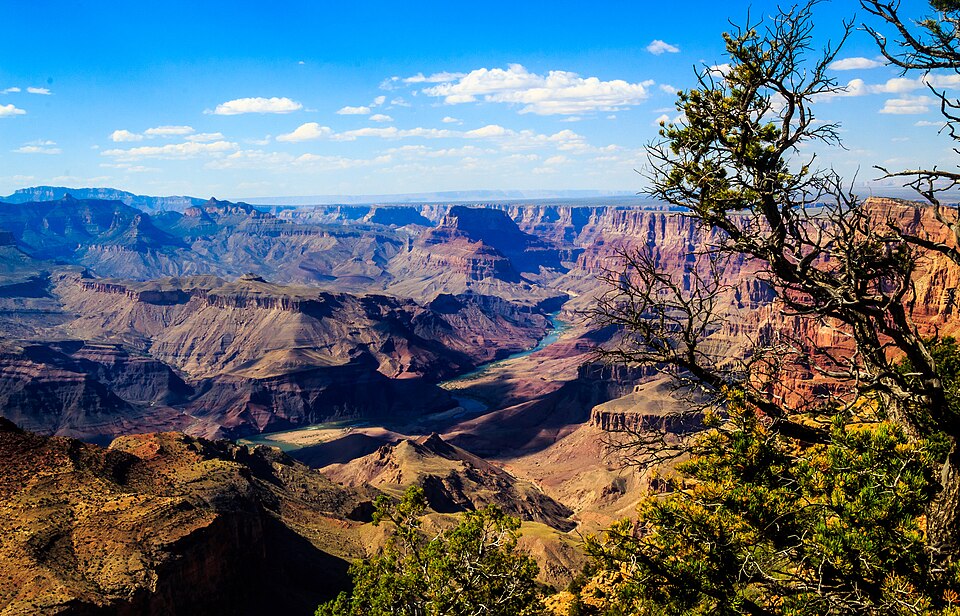 Photo: Lennart Sikkema · CC BY 3.0Trek USA
Grand Canyon Rim-to-Rim — North Kaibab to Bright Angel
The classic crossing of the Grand Canyon: down the North Kaibab Trail from the cool, forested North Rim to the Colorado River at Phantom Ranch, then up the Bright Angel Trail to the South Rim.
- Duration
- 3 days
- Distance
- 38 km
- Difficulty
- Hard