
Blog
Everest Base Camp or Annapurna Base Camp
In short
Both are graded hard. Everest's highlights are 8 days, about 110 km and 3,200 m of ascent, to 5,364 m, in March to May and from late September to November. Annapurna is 7 days, about 90 km and 5,000 m, to 4,130 m, in October to November and March to April. September is not Annapurna season.
The higher camp is not the one with more climbing
Both of these are graded hard, and the numbers people use to rank them point in opposite directions. Everest Base Camp, on this highlights itinerary, is eight days, about 110 km and about 3,200 m of ascent, and you sleep at 5,364 m. Annapurna Base Camp is seven days, about 90 km and about 5,000 m of ascent, and the sanctuary is at 4,130 m. Everest is the higher night. Annapurna is the larger amount of up and down. If you came to this page hoping one of them was the easy famous trek, it is not here.
Choose Everest if the goal is that altitude, and you can live with a compressed highlights pace in March to May or from late September to November. Choose Annapurna if you want the amphitheatre of peaks and you can take the bigger climbing total, in October to November or March to April. Do not book Annapurna for September because Everest’s autumn has started. Those calendars are not the same sentence.
Everest: height first
The walk starts with the flight to Lukla, at 2,860 m, and follows the Sherpa valleys through Namche Bazaar, Tengboche, Dingboche, Lobuche and Gorak Shep to the glacier. This page is an eight-day highlights version for people who are already fit and short of time. The classic route inserts extra days at Namche and Dingboche. This one does not. Altitude, not the kilometre count, is the difficulty the page names. Walk slowly. Turn back if symptoms show. A spare day, if you can add one, is the margin the compression removes.
Base camp at 5,364 m does not give you the view of the summit. That is Kala Patthar, at 5,545 m, the viewpoint above Gorak Shep. People who imagine standing at the tents and seeing the top are imagining a different photograph. Build that hour into the plan, and build the acclimatisation honesty in before it.
Permits are the Sagarmatha National Park entry and the local Khumbu municipality permit. The municipality permit is issued in the region, at Lukla or Monjo, not as a piece of paper you sort from home months ahead in the way an Inca permit is. Nepal has required a licensed guide in most national parks since 2023. The Khumbu municipality has not adopted that rule, so walking without a guide has remained legal here. A guide is still what the page strongly recommends, and the rule is worth confirming when you book, because it has moved before. This is not a trek to invent as a solo plan on the strength of one paragraph.
The seasons are pre-monsoon spring, March to May, and post-monsoon autumn, late September to November. October is the heart of the autumn. Early September is not yet it. July is monsoon, and it is the wrong month. The wider calendar is Where to walk in October for the autumn middle, and Where to walk in March for the spring.
Annapurna: climbing first
The sanctuary is a high basin about 40 km north of Pokhara, ringed by the Annapurna peaks, with one way in: the gorge of the Modi Khola between Hiunchuli and Machapuchare. You walk up that gorge for days, and then it opens. Base camp at 4,130 m is the centre of the ring. You sleep there and you walk back out the same way. It is a dead end on purpose. There is no pass to somewhere else.
The page is plain about which day is the hard one. The route is a rollercoaster. The descent to the Chhomrong Khola and the climb back out is what breaks people, not the modest-sounding camp altitude. Five thousand metres of ascent over seven days is the figure to respect. From Bamboo upward the height comes on quickly. Drink, walk slowly, and take the extra night at Chhomrong if you feel the need. Machapuchare, at 6,993 m, is the fishtail above you. It is sacred, it is closed to climbers, and the walk does not try to change that.
Teahouses run the whole route. You do not need a tent or a stove. You do need the Annapurna Conservation Area permit, issued in Pokhara or Kathmandu before you start. That is the permit the checkpoints ask for. Other paperwork, including what a guide requirement looks like this year, has changed more than once since 2023. Confirm it when you book. Above Deurali the trail crosses avalanche paths. In snow that section is genuinely dangerous. Ask at the lodges, and cross early in the day. Deep winter is when that warning is sharpest. The monsoon months are a different warning, and they include the whole of September.
The seasons are October to November and March to April. October is the opening of the autumn, which is why this trek belongs in Where to walk in October and not in Where to walk in September. A September Annapurna booking is a booking in the months the page tells you to avoid.
Where the calendars overlap, and where they do not
Put the two seasons on one line. March and April: both. May: Everest, not Annapurna. June through early September: neither. Late September: Everest starts, Annapurna does not. October and November: both, and November is the end of each autumn window as written. Deep winter above Deurali is an Annapurna-specific snow problem. Everest’s gap is simply “not in the listed seasons.”
The practical effect is that a flexible traveller in October can choose on the merits of the walk. A traveller in May can choose Everest and should not talk themselves into the sanctuary. A traveller in September has, at most, the late-month Everest start, and has no Annapurna season at all. July is a confident no to both, which is the subject of Where to walk in July.
A plain way to decide
Take Everest if you want the higher camp, you understand that 5,364 m is the point and also the risk, and your dates sit in March to May or from late September through November. Treat the eight days as a highlights pace for someone who already knows how they feel at altitude. Add a day if you are guessing.
Take Annapurna if you want the circle of peaks at 4,130 m, you can absorb about 5,000 m of climbing in a week, and your dates are October to November or March to April. Do not choose it because 4,130 sounds softer than 5,364. The climbing total says otherwise, and the grade is hard either way.
Take neither one as a monsoon gamble, and take neither one as a winter experiment above the lodges that told you the snow was in. The mountains will still be there in the months the pages actually name.
Questions
- Which base camp trek is harder?
- Both are graded hard, in different ways. Everest reaches 5,364 m on about 3,200 m of climbing. Annapurna stops at 4,130 m but gains about 5,000 m. The higher camp is not automatically the bigger week of ascent.
- Can you do both in September?
- Everest's autumn starts in late September and runs to November. Annapurna's autumn is October to November. The page says to avoid the June to September monsoon on Annapurna. Early September is neither trail's season.
- Do you need a guide?
- For Everest, the Khumbu has not adopted Nepal's wider guide rule, so independent trekking has remained legal, and a guide is still strongly recommended. For Annapurna, confirm the current rule when you book. Both need their park or area permits.
- Is Annapurna the easier choice because the camp is lower?
- No. The sanctuary is lower, at 4,130 m, and the week climbs more. The day that breaks people is the drop and climb at the Chhomrong Khola, not a single high pass. Read the ascent, not only the sleeping height.
Sources
Routes in this post
-
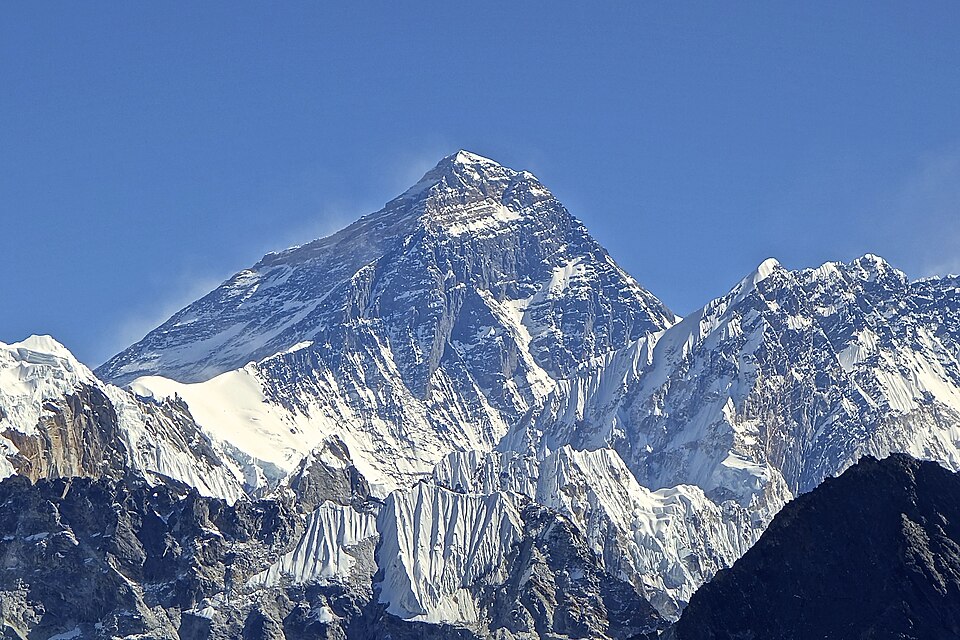 Photo: Rdevany · CC BY-SA 3.0Trek Nepal
Everest Base Camp Trek: The 8-Day Highlights
An accelerated highlights version of the classic trek through the Khumbu — from the airstrip at Lukla up the Sherpa valleys to the foot of the world's highest mountain at 5,364 m.
- Duration
- 8 days
- Distance
- 110 km
- Difficulty
- Hard
-
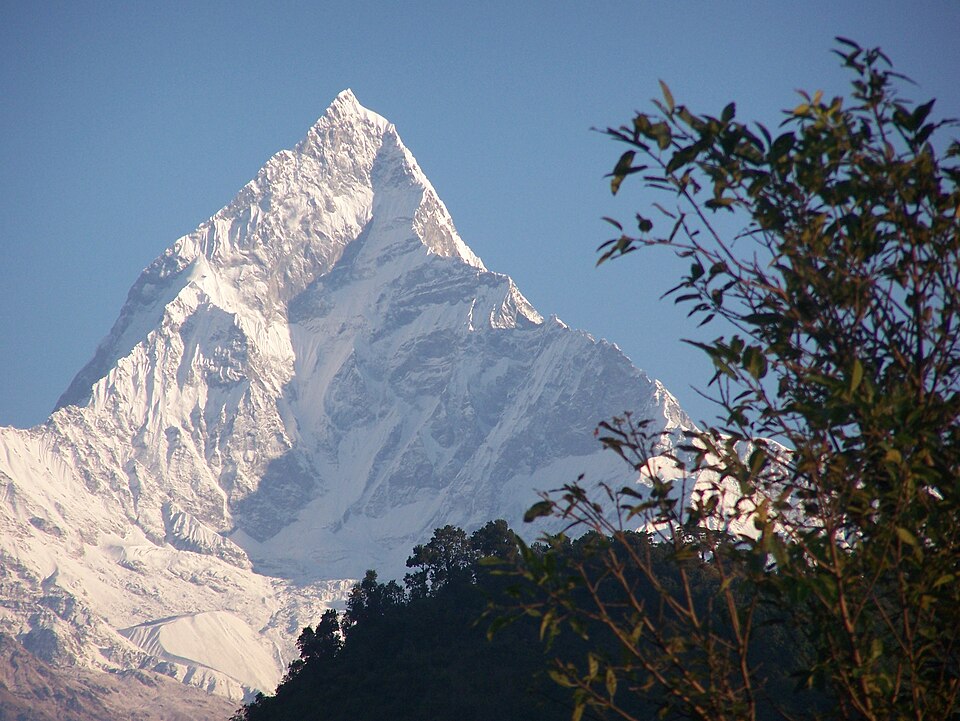 Photo: Nancy Collins · CC BY-SA 3.0Trek Nepal
Annapurna Base Camp — the Sanctuary Trek
Seven days from terraced Gurung villages up a hidden gorge into the Annapurna Sanctuary, an amphitheatre of 7,000-metre peaks closing a full circle around base camp at 4,130 m.
- Duration
- 7 days
- Distance
- 90 km
- Difficulty
- Hard