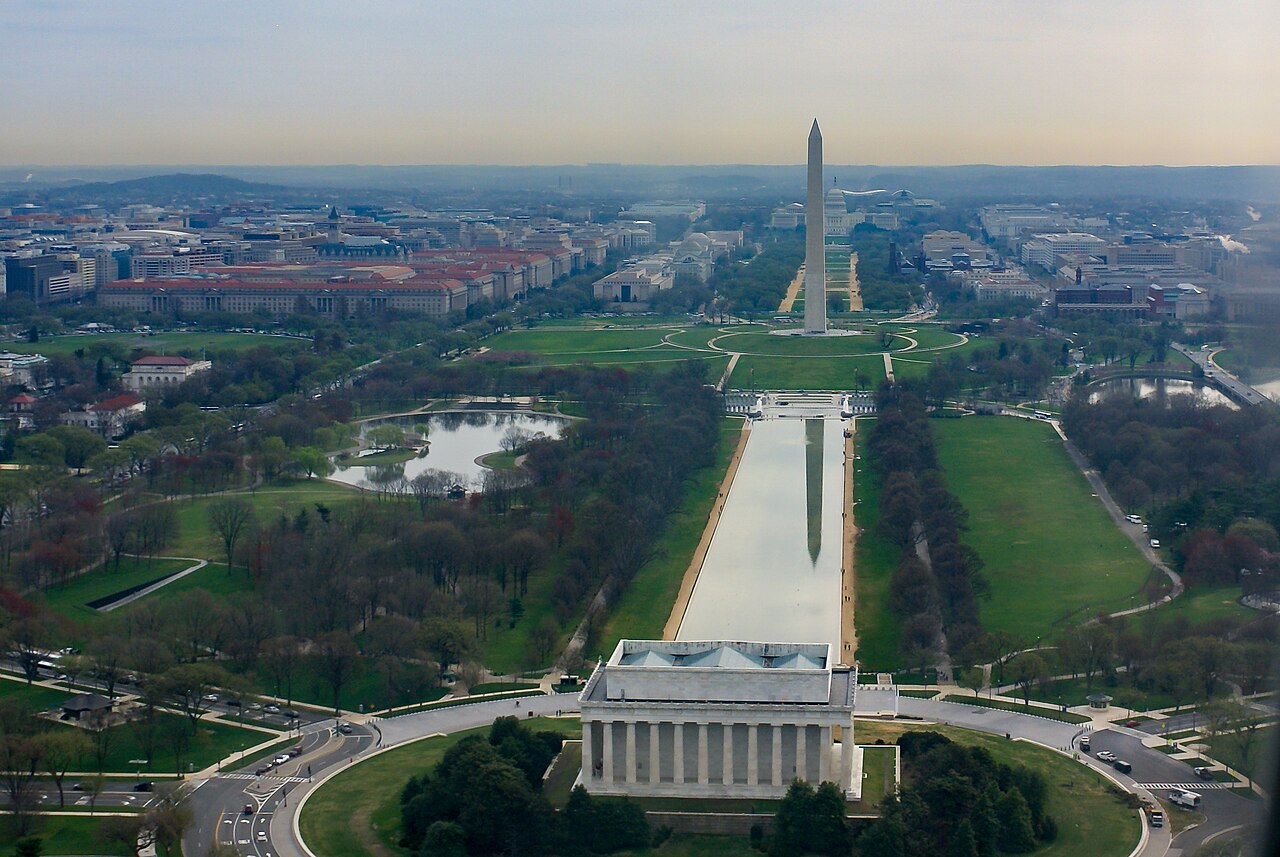
A near-straight line east along the National Mall, from the Lincoln Memorial to the Capitol, with a northward loop for the White House.
Segments
-
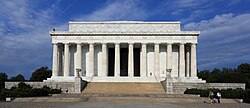 The Lincoln Memorial
Foggy Bottom / Lincoln Memorial → Lincoln Memorial steps
Paved paths and steps
Begin at the marble temple honoring Abraham Lincoln at the Mall's western end, where a seated statue of the sixteenth president gazes out over the water. The Gettysburg Address is carved on the south wall, and the steps below mark where Martin Luther King Jr. delivered his 1963 speech. Free and open at all hours; allow about 30 minutes.
About this place
The Lincoln Memorial is a U.S. national memorial honoring Abraham Lincoln, the 16th president of the United States, located on the western end of the National Mall of Washington, D.C. The memorial is built in a neoclassical style in the form of a classical temple. The memorial's architect was Henry Bacon. In 1920, Daniel Chester French designed the large interior Abraham Lincoln statue, which was carved in marble by the Piccirilli brothers. Jules Guérin painted the interior murals, and the epitaph above the statue was written by Royal Cortissoz. Dedicated on May 30, 1922, it is one of several memorials built to honor an American president. It has been a major tourist attraction since its opening, and over the years, has occasionally been used as a symbolic center focused on race relations and civil rights.
Read more on Wikipedia -
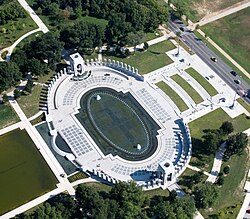 Reflecting Pool & World War II Memorial
Lincoln Memorial → World War II Memorial
Paved lakeside paths
Walk the length of the long Reflecting Pool, which mirrors the monument at each end, to the World War II Memorial at its eastern head. Its ring of granite pillars and two arches honor the Americans who served in the war. Both are free and open around the clock. About 20 minutes plus the stroll.
About this place
The World War II Memorial is a national memorial in the United States dedicated to Americans who served in the armed forces and as civilians during World War II. It is located on the Mall in Washington, D.C.
Read more on Wikipedia - The Washington Monument
World War II Memorial → Washington Monument grounds
Grass and paved paths
Climb the gentle rise to the great marble obelisk, at about 555 feet the tallest structure in the city, built to honor George Washington. The grounds are free and always open; a timed ticket is needed to ride the elevator to the observation deck. Allow around 30 minutes on the grounds.
-
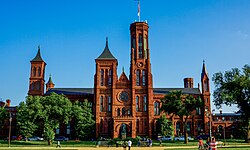 The Smithsonian Museums
Washington Monument → Smithsonian museums (Mall side)
Paved paths
Descend into the heart of the Mall, lined on both sides by the Smithsonian — Natural History, American History, Air and Space and more, fronted by the red sandstone 'Castle'. Admission is free, though timed passes are sometimes required in peak season. Pick one or two; a single museum easily fills 90 minutes.
About this place
The Smithsonian Institution is a group of museums, education and research centers, created by the United States federal government "for the increase and diffusion of knowledge". Founded on August 10, 1846, it operates as a trust instrumentality and is not formally a part of any of the three branches of the federal government. The institution is named after its founding donor, British scientist James Smithson. It was originally organized as the United States National Museum, but that name ceased to exist administratively in 1967.
Read more on Wikipedia -
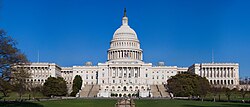 The United States Capitol
Smithsonian museums → United States Capitol grounds
Paved paths and a low hill
Reach the Mall's eastern end at Capitol Hill, seat of the United States Congress, its white dome closing the vista you have followed all day. The grounds are open to walk; interior tours are free but must be booked in advance through the visitor center. About 45 minutes around the grounds.
About this place
The United States Capitol, often called the Capitol or the Capitol Building, is the seat of the United States Congress, the legislative branch of the federal government. It is located on Capitol Hill at the eastern end of the National Mall in Washington, D.C. Although no longer at the geographic center of the national capital, the U.S. Capitol forms the origin point for the street-numbering system of the district as well as its four quadrants. Like the principal buildings of the executive and judicial branches, the Capitol is built in a neoclassical style and has a white exterior.
Read more on Wikipedia -
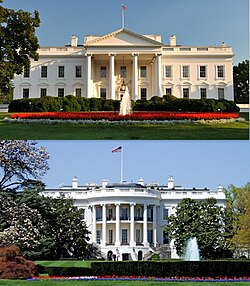 A View of the White House
United States Capitol → White House (Pennsylvania Avenue view)
City streets and sidewalks
Loop north-west, along or near Pennsylvania Avenue, to end at the fence of the White House, the president's official residence since 1800. There is no walk-up entry, but the classic view of the north portico from Lafayette Square or the south lawn from the Ellipse is free and open. About 25 minutes of walking.
About this place
The White House is the official residence and workplace of the president of the United States. Located at 1600 Pennsylvania Avenue NW in Washington, D.C., it has served as the residence of every U.S. president since John Adams in 1800 when the national capital was moved from Philadelphia. The White House is also a metonym for the Executive Office of the President.
Read more on Wikipedia
Comments
Sign in to join the conversation.
No comments yet — be the first.