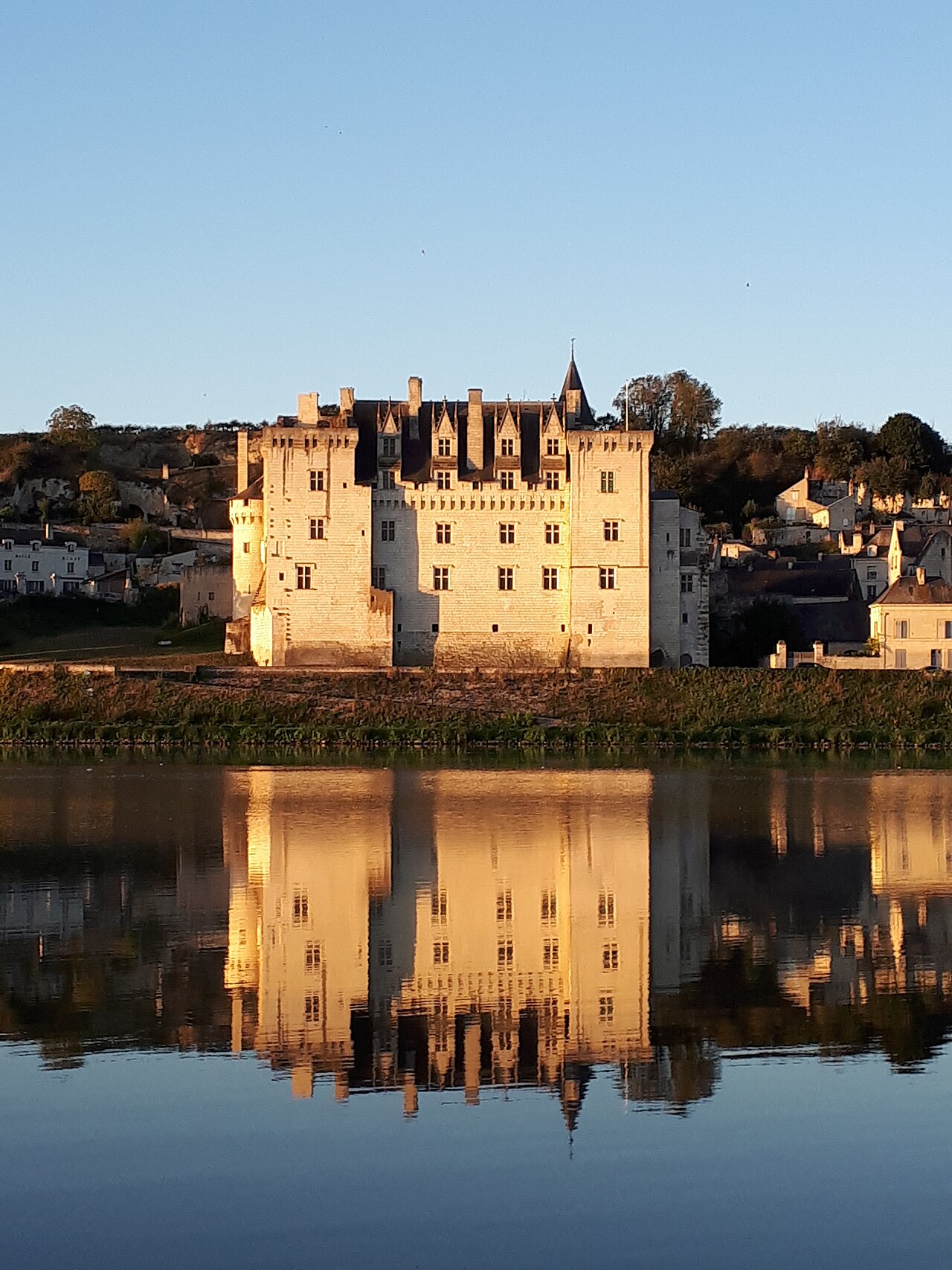
A circuit rather than a line: each segment is a château and its grounds, linked by road rather than by trail.
Segments
- Château de Chambord
Chambord car park → Chambord grounds
Gravel paths and parkland
Start early, before the coaches. Chambord is the most recognisable château in the world for a reason: its French Renaissance architecture blends traditional French medieval forms with classical Renaissance structure into a roofline that looks like a small city of chimneys and turrets. Built from the early 16th century under Francis I as a hunting retreat, it was never a comfortable home and was barely lived in. Climb the famous double-helix staircase — two spirals wound around each other so that people going up and down never meet — and get out onto the roof terraces. Then walk the surrounding park, which is enormous. About two hours.
- Chambord to Chenonceau
Chambord → Chenonceaux village
Road transfer — about an hour by car
The first honest gap in the day. This is roughly an hour of driving southwest, and there is no walking version of it. The compensation is the drive itself: the valley opens out through vineyards and small tile-roofed villages, and you cross the Loire on the way. Park in Chenonceaux village and walk in along the tree-lined avenue.
-
 Château de Chenonceau
Chenonceaux village → Chenonceau gardens
Formal gardens and gallery floors
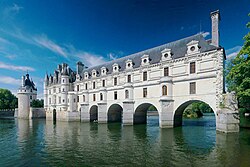
The one that spans the river. Chenonceau reaches across the Cher on a series of arches, with a long gallery built directly over the water — you walk from bank to bank inside the house. It is among the best known of all the Loire châteaux, and its history is unusually female: a succession of women built it, extended it, fought over it and saved it, Diane de Poitiers and Catherine de' Medici most famously, each leaving a formal garden that still carries her name. Walk both gardens and the far bank for the view back. About 90 minutes.
About this place
The Château de Chenonceau is a French château spanning the river Cher, near the small village of Chenonceaux, Indre-et-Loire, Centre-Val de Loire. It is one of the best-known châteaux of the Loire Valley.
Read more on Wikipedia -
 Amboise & Clos Lucé
Chenonceaux → Clos Lucé, Amboise
Town streets, a short climb to the château, garden paths
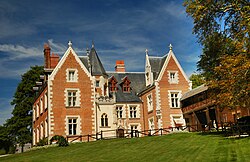
About 20 minutes north, and the best walking of the day. The Château d'Amboise stands on a terrace above the town — confiscated by the monarchy in the 15th century, then rebuilt into a favoured royal residence — and the chapel of Saint-Hubert in its grounds is traditionally held to hold Leonardo da Vinci's remains. Then walk about ten minutes uphill to Clos Lucé, the manor where Leonardo spent his last years at the invitation of Francis I, and died in 1519. The gardens below the house display models built from his drawings. Allow two hours for both together.
About this place
The Château du Clos Lucé, formerly called Manoir du Cloux, is a large château located in the center of Amboise, in the department of Indre-et-Loire, in the Centre-Val de Loire region of France. It is located in the Val de Loire region. Built by Hugues d'Amboise in 1471, the palace has known several famous owners such as the French king Charles VIII and Leonardo da Vinci. Clos Lucé is 500 metres from the royal Château d'Amboise, to which it is connected by an underground passageway.
Read more on Wikipedia -
 Château of Blois
Amboise → Blois
Town streets and courtyard; about 40 minutes by road from Amboise
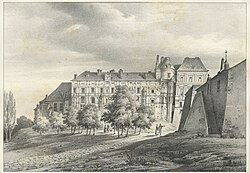
Finish where the architecture argues with itself. The royal château at Blois wraps four wings of four different eras around one courtyard — Gothic, Renaissance, and classical facing each other across a few metres of gravel — so you can read four centuries of French building without moving your feet. It housed the Counts of Blois and later French kings; Joan of Arc came here in 1429 to be blessed before marching on Orléans. The spiral staircase on the Francis I wing is the piece everyone photographs. About an hour, then walk down into the old town for dinner.
About this place
The Royal Château of Blois is a château located in the city center of Blois, Loir-et-Cher, in the Loire Valley, France. In addition to having been the residence of the Counts of Blois and some French kings, Joan of Arc also went there by 1429 to be blessed by the Archbishop of Reims before departing with her army to drive out the English, who conquered Orléans the previous year.
Read more on Wikipedia
Comments
Sign in to join the conversation.
No comments yet — be the first.