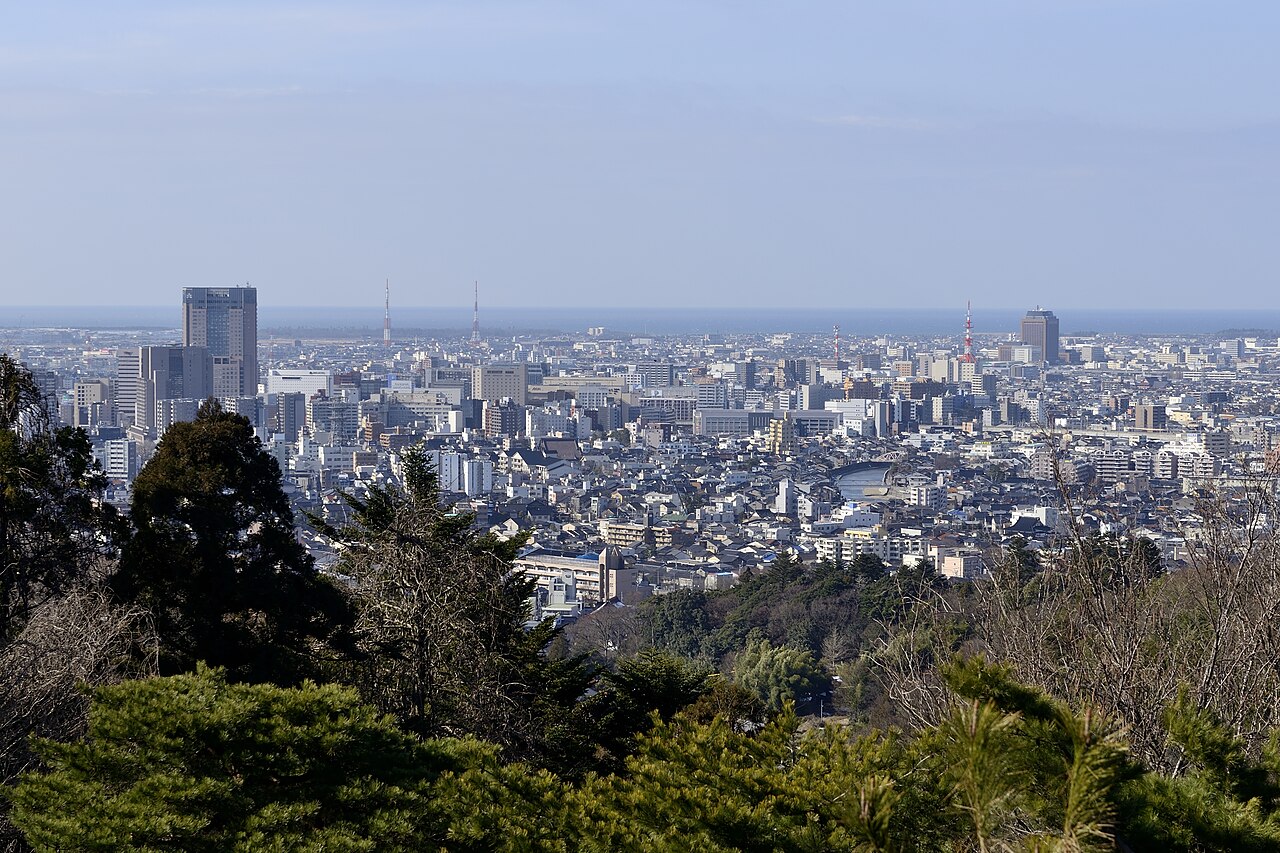
From the garden and castle at the centre, west to the samurai walls, north across the Asano river to the teahouses, and back to the market.
Segments
-
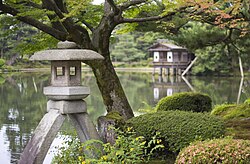 Kenroku-en
Kenrokuen-shita bus stop → Kotoji-tōrō and the main pond
Garden paths
A strolling garden built by the Maeda clan over the Edo period and counted among the Three Great Gardens of Japan. It spreads over nearly 25 acres of meandering paths, a large pond, teahouses and one of Japan's oldest fountains, and is noted for its beauty in every season, particularly winter. First opened to the public in 1871. Allow about an hour.
About this place
Kenroku-en , located in Kanazawa, Ishikawa, Japan, is a strolling style garden constructed during the Edo period by the Maeda clan. Along with Kairaku-en and Kōraku-en, Kenroku-en is considered one of the Three Great Gardens of Japan and is noted for its beauty across all seasons, particularly in winter. Spread over nearly 25 acres, features of the landscape include meandering paths, a large pond, several tea houses, and one of Japan's oldest fountains. First opening to the public in 1871, the garden was later designated a National Site of Scenic Beauty in 1922, and subsequently received status as a National Site of Special Scenic Beauty in 1985. The grounds are open through paid admission year-round during daylight hours.
Read more on Wikipedia -
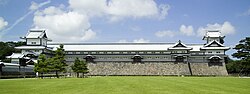 Kanazawa Castle
Kenroku-en → Ishikawa-mon gate and castle park
Gravel castle grounds
A large, partially restored castle directly across from the garden — which was once its private outer garden. It was the headquarters of the Kaga Domain under the Maeda for fourteen generations. The grounds are open parkland; some reconstructed turrets and storehouses charge a small fee.
About this place
Kanazawa Castle is a large, partially restored Japanese castle in Kanazawa, Ishikawa, Japan. It is located adjacent to the celebrated Kenroku-en Garden, which once formed the castle's private outer garden. It was the headquarters of Kaga Domain, ruled by the Maeda clan for 14 generations from the Sengoku period until the coming of the Meiji Restoration in 1871.
Read more on Wikipedia - Nagamachi samurai district
Kanazawa Castle → Nagamachi
Narrow lanes between earthen walls
West of the castle, below the Kōrinbō shopping streets, a grid of lanes runs between the ochre earthen walls of the old samurai quarter. Old houses and local craft shops line it; one or two residences are open to visitors for a fee. In winter the walls are wrapped in straw matting against the snow.
- Higashi Chaya district
Nagamachi → Higashi Chaya, north of the Asano river
City streets and a river bridge
Cross the city and the Asano river to the Eastern Teahouse District — a hanamachi, a quarter where geisha live and work. Its two-storey wooden teahouse fronts with fine lattice screens are the best preserved in the city. Some houses are open as museums; the rest are still in use.
About this place
A hanamachi is a district where geisha live and work in Japan. Each hanamachi typically has its own name, crest, and distinct geisha population, with geisha not typically working outside of their own district. Hanamachi usually contain okiya and ochaya.
Read more on Wikipedia - Ōmichō market
Higashi Chaya → Ōmichō market
City streets and covered arcade
A large covered market of shops and stalls, most of them selling seafood from the Sea of Japan, with small restaurants tucked among them. Shops generally open from mid-morning to late afternoon, though hours vary. A good place to end on lunch.
- Back to Kanazawa Station
Ōmichō market → Kanazawa Station
City pavement
About a 15-minute walk, or one stop by bus. The station's eastern entrance stands under the Tsuzumi-mon, a wooden gate shaped after the drums used in Noh theatre, and a glass-and-steel dome.
Comments
Sign in to join the conversation.
No comments yet — be the first.