Blog
Zion Narrows from the Bottom: The Day Hike to Big Spring
In short
The bottom-up Narrows is a moderate one-day out-and-back of 14 km and about 100 m, from the Temple of Sinawava up the Virgin River to Big Spring. Go from late spring to early autumn, once snowmelt eases, and stay out when flash floods are possible. The day needs no permit. The canyon past Big Spring does.
The bottom-up day, to Big Spring and back
The Narrows from the bottom is a moderate one-day walk: 14 km and about 100 m of ascent, out and back. You ride to the Temple of Sinawava, follow the paved Riverside Walk to the river, and wade up the Virgin River to Big Spring. Then you turn around. The months on the route are May to September. Go in late spring to early autumn, once snowmelt has eased and the park has left the canyon open. On a stormy summer day, do not go. Flash floods are the danger that matters, including a flood from a storm you cannot see.
This is the bottom-up day. It is not the top-down overnight, which continues past Big Spring and is a different trip. The day hike needs no permit. You must turn around at Big Spring, because the canyon beyond it is permit-only. This page does not describe how to apply for that overnight permit. If you want the overnight, read the park’s own permit rules. If you want the day, Big Spring is the end of the trail in both directions that count.
The walk sits with the other canyon day hikes in Southwest canyon day hikes. It does not share a calendar square with rim-to-rim.
How the 14 km is actually spent
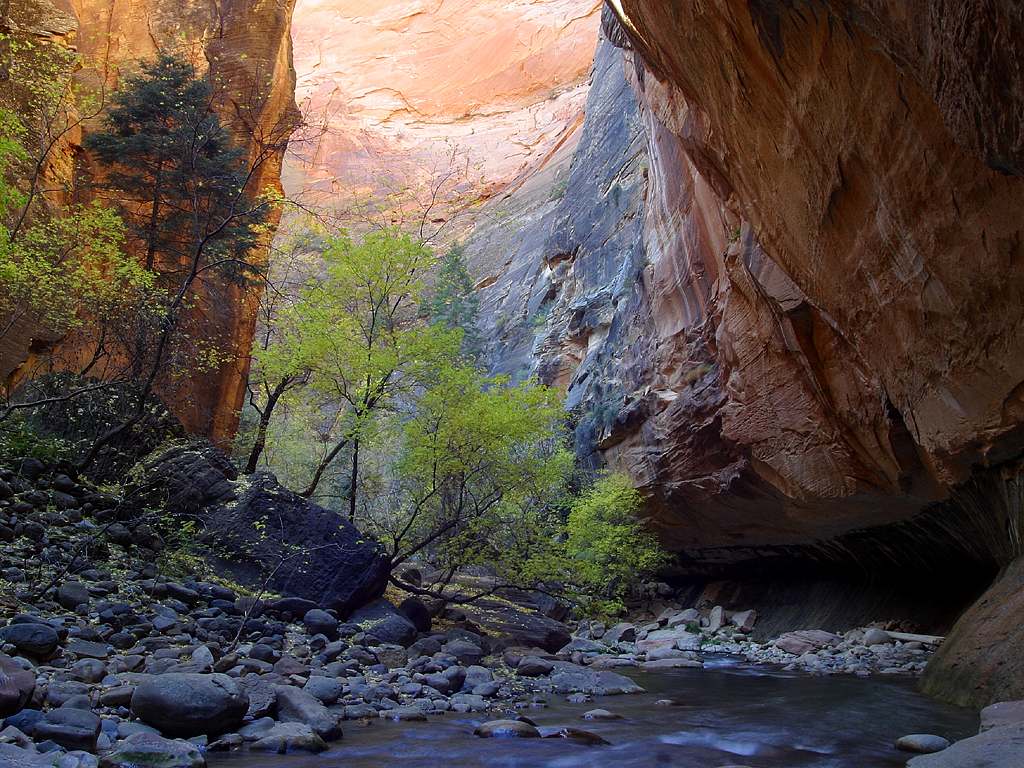
The Riverside Walk is the first 1.6 km, paved, flat, about 30 minutes each way, from the shuttle stop to the point where the pavement ends and the river becomes the trail. People in ordinary shoes stroll this part and then discover the hike. The hike starts in the water.
From the gateway you wade upstream about 2.4 km, gaining little, past Mystery Falls to the mouth of Orderville Canyon. That junction is the popular turnaround for a shorter day, about an hour and a half upstream from the pavement. It is a legitimate shorter walk. It is not Big Spring, and it is not the full 14 km.
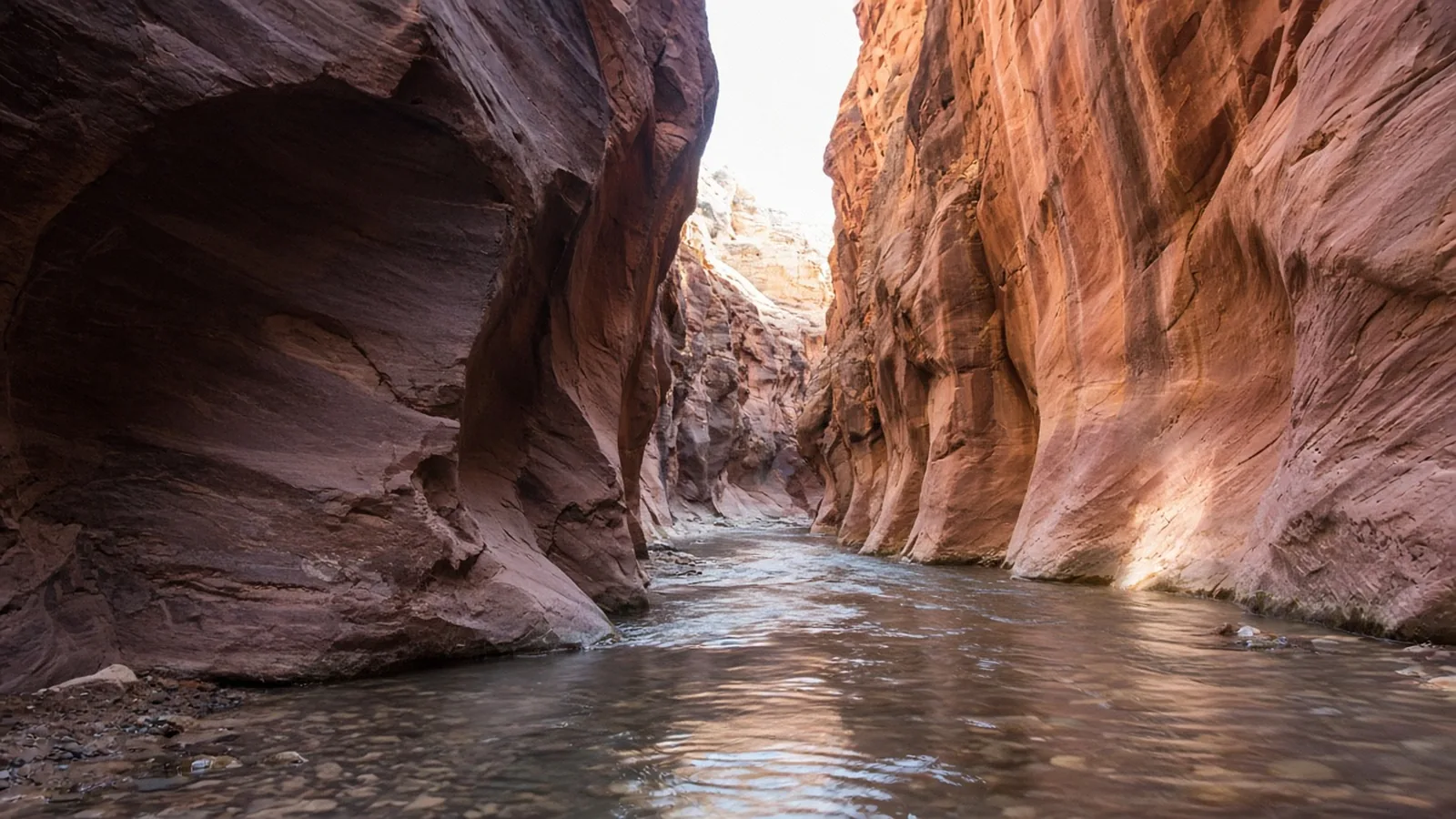
Orderville to Big Spring is about 2.9 km more, into Wall Street, where the walls climb hundreds of metres and the canyon pinches to a few metres wide. The wading gets deeper. Allow about two hours to Big Spring, which is the mandatory turnaround for day hikers. The return is the same river with the current at your back, about 6.9 km including the paved walk out, and something like two and a half to three hours. The full day is often six to eight hours. The 100 m of ascent is why the grade is moderate. The hours in cold water are why it still fills a day.
Expect to wade continuously, sometimes waist-deep, on slick cobbles you cannot see, against a steady current on the way up. Sturdy shoes and a hiking pole change the day. Outside high summer, dry suits and neoprene are a normal rental, not a costume. In the heat of July the water is the relief and the sun on the open approaches is not. Either way, you are wet for hours.
Season, flow, and the forecast
May is on the list, and it is also when snowmelt most often pushes the river past the level at which the park closes the canyon, typically above about 150 cubic feet per second. A May date is legal on the month list and still might be a closed trail. Check the flow. June, July, August and September are the rest of the window. Early autumn here means September, not a vague October you would rather have. October is not a month on this route.
Inside those months, the daily flash-flood forecast is the go or no-go. A clear sky at the Temple of Sinawava is not the forecast. The storm that matters may be upstream. If the park has closed the Narrows, the Riverside Walk may still be open and it is a different, dry, short stroll. Do not wade past a closure because the first pool looks calm.
In season the Zion Canyon shuttle is the way up the canyon. Private cars do not replace it when the restriction is in force. Ride to the last stop and start there. The logistics are simple on a day the canyon is open, and impossible to negotiate on a day it is not. Build a spare plan that is not “we will see when we get to the gate.”
A shorter day is still this route
Orderville Canyon is the honest short version: the paved approach, then the first long wade, then out. You still need the flood forecast, the flow under the closure line, and shoes that can handle the cobbles. You just spend fewer hours in the slot. People use it when the day started late, when the group includes someone unsteady on wet rock, or when the water is colder than they planned for. It is the same trail, the same rules, and a smaller appetite. Calling it a failure to reach Big Spring is how groups push on into a canyon they are no longer enjoying, which is a poor trade on a walk with no climbing to “make it count.”
Wall Street, past Orderville, is the part the photographs mean: sheer rock, a narrower passage, deeper wading. If you have the hours and the forecast, go there and turn around at the spring. If you do not, Orderville is the walk. Either choice ends in the same place you started, at the Temple of Sinawava shuttle, and either choice is ruined by ignoring a closure. The 14 km figure is the full out-and-back to the spring. Quote that figure for the full day, and do not quote it for the short one.
What to take, and what to leave for another trip
Take shoes that stay on in a current, a pole, and more insulation than a desert afternoon suggests, because the slot is shaded and the water is cold even when the rim is hot. A dry bag for the layers you want later is worth more than a clever outfit. Children and anyone unsteady on wet rock should treat Orderville as a serious candidate for the turnaround, not as a failure to reach Big Spring.
Leave any plan that continues past Big Spring. The canyon beyond the spring is permit-only, and this route does not describe that permit. The day hike is the out-and-back. Leave also the idea that 14 km and 100 m means a morning. The shuttle, the wade, the turnaround and the wade back are the day.
If the month is right, the flow is under the closure line, and the flood forecast is clean, Big Spring and back is the classic day in Zion. If any of those three is wrong, it is a good day to walk somewhere that is not a slot canyon. The rest of the catalogue is on trails.
Questions
- Does the bottom-up Narrows need a permit?
- No. The day hike needs no permit. You must turn around at Big Spring, because the canyon beyond it is permit-only.
- Is this the top-down overnight?
- No. This is the one-day wade upstream from the Temple of Sinawava and back. The overnight that continues past Big Spring is a different trip, and this page does not describe its permit.
- When can I walk it?
- May to September, once snowmelt has eased. The park closes the canyon when the river is high, often above about 150 cubic feet per second. Avoid days with a flash-flood risk.
- How long is the full day?
- 14 km and about 100 m of ascent, often six to eight hours, including the paved Riverside Walk and the return downstream. Orderville Canyon is the shorter turnaround.
- What makes a clear sky unsafe?
- A storm upstream. Flash floods can reach the slot while the sky over the Temple of Sinawava is clear. Use the day's flood forecast, not the view from the shuttle.