
Blog
West Highland Way or Hadrian's Wall
In short
Choose the West Highland Way for seven days, about 154 km and 3,155 m, from May to September, knowing midges peak from June to August. Choose Hadrian's central section for two days, about 32 km and 900 m, in the same May to September window. Both are graded moderate.
A week in the Highlands, or two days on the Wall
The West Highland Way is a through-walk: seven days, about 154 km, about 3,155 m of ascent, graded moderate, from Milngavie on the edge of Glasgow to Fort William. Hadrian’s Wall, in the central section that is worth crossing the country for, is a weekend: two days, about 32 km, about 900 m, also graded moderate.
Choose the Way if you want a full Highland walk and you can take May or September, outside the worst of the midges. Choose the Wall if you have two days, you want the Roman line on the crags, and you will go between May and September when the ground can take the traffic. Same grade. Completely different commitment. Neither is a winter stroll.
The West Highland Way
Most people walk south to north over seven or eight days, which keeps the wind at their back and saves Rannoch Moor, Glen Coe and the view of Ben Nevis for the end. The path uses old drove roads, military roads and disused railway. The season on the page is May to September. The quiet months it names are spring and autumn. Midges peak from June to August, especially near still water, and a head net is the honest piece of kit in those weeks.
No permit is required to walk. Scotland’s access rules allow responsible wild camping along most of the route. A seasonal byelaw restricts camping on the east shore of Loch Lomond, roughly March to September, where you need a permit or a campsite. The highest point is the Devil’s Staircase at 550 m, on the way into Kinlochleven. That is not a high mountain. The week is long anyway: 3,155 m of ascent is a lot of moderate, spread over 154 km. Milngavie is a short train ride from Glasgow. Fort William has trains and buses back, including the West Highland Line.
June, July and August are inside the listed season and inside the midge peak. They are legal and they are the poorer choice if you can move. May and September are the reading of “quietest.” July, as a month that is honest about this, is in Where to walk in July.
Hadrian’s Wall, the central section
The full national trail is about 135 km from Wallsend to Bowness-on-Solway. This page is the middle, the roughly two-day stretch where the Wall is most visible, riding the crags of the Whin Sill past Housesteads and the gap where a famous tree used to stand. The route distance is about 32 km with about 900 m of ascent. The whole national trail tops out at only about 345 m. The central section still rolls, dropping into every nick in the crags and climbing out again. People who hear “345 m” and pack for a flat towpath are the people who feel misled at the first gap.
The season is late spring to early autumn, May to September. Winter walking is wet, and it erodes the archaeology under a thin skin of turf, so the page discourages it. Stay in the listed months if you can. Trains reach Hexham and Haltwhistle. The seasonal AD122 bus links the trailhead villages from about mid-April to October, daily in the main season and weekends only on the shoulders. Check it before you rely on a Sunday in the margins.
The sycamore at Sycamore Gap was illegally felled in 2023. The gap is still a striking place, and the stump has put out new growth. Do not come for the tree in the photographs. Do not walk on top of the Wall itself. The crags are exposed. Bring a layer even when the forecast looks kind.
Hadrian’s Wall, the central section
What the shared season hides
Both pages say May to September. Inside that overlap they do not feel alike. On the West Highland Way, June to August is the midge peak, so the middle of the shared season is the part a Highland walker tries to dodge. On the Wall there is no insect warning of that kind. The constraint is the ground and the monument: go when it is drier, and do not grind a wet winter path into the archaeology. A July week can be a bad Way and a perfectly good Wall. A September week can be the best version of the Way, and still a good Wall, because September is inside both listings.
Outside May to September, stop. The Way’s page does not offer you a winter season. The Wall’s page actively prefers you not to come, for the sake of the path. “We are in Britain and the trail exists all year” is not what either text says.
A plain way to decide
Walk the West Highland Way if you want the length: a week, about 154 km, from the edge of Glasgow to Fort William, graded moderate, with the big scenery at the northern end. Take May or September if you can. If you are stuck with July, go with your eyes open about the midges, not because a blog called the month acceptable without that sentence.
Walk the central Wall if you want two days of Roman frontier on the crags, about 32 km and 900 m, also moderate, between May and September. It is the right choice when the holiday is a weekend, when the point is the monument, and when you do not need a mountain. It is the wrong choice if you will be disappointed by a high point of a few hundred metres, or if you wanted the postcard tree.
Do not try to add them together as one holiday unless you truly have the days. They are in the same country and the same season. They are not the same kind of walk, and the train ride between Fort William and Hexham is not a scenic link the pages pretend it is.
Questions
- Which one takes longer?
- The West Highland Way: seven days, or seven or eight if you follow the usual south-to-north pace, over about 154 km. Hadrian's central section is two days and about 32 km. The full coast-to-coast Wall path is about 135 km, and this page is only the middle.
- When are the midges a problem?
- On the West Highland Way, from June to August. The listed season is May to September, and the quiet months are spring and autumn. Hadrian's Wall has no equivalent warning. Its issue in winter is a wet path over archaeology, so stay with May to September.
- Is Hadrian's Wall an easy flat walk?
- The whole national trail tops out at about 345 m, and the central section is still graded moderate, with about 900 m of ascent as it drops into the gaps in the crags and climbs out. It is not a towpath.
- Can you still see the Sycamore Gap tree?
- No. It was illegally felled in 2023. The gap is still there, and the stump has put out new growth. Come for the Wall, not for the photograph of the tree.
Sources
Routes in this post
-
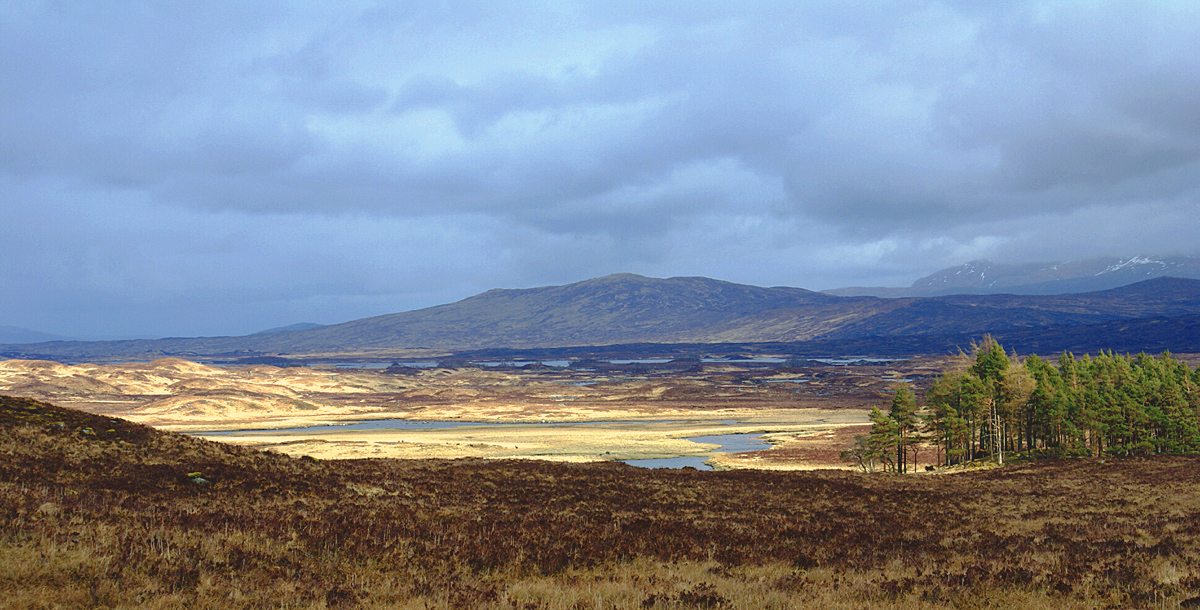 Photo: Mogens Engelund · CC BY-SA 3.0Trek United Kingdom
The West Highland Way: Milngavie to Fort William
Scotland's best-loved long-distance walk — 154 km from the edge of Glasgow along Loch Lomond, across the wilds of Rannoch Moor and through Glen Coe to Fort William beneath Ben Nevis.
- Duration
- 7 days
- Distance
- 154 km
- Difficulty
- Moderate
-
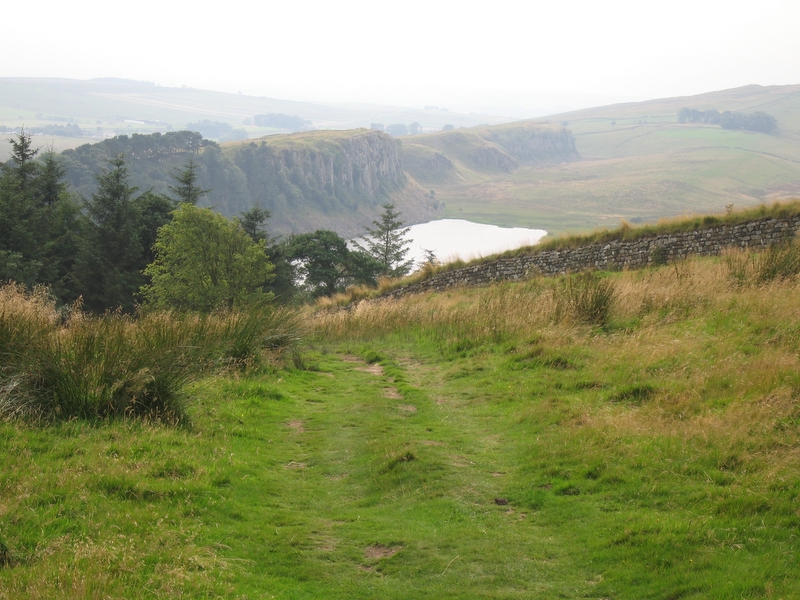 Photo: The original uploader was Moyn2000 at English Wikipedia. · Copyrighted free useTrek United Kingdom
Hadrian's Wall: The Central Section
Two days along the best-preserved stretch of Hadrian's Wall Path, where the Roman frontier rides the crags of the Whin Sill past Housesteads, Sycamore Gap and Vindolanda.
- Duration
- 2 days
- Distance
- 32 km
- Difficulty
- Moderate