
Blog
Day hike packing list: the Ten Essentials and what to add
In short
Pack the Ten Essentials: navigation, sun protection, extra clothing, a headlamp, first aid, fire, a repair kit, extra food, enough water and emergency shelter. Scale each one to the route, from a light city kit to the full list for mountain and desert days, and tell someone your plan.
Pack for the day you might have
Most day hikes go to plan. You walk, you eat, you come home. A packing list is for the other days: the wrong turn, the twisted ankle, the storm that arrives two hours early. A good day pack is light enough to forget about and complete enough that a delay becomes an inconvenience rather than an emergency.
A widely used starting point is the Ten Essentials, a system developed by The Mountaineers and recommended by the US National Park Service. It groups what you carry into ten categories, or systems, rather than a fixed list of items. You choose how much of each to bring depending on the route, the season and the group.
The Ten Essentials
- Navigation. A map, a compass and a GPS or phone. The National Park Service recommends knowing how to use them before you go, carrying a physical map as a backup and packing an extra battery for your phone. Our guide to using a GPX file explains how to load a route onto your phone.
- Sun protection. Sunglasses, sunscreen and a hat. Long sleeves and trousers help on exposed routes.
- Extra clothing. A layer for the worst conditions you could meet: a rain jacket, a warm layer, a hat and gloves. Bright colours make you easier to find.
- Illumination. A headlamp, which leaves your hands free, and spare batteries. Even on a short walk, a late start or a slow descent can end in darkness.
- First aid. A small kit adapted to your group, with blister care, any personal medicines and a short emergency guide.
- Fire. Waterproof matches or a lighter and a fire starter, for emergencies only. Know the local fire rules; many parks restrict fires.
- Repair kit and tools. A knife or multi-tool, some tape and scissors. A trowel and toilet paper are useful too.
- Nutrition. Food for the day plus extra, ideally no-cook snacks such as nuts, trail mix and bars.
- Hydration. Enough water, and a way to treat water if there are streams on the route. In heat, drink often and before you feel thirsty.
- Emergency shelter. A space blanket, a bivy bag or a light tarp. It weighs very little and can matter a great deal if you have to wait for help.
Adapting the list to the route
The categories stay the same, but the items change with the walk:
- A city walk such as Westminster to the Tower needs water, a light rain layer, comfortable shoes and a charged phone. Shops and transport are never far away.
- A park trail such as the Stanley Park Seawall is flat and busy, but a layer, water and snacks still make the day better.
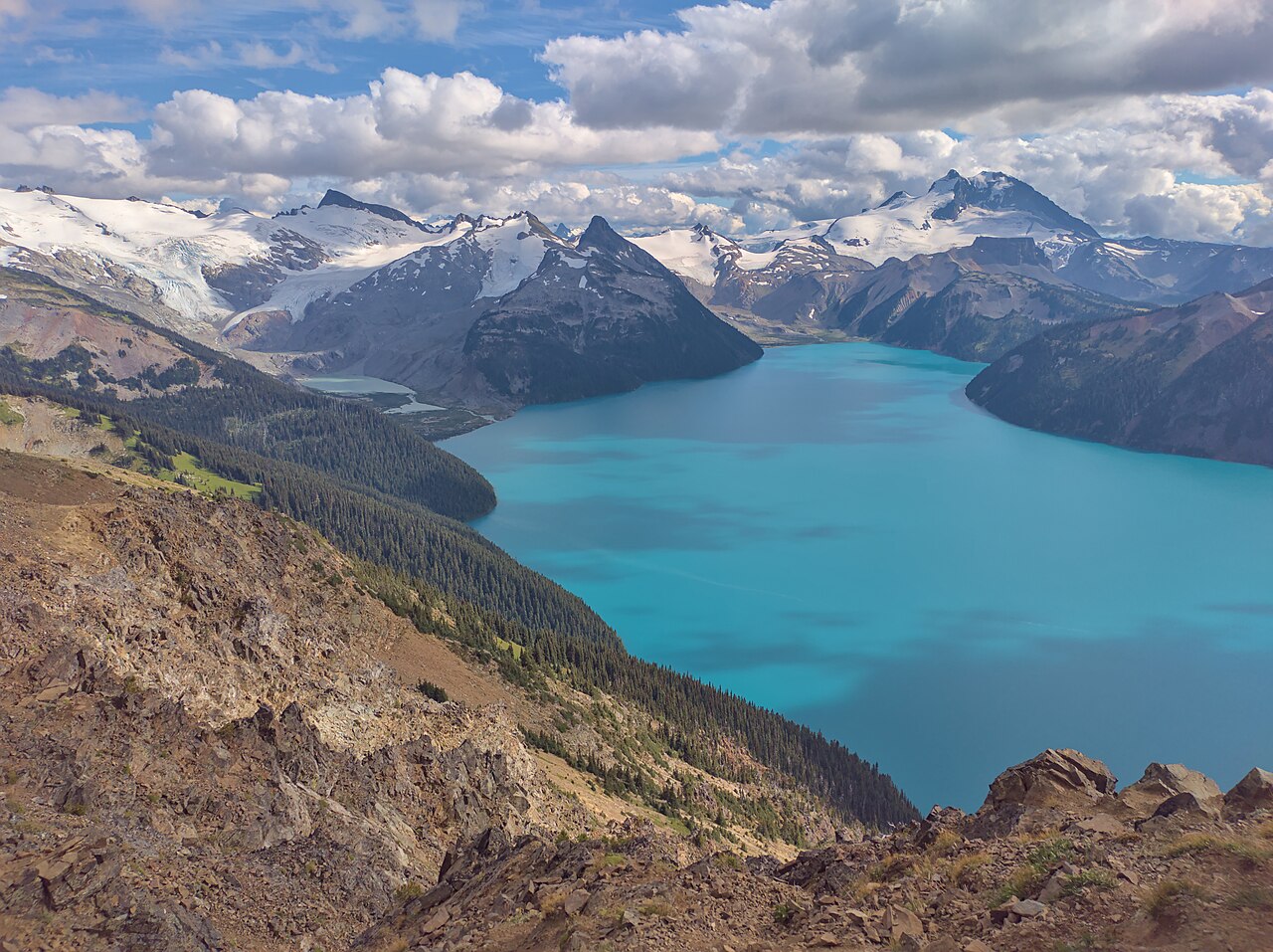
- A mountain day such as Garibaldi Lake or Snowdon by the Llanberis Path needs the full list. Weather on summits changes fast, and the route page warns that outside summer Snowdon becomes a winter mountaineering route.
- A desert walk such as Ein Avdat needs far more water than you think, sun protection and an early start.
Clothing and footwear
Wear layers rather than one heavy jacket: a base layer that moves sweat away from your skin, a warm middle layer, and a waterproof shell. Avoid cotton next to the skin on cold or wet days, because it stays wet. For footwear, use shoes or boots you have already walked in. Trail shoes are fine on good paths; rocky or wet routes are easier with more grip and ankle support. Carry spare socks.
The pack itself
For a day hike, a pack of about 20 to 30 litres is usually enough. Look for a hip belt to carry the weight on your hips, a chest strap and a rain cover or a liner bag to keep spare clothes dry. Put heavy items close to your back and the things you need often, such as snacks, sunscreen and the map, in outside pockets.
Packing for children
Children need the same categories in smaller sizes, plus a few extras: their own small bottle, snacks they actually like, a spare full set of clothes on wet or muddy routes, and a sun hat that stays on. Let older children carry a light pack with their own water and a whistle, and teach them to stop and stay put if they get separated. See our guide to family-friendly walks for routes that suit them.
Tell someone your plan
The National Park Service also advises telling someone where you are going and when to expect you back. Leave the route name, your start time and your expected return with a friend or at your accommodation. If you change the plan, let them know.
Before you leave the car or the station
- Check the weather forecast for the summit or the high point, not only the valley.
- Check sunset time and work back to a turnaround time.
- Check the route page for closures and seasonal notes.
- Count the water: one litre per person is rarely enough on a long or hot day.
- Charge the phone and pack the battery.
A printable checklist
- Map, compass, phone with the route loaded, battery pack
- Sunglasses, sunscreen, hat
- Rain jacket, warm layer, hat and gloves
- Headlamp and spare batteries
- First-aid kit and personal medicines
- Lighter or matches
- Knife or multi-tool, tape
- Food plus extra snacks
- Water and treatment
- Space blanket
For more ideas, see our walking tips or find your next route on the map.
Questions
- What are the Ten Essentials?
- Navigation, sun protection, extra clothing, illumination, first aid, fire, repair kit and tools, nutrition, hydration and emergency shelter.
- What size pack do I need for a day hike?
- Usually about 20 to 30 litres, with a hip belt and a rain cover or liner.
- How much water should I carry?
- It depends on the route and the heat. One litre per person is rarely enough on a long or hot day.
Sources
Routes in this post
-
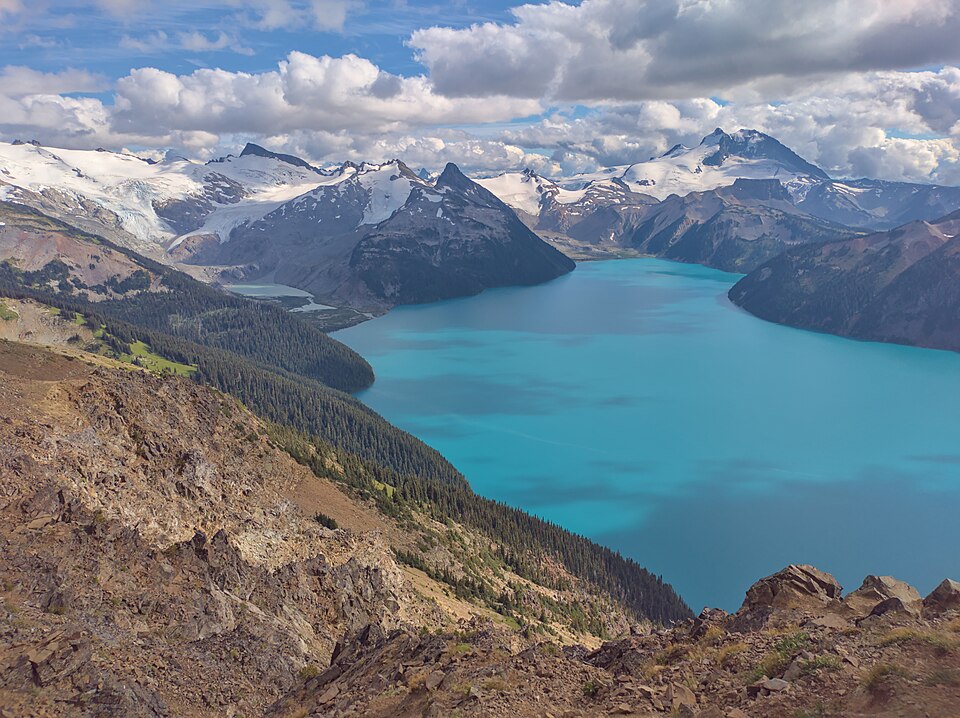 Photo: The Cosmonaut · CC BY-SA 2.5 caTrek Canada
Garibaldi Lake from Rubble Creek
The big day hike of the Sea-to-Sky: nine kilometres and about 900 metres up through old forest from Rubble Creek to a vast turquoise lake held back by a volcanic lava dam, with glaciers pouring into its far shore.
- Duration
- 1 day
- Distance
- 18 km
- Difficulty
- Hard
-
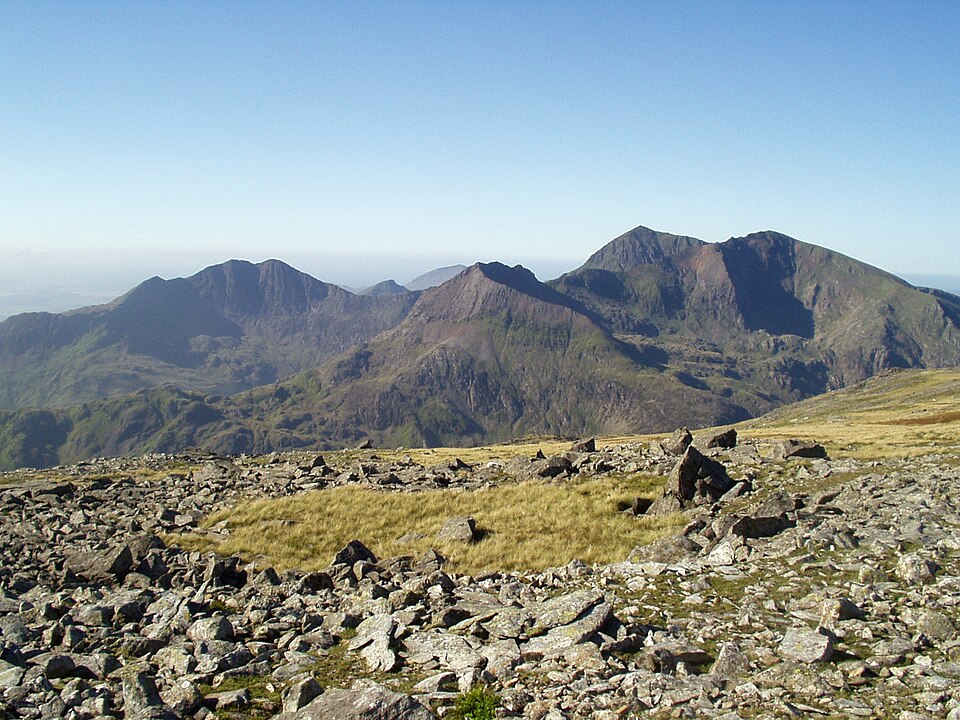 Photo: Wikimedia Commons · CC BY-SA 3.0Trek United Kingdom
Yr Wyddfa (Snowdon) by the Llanberis Path
The longest and most gradual way up the highest mountain in Wales — about 6.8 km of steady climbing beside the mountain railway, past the cliffs of Clogwyn Du'r Arddu to the summit at 1,085 m.
- Duration
- 1 day
- Distance
- 14 km
- Difficulty
- Moderate
-
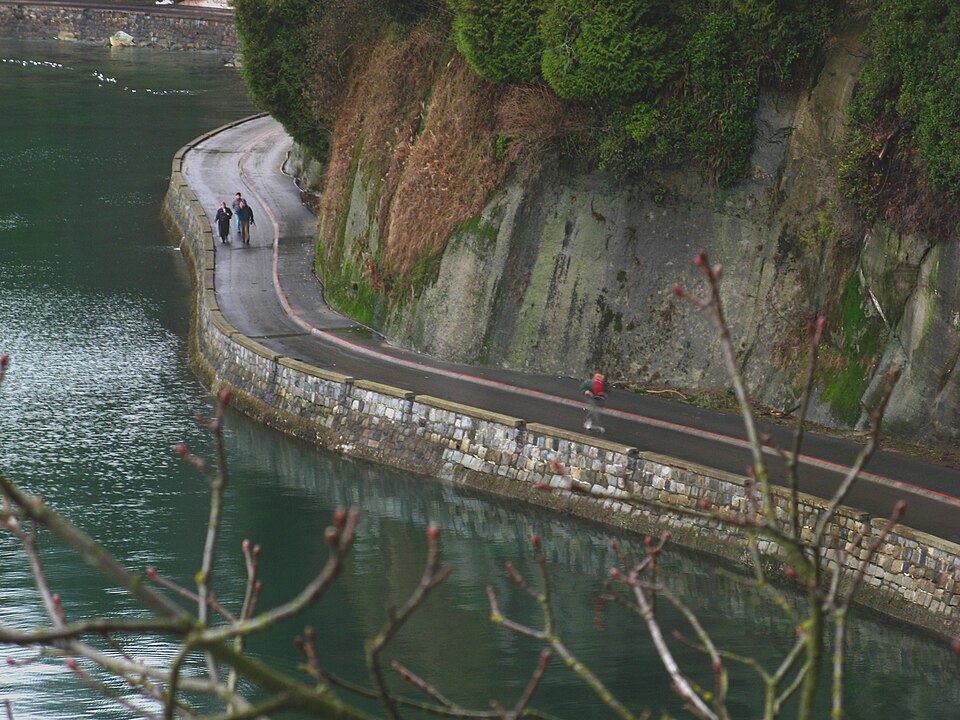 Photo: No machine-readable author provided. Bobanny assumed (based on copyright claims). · Public domainTrek Canada
The Stanley Park Seawall: Coal Harbour to English Bay on Foot
A flat, ten-kilometre loop around the edge of Vancouver's great forest park, from the marinas of Coal Harbour past totem poles, a lighthouse, the Lions Gate Bridge and a lone sea stack, to the sunset beaches of English Bay.
- Duration
- 1 day
- Distance
- 10 km
- Difficulty
- Easy
-
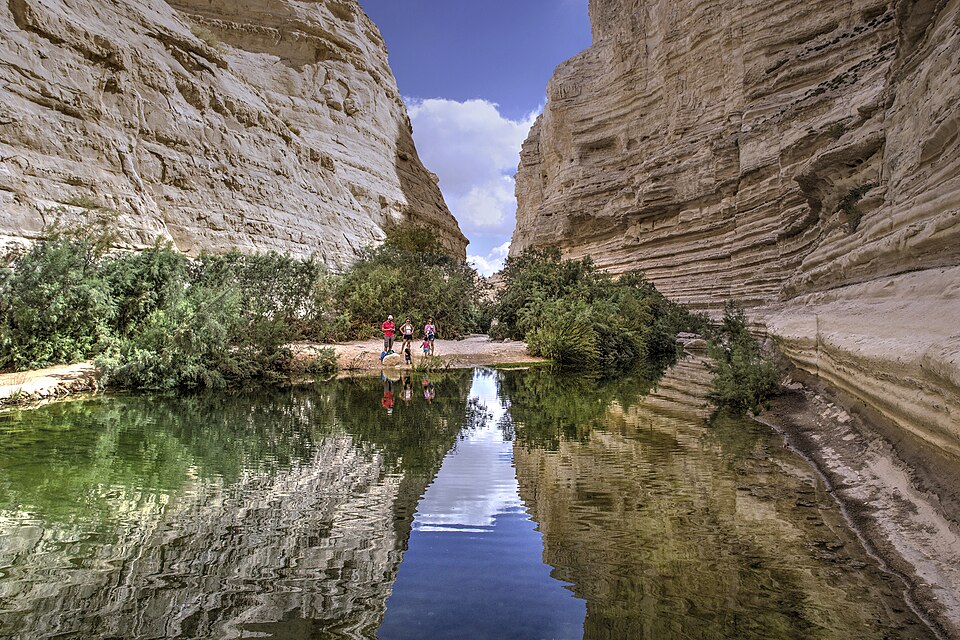 Photo: Hanan epstein · CC BY-SA 4.0Trek Israel
Ein Avdat: The White Canyon of Zin
A short, vertical day in the Negev — a white chalk gorge with a 15-metre waterfall, spring-fed pools, Byzantine monks' caves and a ladder climb out onto the rim above the Wilderness of Zin.
- Duration
- 1 day
- Distance
- 5 km
- Difficulty
- Moderate