
Blog
A Chamonix Day Before the Tour du Mont Blanc
In short
The Mer de Glace day is the valley walk beside the Tour du Mont Blanc: 8 km and 600 m, graded moderate, from late June to September, once the Montenvers railway and the high balcony path are clear of snow. The TMB itself is 170 km and 10,000 m on a 7-day Waymark itinerary, graded hard, from mid-June to mid-September. Book July and August refuges ahead. The railway and the Aiguille du Midi cable car are separate paid tickets. This page does not quote a price.
The valley day and the week are different commitments
Chamonix sits under the Tour du Mont Blanc, and it also has a day of its own that never leaves the valley system: the railway to the Mer de Glace, the Grand Balcon Nord back toward Plan de l’Aiguille, and, if you continue, the cable car. That day is how you meet the massif before you agree to a week of passes. It is graded moderate. The tour is graded hard. Treating them as the same outing is how people discover, on day two, that a glacier view and 10,000 m of ascent were never the same plan.
The figures below are the ones on the two route pages. Fares are not among them. The pages say which tickets exist. They do not print a price here, and this article will not supply one.
The tests you can do in other countries, before you ever reach the valley, are in day hikes before a hut trek. The month the tours open is June.
The Mer de Glace day
Chamonix, the Mer de Glace and the Grand Balcon Nord is 8 km and 600 m of ascent, graded moderate. The season is late June to September, once the Montenvers railway and the high balcony path are open and clear of snow.
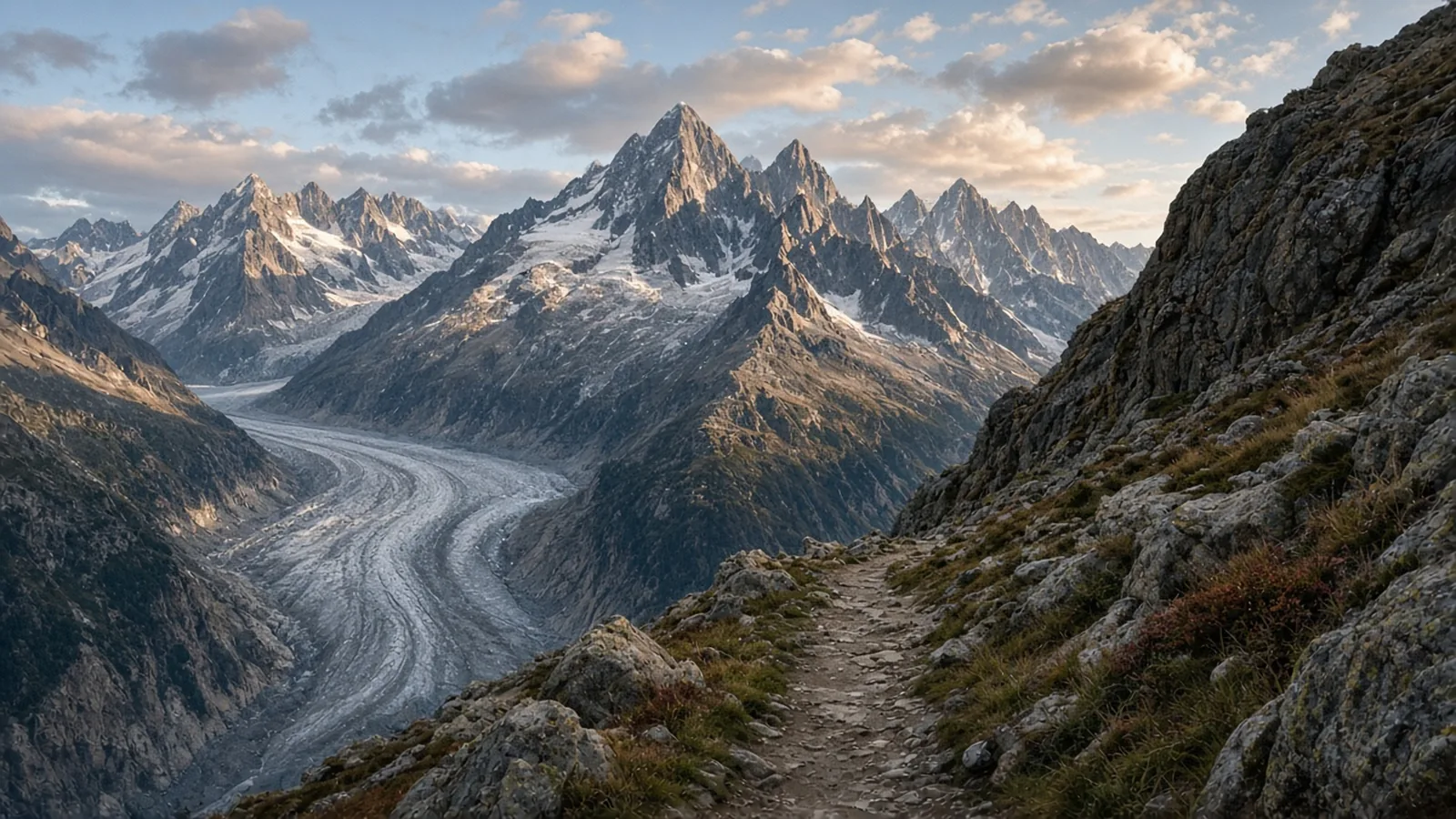
The Mer de Glace is a valley glacier on the north side of the Mont Blanc massif, about 7.5 km long and 200 m deep. Counting its tributaries, the page calls it the longest glacier in France. You reach the viewpoint by the rack railway from Chamonix-Montenvers, a short walk from the town centre, then walk the balcony path under the aiguilles to Plan de l’Aiguille. Walked in that direction, the balcony climbs about 600 m. The reverse is mostly downhill and much easier. The Waymark day is the climbing direction.
The glacier is retreating, and the page gives the practical consequence. The staircase from the gondola down to the ice cave has been lengthened again and again, reaching about 580 steps by the early 2020s. Once the ice was easy to see from town. It is now barely visible from the valley floor. You go up to meet it.
Two tickets are involved if you do the day as written, and they are separate. The Montenvers railway is a paid return. The Aiguille du Midi cable car is a paid return, and the page says it is much the dearer of the two. The ice cave is included with the railway ticket. No permit is required for the path. Check the current fare with the operator when you buy. A number remembered from a previous summer is not a plan.
The cable car’s top station is at 3,842 m. The page notes that the altitude is felt: some visitors get headaches or shortness of breath. That ride is optional relative to the 8 km walk. The walk ends at Plan de l’Aiguille if you stop before the higher lift. The railway closes for about two and a half weeks in October for annual maintenance, which sits outside the walking season anyway.
Chamonix is about an hour and a half by road from Geneva. Late June is the start, not a promise that the balcony is bare on the first of the month. The season line is “once the railway and the high path are clear of snow.” If they are not, the day moves.
The tour beside it
The Tour du Mont Blanc is 170 km and 10,000 m of ascent. Waymark’s itinerary is 7 days, graded hard, anti-clockwise from the Chamonix valley through France, Italy, and Switzerland. The season is mid-June to mid-September. Most walkers take 7 to 11 days, sleeping in refuges and village guesthouses rather than carrying a tent. The route is waymarked. It needs no technical climbing. The daily ascents are long, and the weather at altitude turns quickly.
Snow is part of the early season, not a rumour. A high traverse on the route can hold snow into early summer, so the page tells you to check conditions. The passes are reliably clear of snow only in high summer. July and August are the busiest weeks. Book the refuge chain for those weeks well ahead. The page names late June, and the first half of September, as the same summer weather with fewer people. Even in August you can meet snow patches, cold wind, and strong sun in one day.
You can join or leave the loop at valley towns, and cable cars let you shorten a stage or wait out a storm. That is the structural link to the Mer de Glace day. The valley has lifts and a moderate balcony walk. The tour has passes, nights in huts, and 10,000 m of up and down. Using a lift to skip a white pass is a weather decision inside the tour. It is not the same as walking the Grand Balcon Nord.
July and August are the months that require the beds first. September is the quieter end of the listed season, until mid-month.
How to use the valley day
Use the Mer de Glace walk as the day before the tour, or as the day you keep if the tour is still a question.
If the refuges are booked and you arrive in Chamonix a day early, the 8 km balcony is the acclimatisation that stays in the valley: 600 m of climbing, a look at the glacier, and a night in town before the first pass. It will not tell you whether day four’s cols are in condition. It will tell you whether 600 m feels like a morning or like the whole day. The tour’s days are larger than that.
If you are in the valley in late June and the high traverses still hold snow, the balcony is the walk that is actually in season once the railway and the path are clear, while the passes may not be. Read where to walk in June beside the TMB page before you start the loop on the strength of a blue morning in town.
If you are not yet sure you want the week, spend the moderate day first. Eight kilometres and 600 m, graded moderate, is a fair sample of Chamonix’s height and weather. It is a poor sample of 170 km. A good day on the balcony is permission to keep researching the tour. It is not evidence that the tour will feel the same.
Walk the listed direction if you want the 600 m of ascent. Walk the reverse if you want the easier, mostly downhill line and you are saving your legs for a pass the next morning. Either way, confirm the railway is running. A maintenance closure, or a path still under snow, ends the day before it starts.
What to settle before you leave town
Settle the beds, the snow, and the tickets, in that order.
The beds: July and August refuges go early. The Waymark itinerary is seven days, and many people take up to eleven, so the number of nights is part of the booking, not an afterthought. A tent is dead weight on a route built around refuges and village guesthouses. A liner and a small pack are the page’s suggestion.
The snow: mid-June opens the season. It does not clear every pass. Early summer can still hold snow on a high traverse. High summer is when the passes are reliably clear. If your dates are the first half of June, you are early for the tour even if the valley feels ready.
The tickets: railway one fare, Aiguille du Midi cable car another, the cable car the dearer, the ice cave included with the train. Buy what the day you chose actually uses. If the plan is the balcony on foot and a return on the railway, you do not need the high cable car, and you do not need a guessed price for it. If the plan includes the top station at 3,842 m, treat the altitude as the page describes it, and check the fare at the window.
The grade stays the useful summary. Moderate, 8 km, 600 m, late June to September, snow off the railway and the balcony: that is the valley day. Hard, 170 km, 10,000 m, seven days on this itinerary, mid-June to mid-September, refuges booked for the busy weeks: that is the tour. Do the first as the day beside the second. Do not describe them as one walk.
Questions
- When can you walk the Mer de Glace day from Chamonix?
- Late June to September, once the Montenvers railway and the high balcony path are open and clear of snow. The walk is 8 km and 600 m, graded moderate. The railway also closes for about two and a half weeks in October for maintenance.
- Does the Mer de Glace day replace a stage of the Tour du Mont Blanc?
- It is the valley day beside the tour, not a substitute for it. The Waymark TMB is 7 days, 170 km and 10,000 m, graded hard, with no technical climbing. One balcony path of 600 m shows you the massif. It does not test a week of passes.
- When should you book TMB refuges?
- July and August are the weeks the page tells you to book ahead. The season is mid-June to mid-September. High traverses can hold snow into early summer, and the passes are reliably clear only in high summer. Most walkers take 7 to 11 days.
- How much do the Chamonix lifts cost?
- The route page says the Montenvers railway and the Aiguille du Midi cable car are each a paid ticket, and that the cable car is the dearer of the two. The ice cave is included with the railway. It does not print a fare, and this article does not invent one. Check the current price when you book.
Sources
Routes in this post
-
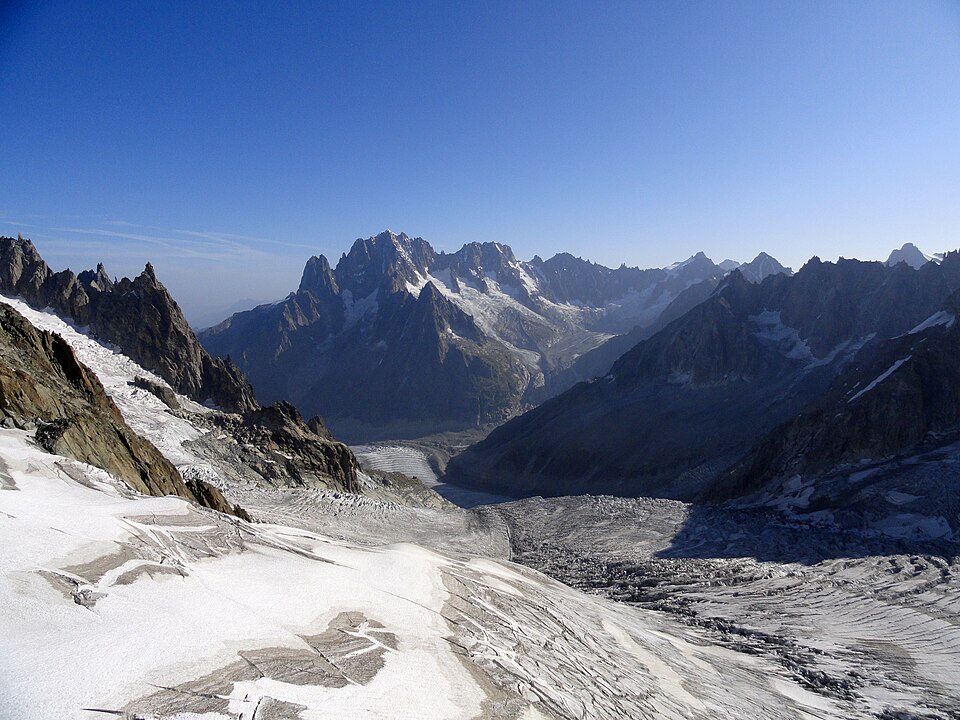 Photo: Kristoferb · CC BY-SA 3.0Trek France
Chamonix, the Mer de Glace and the Grand Balcon Nord
A day combining a rack railway, France's largest glacier and its ice cave, a high balcony path under the Chamonix aiguilles, and the cable car to the Aiguille du Midi.
- Duration
- 1 day
- Distance
- 8 km
- Difficulty
- Moderate
-
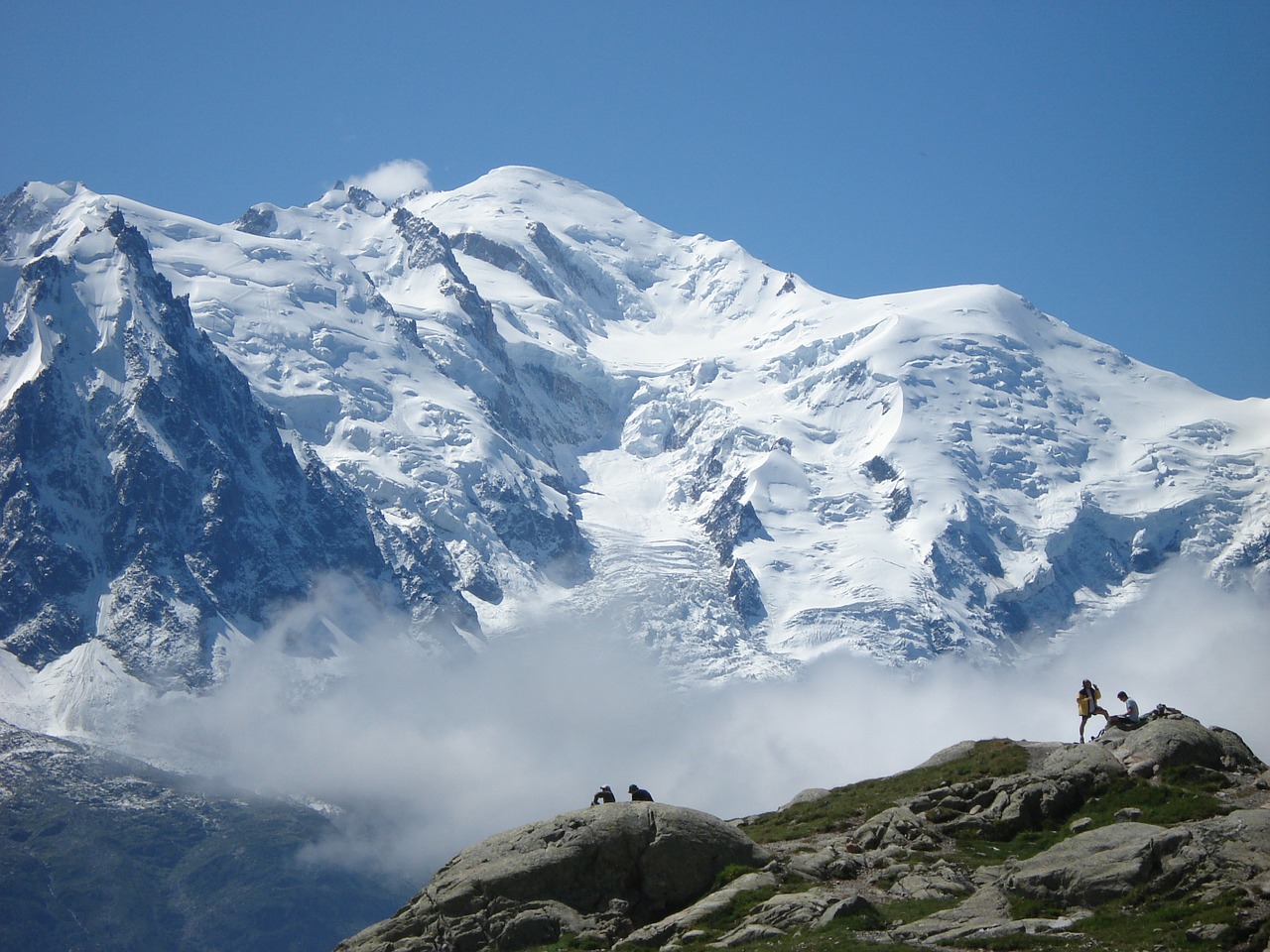 Photo: Hseugut · CC BY-SA 4.0Trek France, Italy, Switzerland
Tour du Mont Blanc
A circular alpine classic looping 170 km around the Mont Blanc massif through France, Italy and Switzerland.
- Duration
- 7 days
- Distance
- 170 km
- Difficulty
- Hard