← كل المسارات
جولة في المدينة Judaean Desert — near Bethlehem, Israel

Herodium: Herod's Cone-Shaped Palace-Fortress

A single day at the mountain Herod the Great raised for himself in the desert — the climb up the artificial cone, the round towers, the theatre with its royal box, the Bar Kokhba tunnels and the tomb.

المدة
1 أيام
المسافة
2 km
مستوى الصعوبة
متوسط
أفضل موسم
October–April

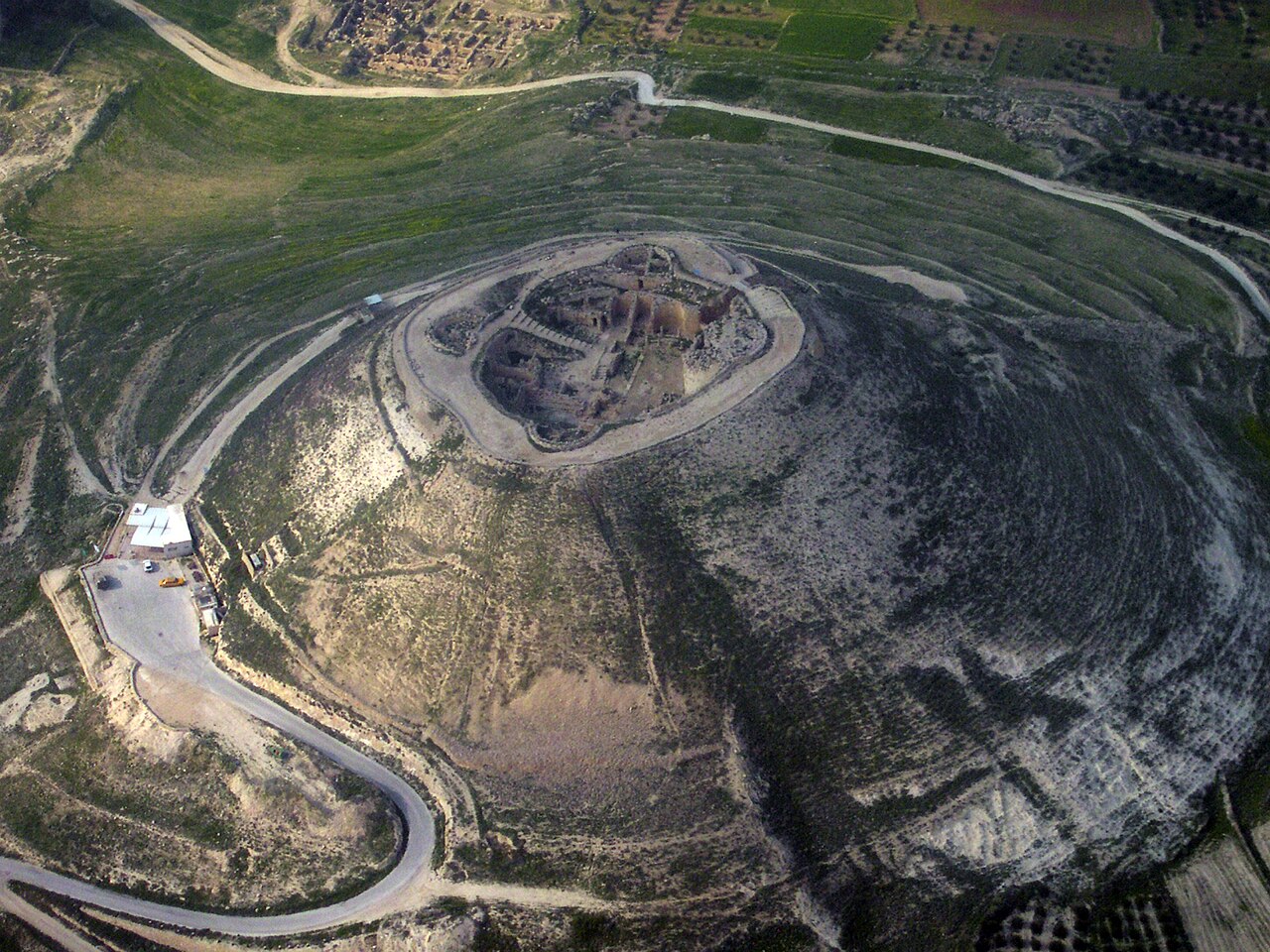
Of all the places Herod the Great built, Herodium is the only one he named after himself, and the only one where he chose to be buried. Rising from the Judaean Desert about 12 kilometres south of Jerusalem, near Bethlehem, it is a mountain that is partly man-made: Herod took an existing hill and heaped an artificial cone of earth over his palace-fortress until it stood like a small volcano above the desert.

He built it between about 23 and 15 BCE, on the spot where, according to Josephus, he had won a battle during his flight from Jerusalem around 40 BCE. The result is one of the most theatrical sites in the country — a place designed to be seen from a distance and to command the land in every direction.

This route walks it in the order the site unfolds: up the steep flank, around the towers and palace at the summit, down to the theatre Ehud Netzer uncovered, into the tunnels the Bar Kokhba rebels dug through the hill, and finally to the mausoleum where Herod’s tomb was identified in 2007.

Getting there. Herodium sits in the West Bank; most visitors come by car from Jerusalem via the Tunnels Road toward Gush Etzion, roughly a 25-minute drive. It is a fenced national park with an entrance fee and set opening hours.

Good to know:

اليوم 1

Up the mountain Herod built

Herodium park entrance → Herod's mausoleum, northern slope 2 km
التنقّل في هذا اليوم

A compact loop that climbs the cone, circles the summit fortress and drops to the discoveries on the northern slope.

مقاطع

  1. The climb up the cone
    The climb up the cone 0.3 km 📍 خريطة

    Park entrance → Summit rim

    Steep stepped ascent, fully exposed

    Start at the foot of the artificial mound and climb its steep flank. Josephus wrote that Herod approached the summit by 'two hundred steps of hewn stone'; today a modern path takes you up the same volcano-like cone to a rim that stands roughly 758 metres above sea level. It is a short climb but a steep one, and the view widens with every step. Allow about 30 minutes.

    عن هذا المكان

    The Herodeion, in Latin: Herodium, in Modern Hebrew: הרודיון Herodion, known in Arabic as Jabal al-Fureidis is a fortified desert palace built by Herod the Great, king of Judaea, in the first century BCE. The complex stands atop a hill in the Judaean Desert, approximately 12 kilometres (7.5 mi) south of Jerusalem and 5 kilometres (3.1 mi) southeast of Bethlehem, between Beit Ta'mir, Za'atara to the east and Jannatah, Tekoa and Nokdim to the west. The site is located at an elevation of 758 meters (2,487 ft) above sea level.

    اقرأوا المزيد في ويكيبيديا ↗

    صورة: Asaf T. · Public domain

  2. The round towers and the palace
    The round towers and the palace 0.3 km 📍 خريطة

    Summit rim → Inner courtyard

    Ancient stone ruins

    The summit is ringed by a double circular wall set with four towers — three semicircular and, to the east, a great round tower about 18 metres across at its base that once rose several storeys. Inside sat a luxurious palace with a colonnaded garden and a Roman-style bathhouse of hot, warm and cold rooms. During the First Jewish–Roman War, defenders turned one of the rooms into a synagogue, among the earliest known. About 40 minutes.

    عن هذا المكان

    The Herodeion, in Latin: Herodium, in Modern Hebrew: הרודיון Herodion, known in Arabic as Jabal al-Fureidis is a fortified desert palace built by Herod the Great, king of Judaea, in the first century BCE. The complex stands atop a hill in the Judaean Desert, approximately 12 kilometres (7.5 mi) south of Jerusalem and 5 kilometres (3.1 mi) southeast of Bethlehem, between Beit Ta'mir, Za'atara to the east and Jannatah, Tekoa and Nokdim to the west. The site is located at an elevation of 758 meters (2,487 ft) above sea level.

    اقرأوا المزيد في ويكيبيديا ↗

    صورة: Asaf T. · Public domain

  3. The theatre and the royal box
    The theatre and the royal box 0.4 km 📍 خريطة

    Summit → Theatre on the northern slope

    Slope paths and steps

    On the northern slope, below the summit, Ehud Netzer's team uncovered a private theatre seating roughly 450 people. Above the ordinary seats sat an elaborately decorated royal box, or loggia, its walls painted with frescoes and windows — a viewing room built for the king and his guests. It was deliberately buried when the tomb below it was constructed. About 30 minutes.

    عن هذا المكان

    The Herodeion, in Latin: Herodium, in Modern Hebrew: הרודיון Herodion, known in Arabic as Jabal al-Fureidis is a fortified desert palace built by Herod the Great, king of Judaea, in the first century BCE. The complex stands atop a hill in the Judaean Desert, approximately 12 kilometres (7.5 mi) south of Jerusalem and 5 kilometres (3.1 mi) southeast of Bethlehem, between Beit Ta'mir, Za'atara to the east and Jannatah, Tekoa and Nokdim to the west. The site is located at an elevation of 758 meters (2,487 ft) above sea level.

    اقرأوا المزيد في ويكيبيديا ↗

    صورة: Asaf T. · Public domain

  4. The Bar Kokhba tunnels 0.3 km 📍 خريطة

    Theatre → Tunnel network in the hillside

    Dug tunnels and stairs, low ceilings

    Some 130 years after Herod, rebels of the Bar Kokhba Revolt (about 132–135 CE) turned Herodium into a stronghold and carved a network of tunnels through the hill, linking Herod's old water cisterns into hidden passages for guerrilla warfare. You can walk part of the system today, ducking through the dug corridors that once let fighters move unseen inside the mountain. About 30 minutes.

  5. Herod's tomb and mausoleum
    Herod's tomb and mausoleum 0.3 km 📍 خريطة

    Tunnels → Mausoleum site, northern slope

    Slope paths

    The route ends where the long search ended. After decades of digging, in 2007 the archaeologist Ehud Netzer identified the base of a monumental mausoleum on the northern slope, along with fragments of a finely carved sarcophagus, as the tomb of Herod the Great. Netzer died in 2010 after a fall at this very spot. Stand here and look out over the desert Herod chose for his final monument. About 20 minutes.
    عن هذا المكان

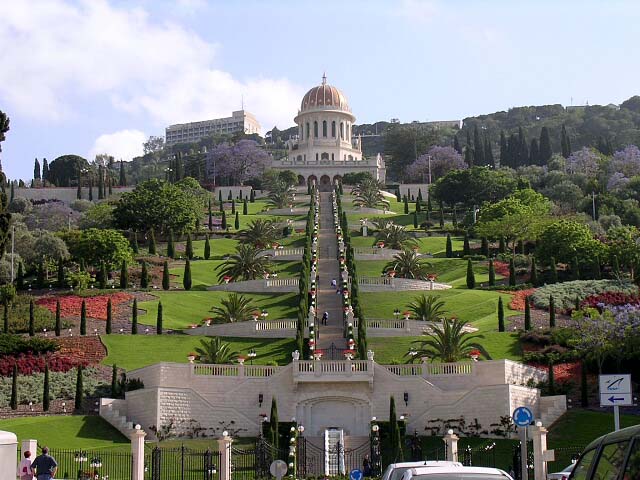
    Ehud Netzer was an Israeli architect, archaeologist and educator, known for his extensive excavations at Herodium, where in 2007 he found and identified the tomb of Herod the Great; and the discovery of a structure defined by Netzer as a synagogue, which, if true would be the oldest one ever found.

    اقرأوا المزيد في ويكيبيديا ↗

    صورة: sir kiss · Public domain

Comments