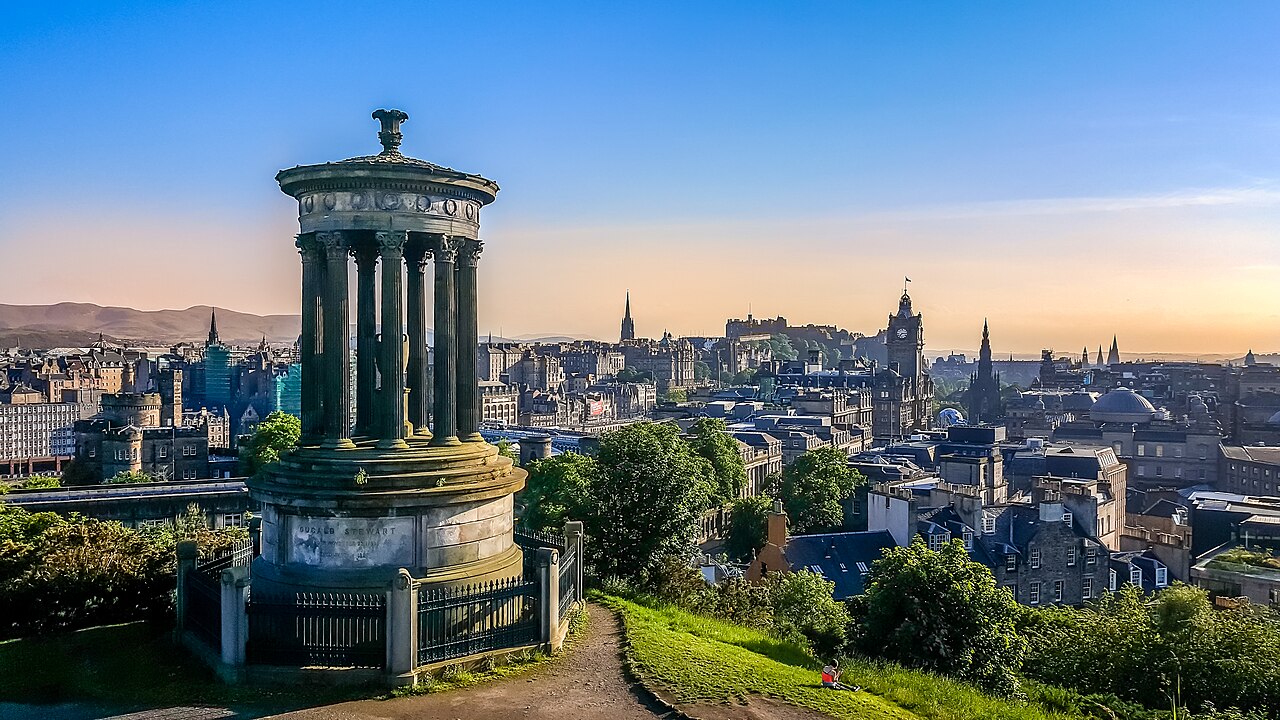
A single downhill line through a thousand years of the Old Town, followed by one honest uphill.
مقاطع
- Edinburgh Castle
Castle Esplanade ← Crown Square
Cobbled ramps and stone stairs
Start on Castle Rock, occupied since at least the Iron Age and crowned by a royal castle since the reign of Malcolm III in the 11th century. Inside are the Honours of Scotland — the Scottish crown jewels, dating from the 15th and 16th centuries — the tiny Norman St Margaret's Chapel, and views straight down the street you are about to walk. Allow about 90 minutes.
- Down the Royal Mile and its closes
Castlehill ← High Street
Cobbled street
The Mile is not one street but several, running downhill in a straight medieval line. The real discovery is sideways: duck into the closes and wynds — steep, shoulder-width alleys off both sides — where the tenement city stacked itself up to eleven storeys. Mary King's Close, sealed under the City Chambers, can be visited underground. About 45 minutes, more if you wander.
-
 St Giles' Cathedral
High Street ← Parliament Square
Cobbled street
The High Kirk of Edinburgh, begun in the 14th century and extended into the early 16th, sits halfway down the Mile under its distinctive crowned steeple. This was John Knox's church and the pulpit of the Scottish Reformation. Don't miss the Thistle Chapel, a small riot of carved stone. About 30 minutes.
عن هذا المكان
St Giles' Cathedral, also known as the High Kirk of Edinburgh, is one of three cathedrals in Edinburgh, Scotland. The existing building was begun in the 14th century and extended until the early 16th century; significant alterations were undertaken in the 19th and 20th centuries, including the addition of the Thistle Chapel. St Giles' is closely associated with many events and figures in Scottish history, including John Knox, who served as the church's minister after the Scottish Reformation. The cathedral is administered by the Church of Scotland.
اقرأوا المزيد في ويكيبيديا - Canongate to Holyrood Palace
Parliament Square ← Palace of Holyroodhouse
Cobbled street and pavement
The Mile's lower half, the Canongate, is quieter and older-feeling, and delivers you to the Palace of Holyroodhouse — the official residence of the monarch in Scotland, standing at the opposite end of the Mile from the castle. Mary, Queen of Scots' chambers are here, and the roofless ruin of Holyrood Abbey sits alongside. The modern Scottish Parliament faces it across the road. About 90 minutes.
- Into Holyrood Park
Palace of Holyroodhouse ← Dunsapie Loch
Park paths and road
The city stops at a gate. Holyrood Park is a piece of highland dropped into the capital — hills, lochs, glens and basalt cliffs, with the great curved wall of Salisbury Crags overhead. Follow the park round to Dunsapie Loch, the launching point for the gentlest way up. About 45 minutes.
- Up Arthur's Seat
Dunsapie Loch ← Arthur's Seat summit
Grassy slope and rocky path
The main peak of an ancient extinct volcano, rising to about 251 m above the city — Robert Louis Stevenson called it a hill for magnitude, a mountain in virtue of its bold design. From the east, above Dunsapie Loch, it is a steady grassy pull with a rocky final scramble to a summit that gives back the whole route: the Mile, the castle, the Forth and, on a clear day, Fife. About 45 minutes up.
التعليقات
سجّلوا الدخول للانضمام إلى النقاش.
لا توجد تعليقات بعد — كونوا أوّل المعلّقين.