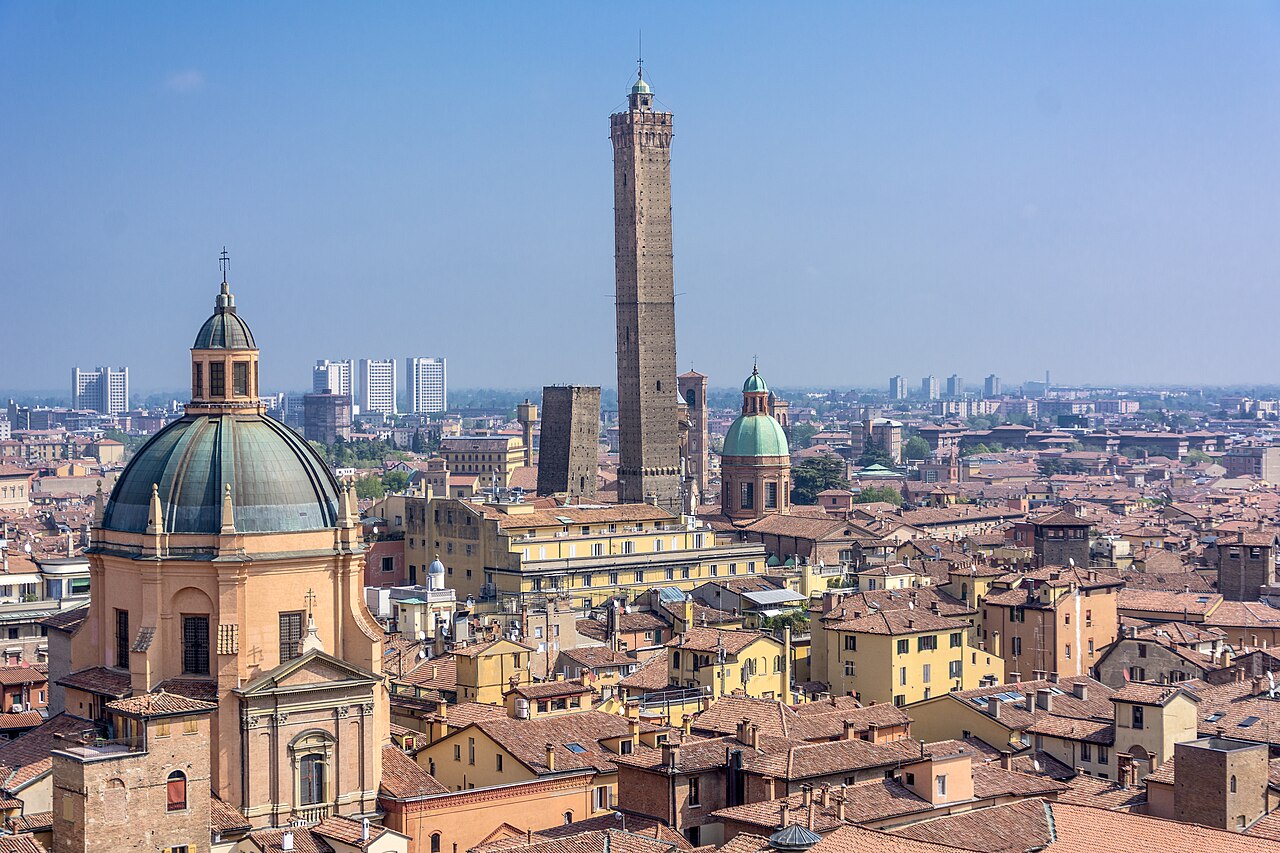
A continuous line from Piazza Maggiore past the Two Towers and the market to the university quarter, then out to the start of the San Luca portico.
مقاطع
- Piazza Maggiore & Basilica di San Petronio
Piazza Maggiore ← Basilica di San Petronio
Paved square
Begin in Piazza Maggiore, the medieval square at the centre of Bologna, dominated by the Basilica di San Petronio. Dedicated to the city's patron saint and begun in 1390, it is one of the largest brick churches in the world, its façade left famously half-clad in marble and half in bare brick. Alongside, Piazza del Nettuno holds Giambologna's muscular Neptune fountain of the 1560s. About 45 minutes.
- The Two Towers
Basilica di San Petronio ← Two Towers
City streets under porticoes
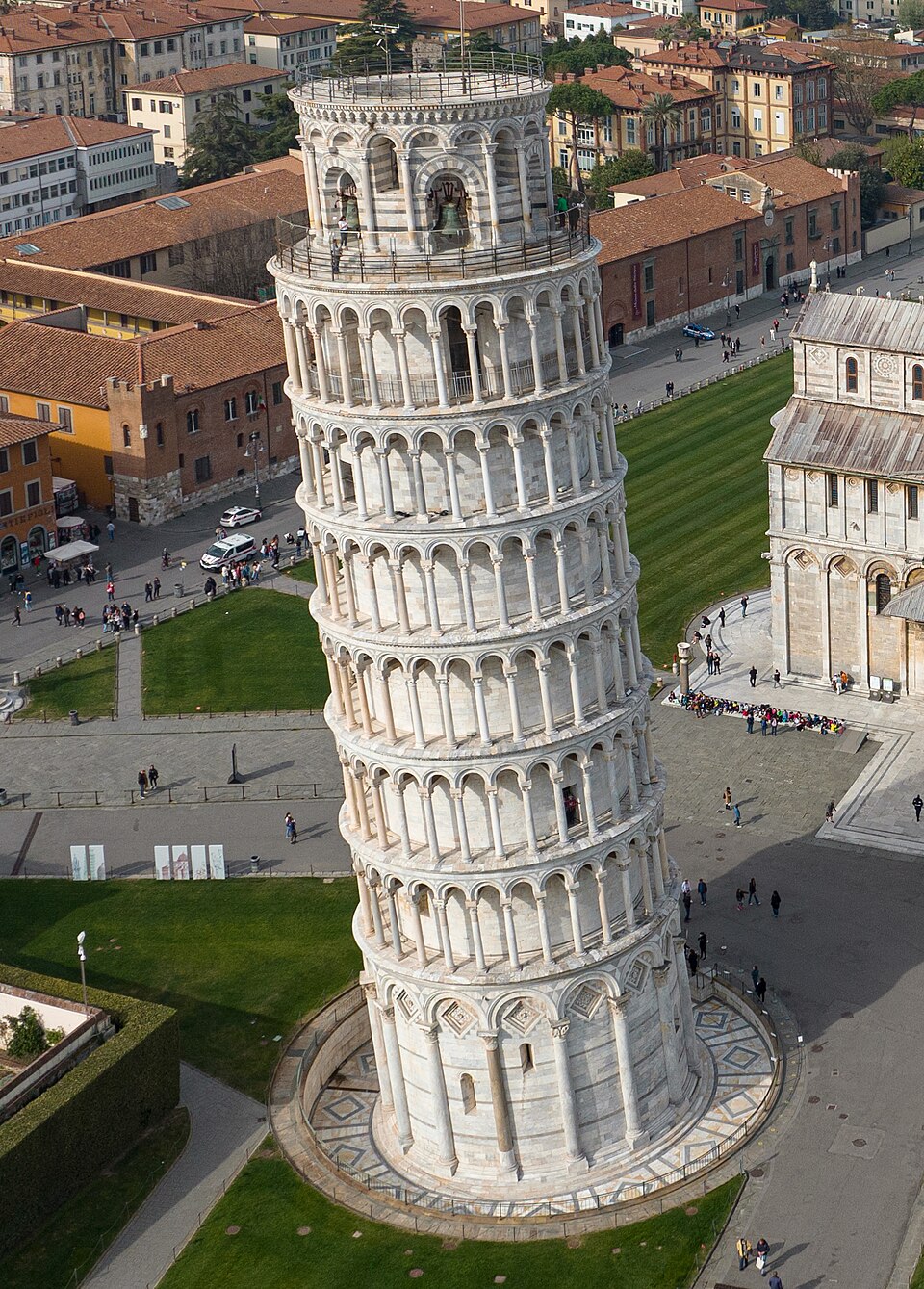
A few streets east rise the Two Towers, the survivors of the many that Bologna's medieval families built for status and defence. The taller Asinelli, about 97 metres, has long been climbed by its 498 wooden steps for a rooftop view; the shorter Garisenda leans so sharply that Dante likened it to a giant stooping overhead. About 40 minutes, more if you climb.
- The Quadrilatero market
Two Towers ← Quadrilatero
Narrow market lanes
Duck into the Quadrilatero, the tight grid of lanes just off Piazza Maggiore that has been Bologna's market since Roman times. Its delis, fishmongers and greengrocers spill mortadella, tortellini and parmigiano onto the street — this is the grassa, the fat, in the city's old nickname. Graze slowly. About 30 minutes.
-
 The university quarter
Quadrilatero ← Via Zamboni
City streets under porticoes
Walk northeast into the Zona Universitaria along Via Zamboni, the student heart of the city. The University of Bologna, founded in 1088, is the oldest in continuous operation in the Western world; nearby the Archiginnasio, its former main building, hides a spectacular 17th-century carved wooden anatomical theatre. About 45 minutes.
عن هذا المكان
The University of Bologna is a public research university in Bologna, Italy. It is the oldest university in continuous operation in the world, and the first degree-awarding institution of higher learning. Teaching began around 1088, with the university becoming organised as universitas scholarium or guilds of students by the late 12th century. The university's emblem carries the motto Alma Mater Studiorum and the date A.D. 1088. With over 90,000 students, the University of Bologna is one of the largest universities in Europe.
اقرأوا المزيد في ويكيبيديا - The porticoes toward San Luca
Via Zamboni ← Porta Saragozza
City streets under porticoes
End at the porticoes themselves, Bologna's defining feature and a UNESCO World Heritage Site since 2021 — together they run for tens of kilometres through the city. Follow them southwest to Porta Saragozza, where the Portico di San Luca begins: a covered walkway of about 3.8 kilometres and 666 arches that climbs the hill to the Sanctuary of the Madonna di San Luca. Walk as far up as the light allows. About 40 minutes to the gate, longer for the full climb.
التعليقات
سجّلوا الدخول للانضمام إلى النقاش.
لا توجد تعليقات بعد — كونوا أوّل المعلّقين.