Beit She'an: Walking Roman Scythopolis
Practical, route-specific tips and insights for Beit She'an: Walking Roman Scythopolis.

Packing list
Filled in for this route from the kit a walk like this needs and the gear its tips mention. Tick things off as you pack.
Best time to go
-
Be at the gate when it opens, not after lunch
The Beit She’an valley sits about 120 metres below sea level and summer afternoons routinely pass 40°C, with almost no shade anywhere in the excavated city. The park opens early and the first two hours are the only comfortable ones from May to September. In winter the same hour pays off differently: low sun rakes along the fallen columns of Palladius Street and they photograph the way they look in your memory rather than flat and grey.
Tickets & reservations
-
Entry closes an hour before the park does — and Fridays close early
Israel’s national parks stop admitting visitors one hour before the posted closing time, and Fridays and holiday eves close roughly an hour earlier than the rest of the week. Beit She’an wants two to three hours if you climb the tel, so a late-morning Friday arrival is the classic way to be walked out before reaching the theatre. Check the day’s closing time, subtract an hour, and work backwards.
Smart savings
-
If this is your third national park, buy the pass instead
The Nature and Parks Authority’s annual Matmon subscription covers around sixty national parks and nature reserves with unlimited entries for a year, and there is a shorter-stay visitor version for trips. It pays for itself at roughly the third site, which anyone touring the Galilee passes easily. A few extras — the Masada cable car is the usual example — are discounted rather than included, so read what your card actually covers.
Local insights
-
The night show is a separate ticket, and English nights are rare
She’an Nights projects the vanished city back onto its own ruins after dark on selected evenings through the warmer half of the year, sending visitors in as small timed groups. It is not covered by day admission and it needs a reservation. The part people find out too late: showings alternate between Hebrew and English, and the English ones run much less often — ask which language the date you want is running in before you build an evening around it.
-
Test the acoustics, then go and look at the latrines
The 2nd-century theatre held around 7,000 and its stone bowl still carries an ordinary speaking voice from the stage floor to the upper rows — sit high, send someone down, have them talk rather than shout. Then walk the short distance to the surviving public latrines: a long bench of stone seats over a channel of running water, side by side with no partitions. They tell you more about how this city actually worked than the theatre does.
-
Climb the tel first, while you can still read the city from above
The mound above the ruins is roughly twenty cities stacked on one another, and from the top the Roman street plan below reads like an architect’s model — cardo, theatre, bathhouses, the line of the colonnades — before you are standing inside it and can only see one street at a time. The climb is steep, stepped and shadeless, which is a different proposition at nine in the morning than at one in the afternoon. It is also the one part of the site that is not wheelchair accessible; the cardo and the path to the theatre are.
Water & food
-
Shade is the thing this site does not give you
Carry more water than feels sensible and wear a hat — the ruins are open ground from end to end and there is no tree cover to retreat into. The western bathhouse is the one substantial patch of shade in the excavated city, which is why experienced visitors save it for the hottest part of the visit rather than doing it first in the order the path suggests.
Getting there
-
One of the few great ruins you can reach by train
Beit She’an has its own station on the line from Haifa, a short walk from the park gate — unusual for an archaeological site in Israel, and it removes the car from the day entirely. By road it sits at the junction of Highways 90 and 71, roughly two hours from Tel Aviv or Jerusalem. It is a three-hour site rather than a full day, so plan it alongside the Gilboa, Gan HaShlosha or the Sea of Galilee rather than on its own.
You might also like
-
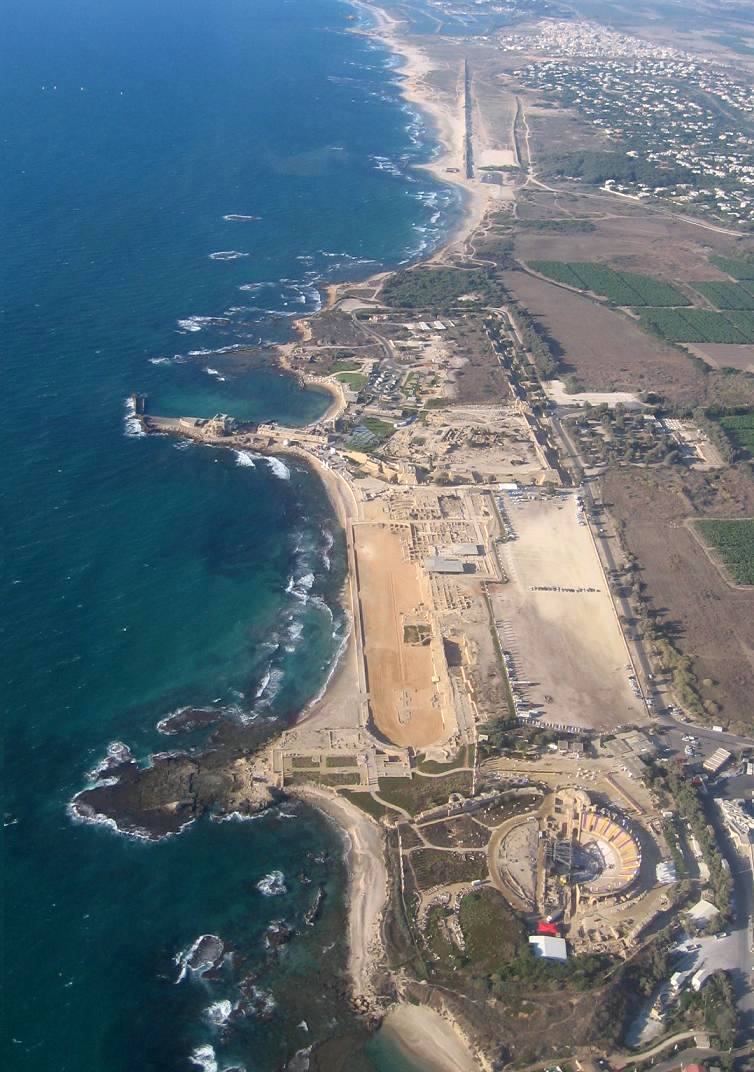 Photo: The original uploader was אסף.צ at Hebrew Wikipedia. · Public domainCity walk Israel
Caesarea Maritima: Herod's Roman Port by the Sea
One easy day through a Roman capital on the Mediterranean — theatre, seaside palace, chariot track, Crusader harbour and a great aqueduct on the beach.
- Duration
- 1 day
- Distance
- 3 km
- Difficulty
- Easy
-
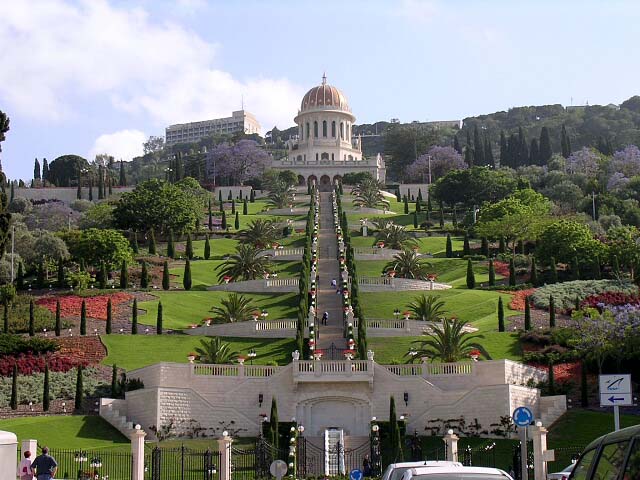 Photo: Arash Hashemi · CC BY-SA 3.0City walk Israel
Haifa: The Baháʼí Terraces, the German Colony and Wadi Nisnas
One downhill day across Mount Carmel — nineteen garden terraces, a golden shrine, a Templer boulevard, an Arab market quarter, and a cable car back to the sea.
- Duration
- 1 day
- Distance
- 5 km
- Difficulty
- Easy
-
 Photo: israeltourism from Israel · CC BY 2.0City walk Israel
Old City of Acre: Crusaders, Khans and the Sea Walls
One easy day inside a walled port city where a Crusader fortress hides underground beneath an Ottoman capital, ringed by sea walls that stopped Napoleon.
- Duration
- 1 day
- Distance
- 2 km
- Difficulty
- Easy
-
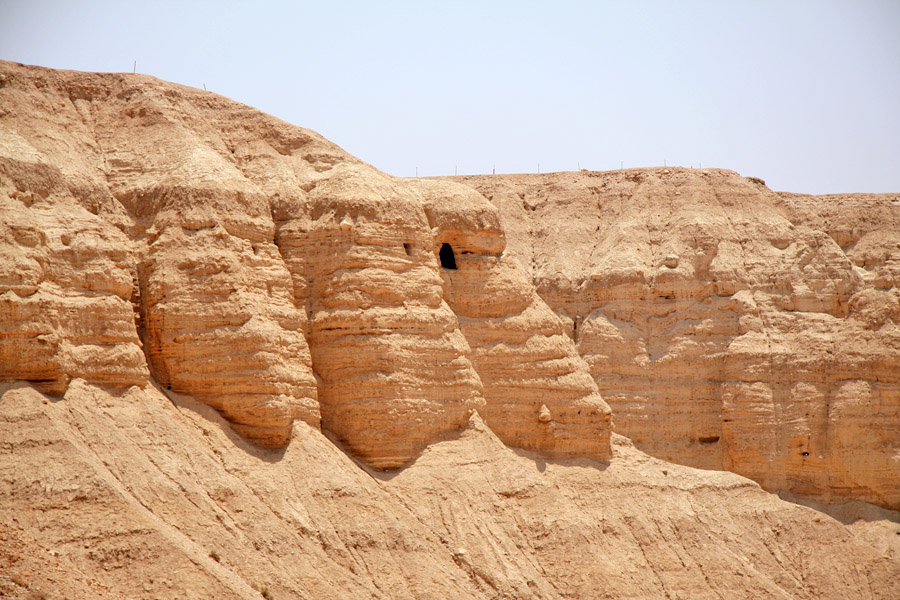 Photo: Tamarah · CC BY-SA 2.5City walk Israel
Qumran: The Settlement of the Dead Sea Scrolls
A single day on the marl plateau above the Dead Sea, where the caves gave up the Dead Sea Scrolls — the ruined settlement, the ritual baths, the scriptorium, the water system and the long argument over who lived here.
- Duration
- 1 day
- Distance
- 1.5 km
- Difficulty
- Easy