
Blog
The Kumano Kodo Nakahechi in Four Days
In short
The Kumano Kodo Nakahechi from Takijiri-oji to Hongu Taisha is a moderate four-day walk of 41 km and 2,100 m. Go in late March to May or in October and November, and avoid the June rains and humid midsummer. Book the small village inns before you fix the dates, and collect stamps in a book from Takijiri.
Four moderate days, in spring or autumn, from gate to shrine
The Nakahechi from Takijiri-oji to Kumano Hongu Taisha is a moderate four-day walk: 41 km and 2,100 m of ascent. The season is spring, late March to May, and autumn, October to November. The months on the route are March, April, May, October and November. March means late March, not the first wet week of the month. June is the rainy season. Leave it alone. Humid midsummer, July through September, is the other gap. Those months are not on the route, and a “quiet” August is the season the page tells you to avoid.
The Kumano Kodo is one of two pilgrimage routes inscribed by UNESCO. The other is the Camino de Santiago. What you collect on this walk is a stamp book: pick up the michi-no-eki pilgrim stamp book at Takijiri and stamp it at the oji, the subsidiary shrines, along the way. That book is the traditional record of the walk.
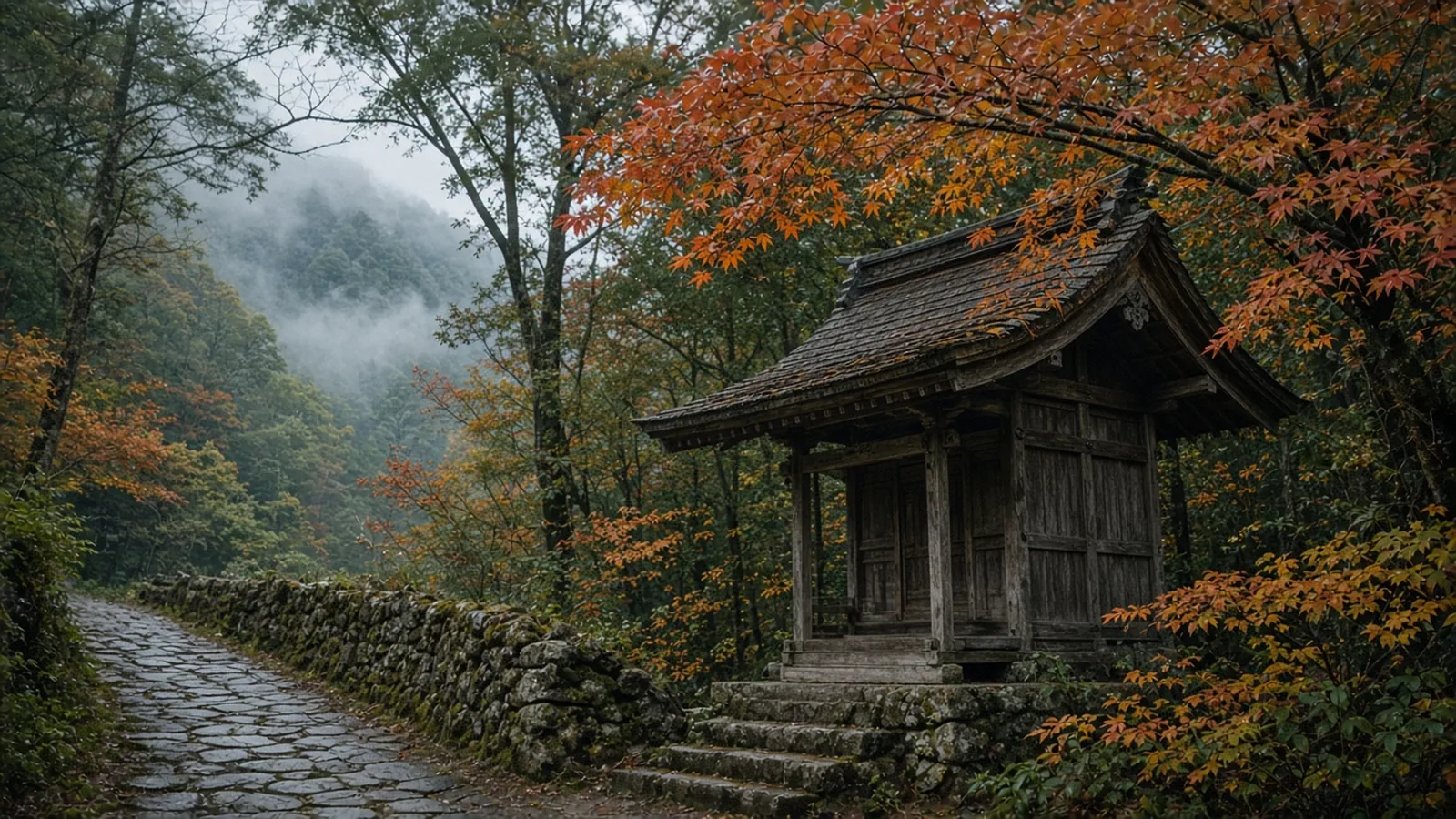
The walking is cedar forest, stone steps worn hollow, tea fields and small villages. You sleep in family-run minshuku, eat what the house eats, and take the bath before dinner. It is not a wilderness trek. The grade is moderate because of that, and because the days are humane. The vertical still adds up to 2,100 m. Do not hear “pilgrimage” and pack as if the hills were flat.
Beds first, then the dates
Accommodation is small and genuinely limited. Takahara and Chikatsuyu have only a handful of beds between them, and in spring and autumn they book out months ahead. Reserve the rooms before you commit to the dates, not after the flights are bought. Luggage shuttles between the villages are widely used and worth it. You then walk with a day bag, which is the right pack for stone steps in the rain that still happens inside the good months.
Carry cash. Card acceptance in the mountain villages is patchy. Most guesthouses serve dinner at a fixed hour and there is nowhere else to eat. Arrive by late afternoon. A stage that looks short in the morning becomes a problem if you treat it as a sightseeing day and walk into a closed kitchen.
Getting there is ordinary. Train or fly to Kii-Tanabe, then a local bus of about 40 minutes to Takijiri-oji. From Hongu, buses run back to Kii-Tanabe, out to the Nachi coast, or to the hot springs at Yunomine and Kawayu. Yunomine is a short bus from Hongu and sits inside the same World Heritage listing. It is the right place to stop walking.
The four days
Day one is only 4 km and about 430 m, around two hours, and it goes almost straight up. Takijiri-oji is the gate into the sacred mountains. The path climbs through cedar past the Tainai-kuguri, a cleft pilgrims squeezed through as a symbolic rebirth, then eases onto a ridge and into Takahara, a hamlet around 300 m, called the village in the mist because cloud fills the valleys below it at dawn. An old camphor grove shades the small shrine. The day is short so that the climb is the memory, not a death march, and so you are in the inn for the bath. Do not add a second village “while you are fresh.” The beds were the constraint, and you booked one of them.
Day two is the long forest day: Takahara to Chikatsuyu, about 13 km and 800 m, around six hours. Cedar, small passes, and a string of oji. There are few views, and you do not need them. This is the day the route feels like a pilgrimage rather than a viewpoint walk. You pass the statue of Gyuba-doji, the retired emperor depicted on both a cow and a horse, and drop to Chikatsuyu on the Hidaka river, the traditional halfway village and the largest on the route. Arrive in time for dinner. The stamp book gets its use here. It is a record, not a prize.
Day three is the biggest: Chikatsuyu to Hosshinmon-oji, about 17 km and 800 m, around seven hours. You climb to Tsugizakura-oji and the Nonaka no Ippo-sugi, a stand of enormous cedars, on the order of 800 years old, whose branches reach toward Kumano. Then the sustained pull to Mikoshi-toge, the high point of the Nakahechi at roughly 700 m, with a short spur to a lookout over the Hatenashi range. The ridge beyond is remote and undulating, and it ends at Hosshinmon-oji, the outer gate of the Hongu sanctuary. Everything from there inward is treated as holy ground. This is the day to start early enough that late afternoon still exists when you arrive.
Day four is the gentle one, and the one people love: about 7 km and 70 m, around three hours, down through the hamlets of Mizunomi and Fushiogami, tea terraces and persimmon trees. At Fushiogami-oji, pilgrims used to see the shrine and drop to their knees. The name means bowing down. A last descent and a broad flight of stone steps reach Kumano Hongu Taisha, the head shrine of the thousands of Kumano shrines, with dark cypress-bark roofs and no gilding. Ten more minutes on the flat bring you to Oyunohara, the sandbank where the shrine stood until a flood in 1889 swept it away. The shrine was rebuilt higher. The old site is marked by a steel torii on the order of 34 m tall, alone in a field at the meeting of the rivers. Go at dusk if you can. Then the bus.
What not to add
Do not add a certificate that links this walk to the Camino. The UNESCO sentence is enough, and the stamp book is the object you actually carry. Do not schedule June because the villages might be quieter. They are quieter because it is raining. Do not schedule midsummer because the days are long. They are long and humid, and the month list has already declined.
Four days, 41 km, 2,100 m, moderate, late March to May or October to November, with the inns booked first: that is the Nakahechi from Takijiri-oji to Hongu Taisha. The other walks are on trails. This one rewards the person who arrives in time for dinner.
Questions
- How long is the Nakahechi in this itinerary?
- Four days, 41 km and 2,100 m, graded moderate, from Takijiri-oji to Kumano Hongu Taisha and the torii at Oyunohara.
- When should I walk it?
- Late March to May, and October to November. Avoid the June rainy season and humid midsummer. Those hotter months are not on the route.
- What stamps do I collect?
- A michi-no-eki pilgrim stamp book from Takijiri, stamped at the oji along the way. That book is the traditional record of the walk.
- How hard is it to find a bed?
- Hard in season. The inns are small and family-run. Takahara and Chikatsuyu have only a handful of beds and book out months ahead in spring and autumn. Reserve before you commit to dates, carry cash, and arrive in time for the set dinner.
- Which day is the longest?
- Day three, Chikatsuyu to Hosshinmon-oji, about 17 km and 800 m, over the Mikoshi pass at roughly 700 m. Day one is only 4 km and still steep.
Sources
Routes in this post
-
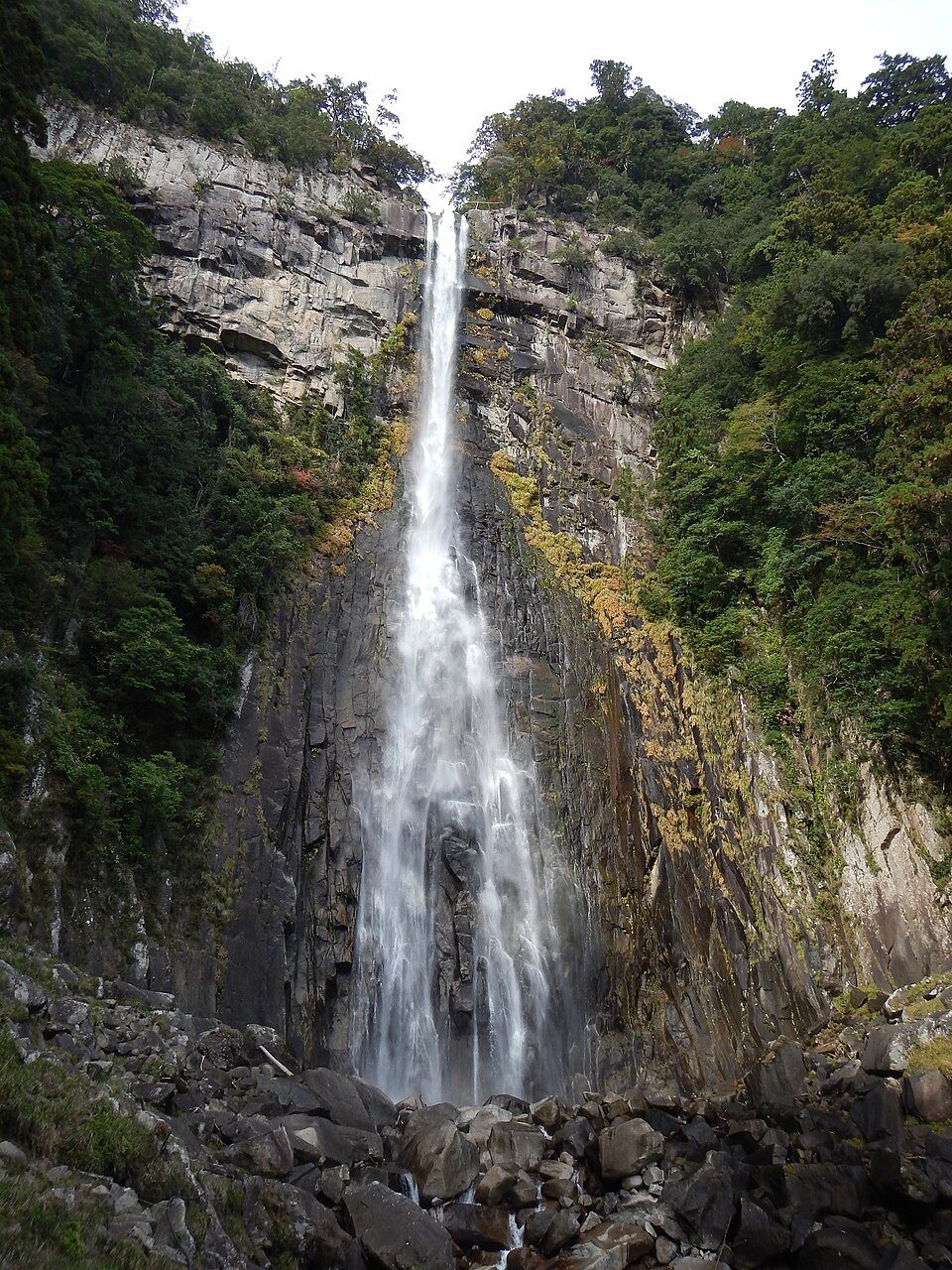 Photo: Nekosuki · CC BY-SA 4.0Trek Japan
The Kumano Kodō Nakahechi — Takijiri-oji to Hongū Taisha
Four days on Japan's imperial pilgrimage road, over forested passes and through mountain villages, from the gateway shrine at Takijiri to the great torii at Oyunohara.
- Duration
- 4 days
- Distance
- 41 km
- Difficulty
- Moderate