
Blog
Inca Trail or Salkantay
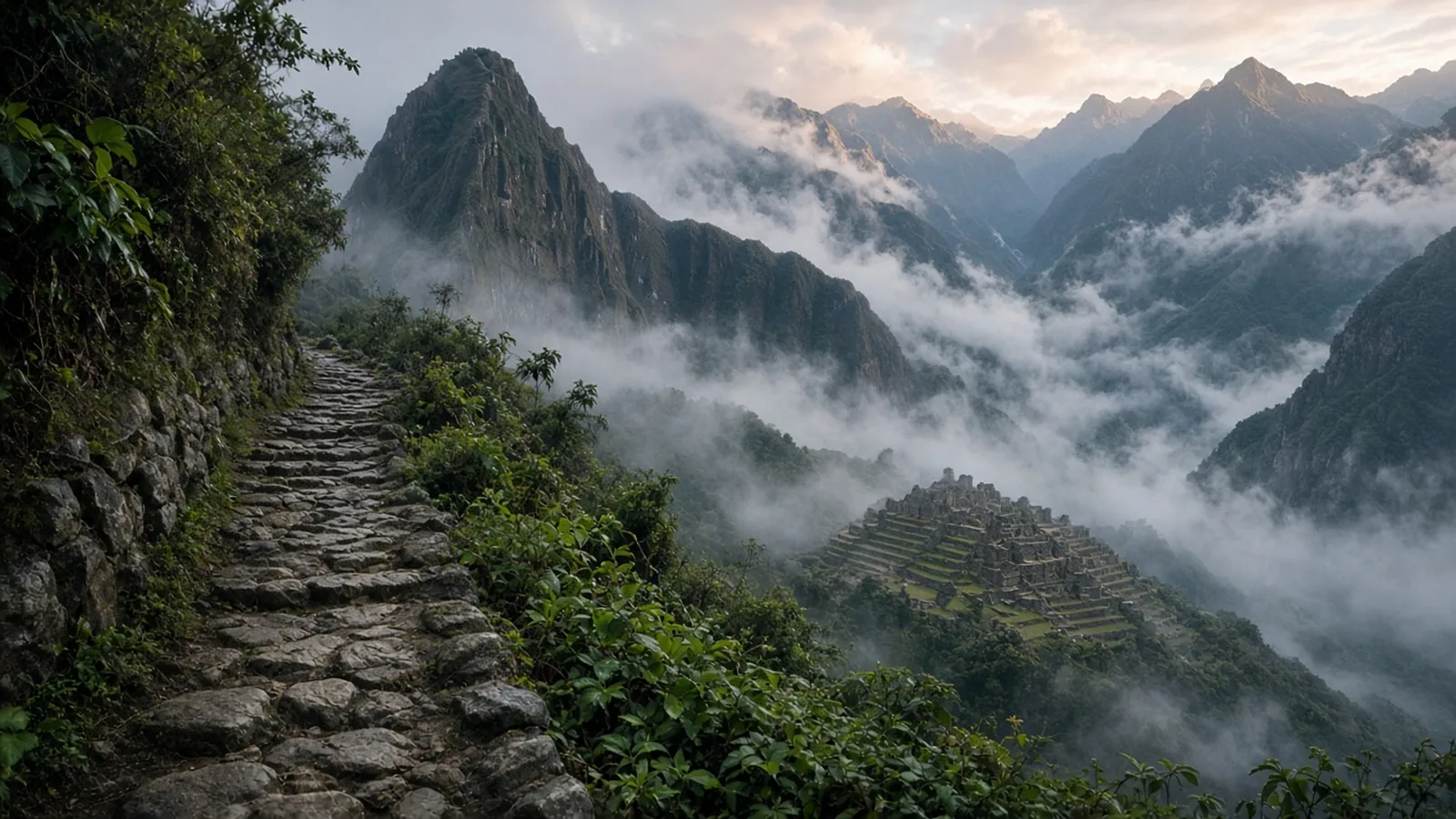
In short
Walk the Inca Trail if you already hold a dry-season permit: 4 days, about 42 km, 2,500 m, high point 4,215 m, May to September, closed every February. Walk Salkantay if you do not: 5 days, about 74 km, 3,200 m, pass about 4,630 m, same dry season, and no permit lottery. It is not the easier trail.
If you hold a permit, walk the Inca Trail. If you do not, read Salkantay properly.
These are not an easy trek and a hard trek. Both are graded hard. The Inca Trail is the shorter one: four days, about 42 km, about 2,500 m of ascent, on the stone road that arrives at Machu Picchu through the Sun Gate. Salkantay is the longer, higher one: five days, about 74 km, about 3,200 m of ascent, around a 6,271 m peak, over a pass at about 4,630 m, and on to the same citadel.
The difference that actually decides the trip is the permit. The Inca Trail requires one, caps it, and forbids you to walk the route on your own. Salkantay has no lottery and no daily cap on the trek. That is not the same thing as an easy backup. The pass is higher than anything on the Inca Trail, and altitude is what turns people around.
The Inca Trail is a permit with a walk attached
The dry season is May to September. The trail closes completely every February for maintenance. July is the middle of the dry window. October is already outside it, which is why Where to walk in October does not send you here. A dry-season month only helps if the permit for that date exists.
The permit is a government one, capped at 500 people a day in total, about 200 of them trekkers. You book through a licensed operator. Independent trekking is prohibited. Permits sell out four to six months ahead. For May to August they are gone months before the date. The permit is fixed to the date and to the passport number. You bring that passport. It is checked at the trailhead. There is no useful version of this plan that starts with a flight and hopes for a spare place.
The high point is Dead Woman’s Pass at 4,215 m, on the second day, and there is a second high pass after it. Cusco, where you should spend at least two days beforehand, sits at 3,400 m. The page treats those days as essential, because the difficulty is the altitude rather than the distance. Porters carry the group kit on an operated trek. You still need layers for cold nights and strong sun. The operator drives you to the trailhead at Km 82. You return by train from Aguas Calientes.
If all of that is already true, the permit is in your name and the dates are in the dry season, walk this trail. It is the Inca road, and it is the shorter of the two hard weeks. It is not a walk you upgrade to on arrival.
Salkantay is the higher pass, without the lottery
The dry season is the same May to September. The rainy season, November to March, is when the page expects mud and landslides. Choosing Salkantay does not buy you an October or a February that the Inca Trail refused. It buys you a way to Machu Picchu in the dry season when you do not have, and cannot get, the capped permit.
The route climbs from dry farmland to a glacial pass at about 4,630 m, then drops for two days through cloud forest into coffee and avocado country, and comes at Machu Picchu from the west. The pass is the crux, and it is higher than Dead Woman’s Pass. People who switch trails to avoid a booking problem and then treat the new trail as gentler have not read the height. The weather is two seasons in one walk: freezing at the pass, humid and warm once you are down in the forest. Pack for both.
There is no permit lottery and no cap on numbers. You can walk it independently, though most people go with an operator. A small community fee is collected near the start, and the Machu Picchu entrance is a separate timed ticket that should be booked well ahead. That ticket is not the Inca Trail permit. Having one does not give you the other. Plan on at least two days in Cusco before you start. The road goes to Mollepata, at about 2,900 m, and usually on up to the trailhead. On the last day you can climb about 400 m of steps from Aguas Calientes to the citadel, or take the bus. The bus is a knee decision. It is not an altitude decision. You have already done the altitude.
What the dry season does, and does not, decide
May to September is the shared good window. Inside it, the Inca Trail’s constraint is the permit, not the weather. Salkantay’s constraint is the pass. July, in the middle of that window, is a fair month for either, and it is discussed as a season in Where to walk in July. It will not manufacture a permit, and it will not lower 4,630 m.
Outside it, be specific. February is a hard stop on the Inca Trail: the path is closed. November to March is the Salkantay rainy season, with mud and landslides in the warning, not as a footnote. October sits after the listed dry season and before that rainy season. It is not a third season the pages offer you. If your dates are October, pick a walk that names October.
A plain way to decide
Walk the Inca Trail if you already have a permit for a dry-season date, through a licensed operator, on the passport you will carry. Four days, about 42 km, a high point of 4,215 m, and the Sun Gate at the end. That is the trip you booked months ago. Show up fit, and show up early enough in Cusco.
Walk Salkantay if you do not have that permit and you still want to reach Machu Picchu on foot in the dry season. Give it five days, about 74 km, and respect a pass at about 4,630 m. Go with an operator or go independently, but do not go without the citadel ticket and the Cusco days. It is the alternative the route itself describes. It is the worse choice if what you wanted was less altitude.
Walk neither one in the rainy months, and do not treat a sold-out Inca permit as a problem Salkantay solves in the same week. The lottery was decided months ago. The pass does not care.
Questions
- Can you walk the Inca Trail without a guide?
- No. You cannot walk it on your own. The booking goes through a licensed operator. The permit is capped at 500 people a day, about 200 of them trekkers, and it is tied to your passport. May to August dates sell out months ahead.
- Does Salkantay need an Inca Trail permit?
- No. There is no lottery and no daily cap on the Salkantay trek. The Machu Picchu entrance ticket is separate and should be booked ahead. You can walk independently, though most people go with an operator.
- Which pass is higher?
- Salkantay. The pass is about 4,630 m. Dead Woman's Pass on the Inca Trail is 4,215 m. Salkantay is the longer walk and the higher one, which is why it is a poor choice if you wanted less altitude.
- When should you avoid both?
- The shared dry season is May to September. The Inca Trail closes every February. Salkantay's rainy season, November to March, brings mud and landslides. October is not listed as the dry season for either.
Sources
Routes in this post
-
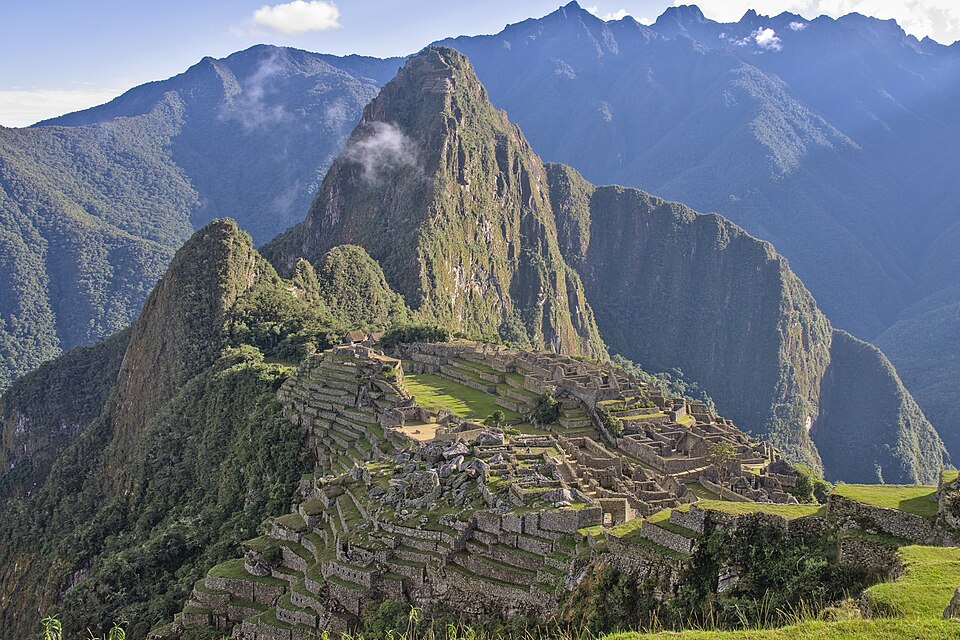 Photo: Draceane · CC BY-SA 4.0Trek Peru
The Classic Inca Trail to Machu Picchu
Four days on original Inca stone paths over high passes and past cloud-forest ruins, arriving at Machu Picchu through the Sun Gate at dawn.
- Duration
- 4 days
- Distance
- 42 km
- Difficulty
- Hard
-
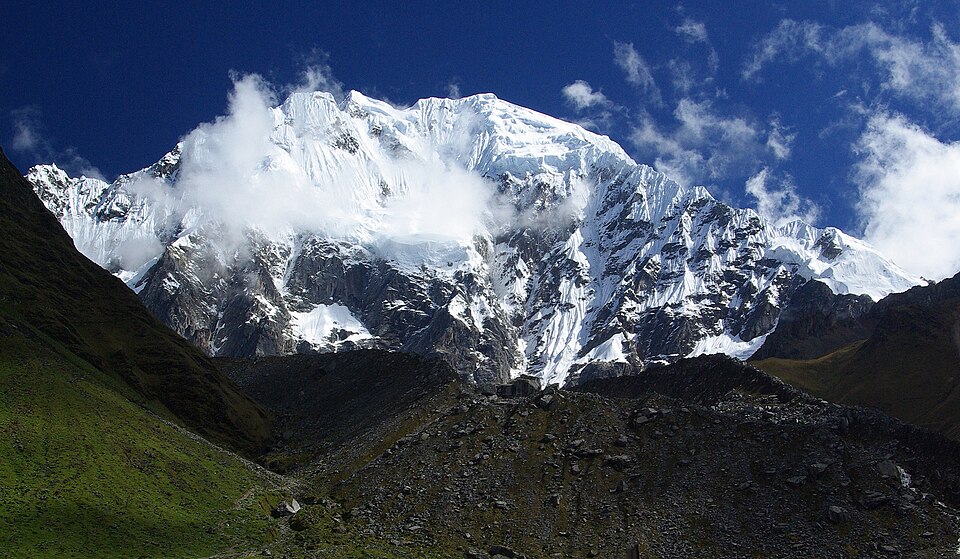 Photo: Stevage · CC BY-SA 3.0Trek Peru
The Salkantay Trek to Machu Picchu
Five days around a 6,271 m ice giant — a glacial pass at about 4,630 m, a turquoise lake, and a long drop into cloud forest, all the way to Machu Picchu without a permit lottery.
- Duration
- 5 days
- Distance
- 74 km
- Difficulty
- Hard