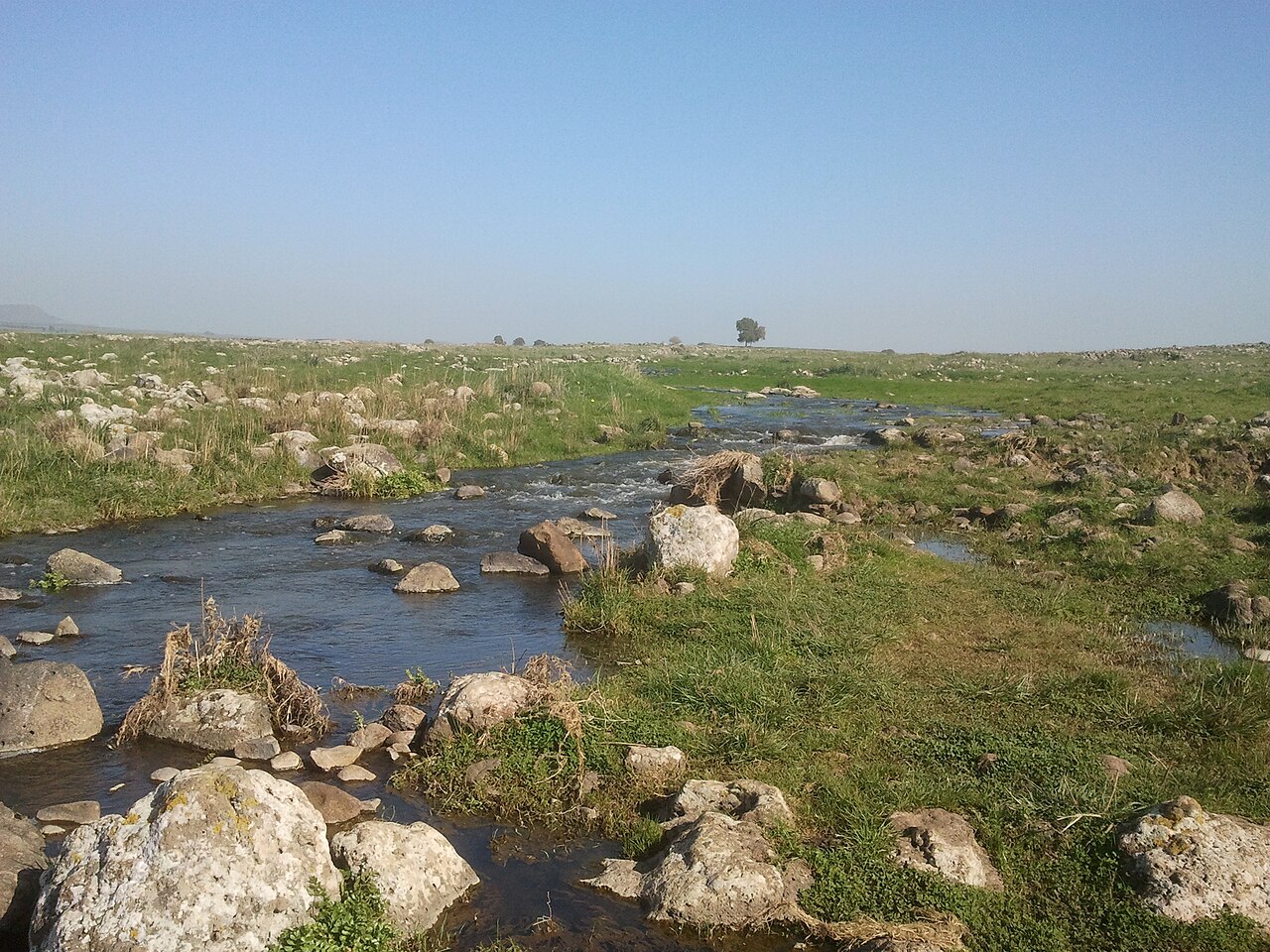
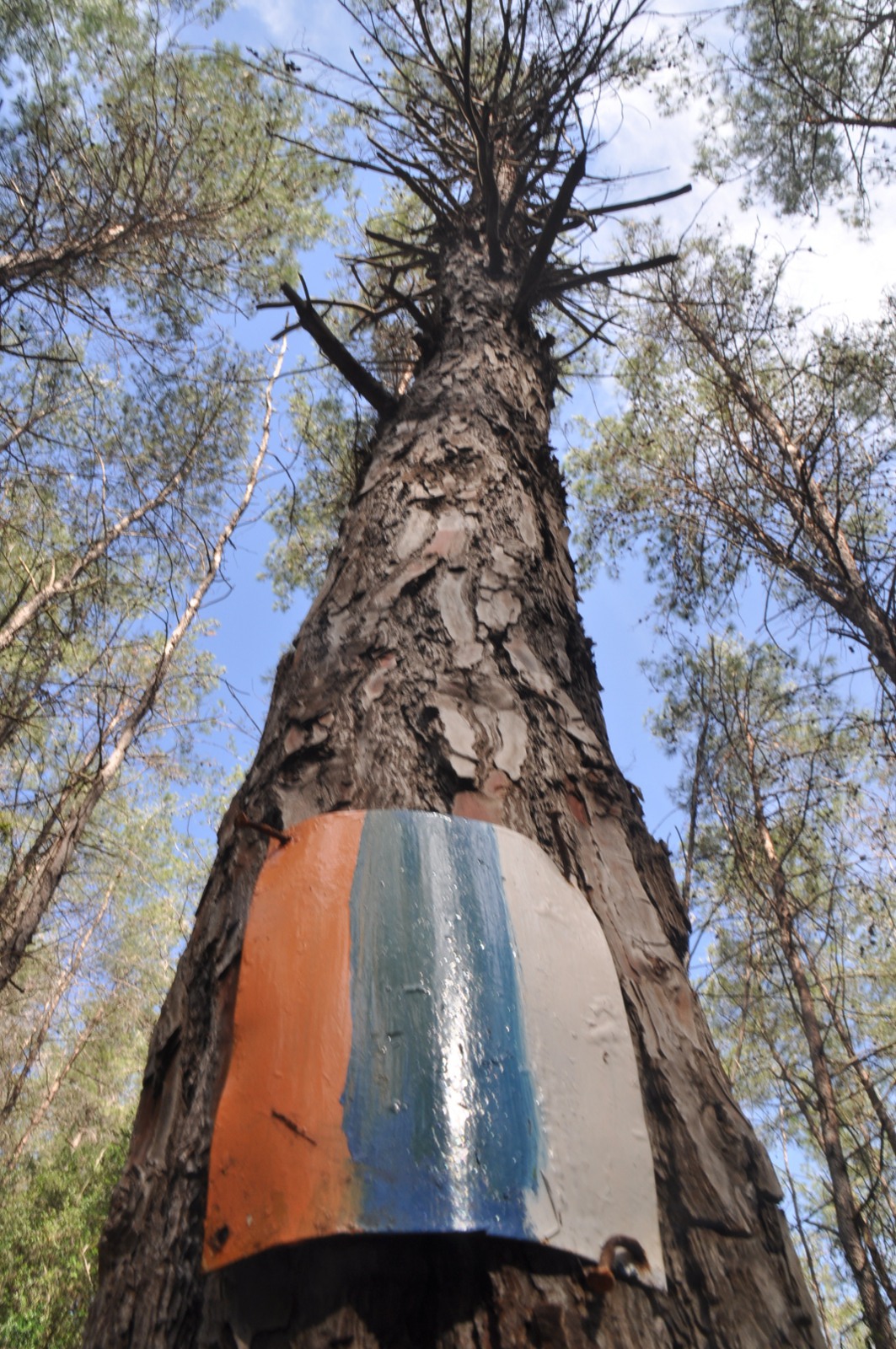
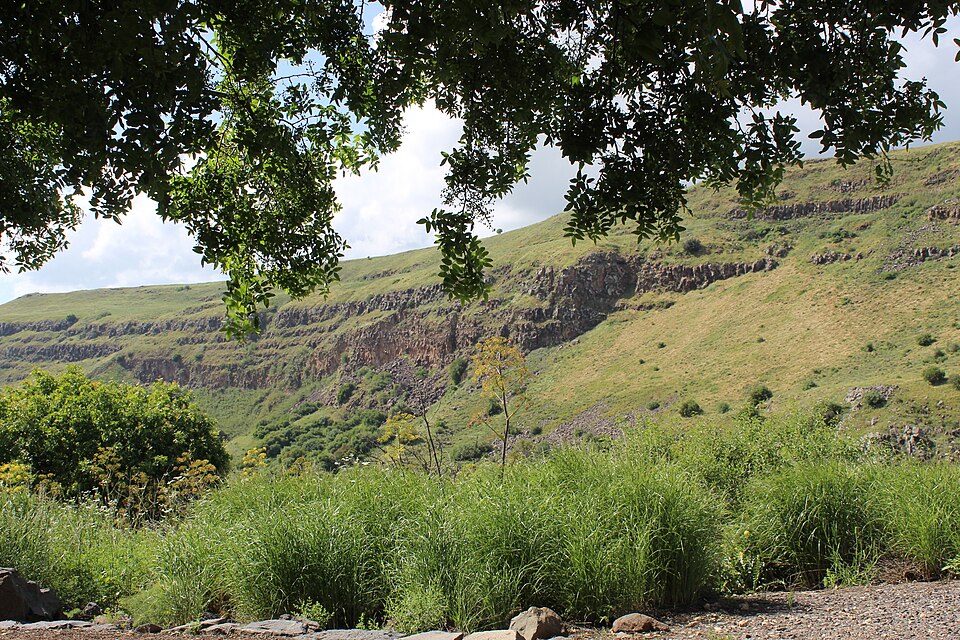
From the savanna of the plateau the trail drops into the canyon, follows the running water past the upper waterfall and its pool, on to the lower falls, and out past the basalt columns and the ruins of the village that named the stream.
مقاطع
- The descent into the canyon
Route 87 trailhead ← Canyon floor
Steep rocky descent, basalt boulders
Leave the open oak savanna of the plateau and drop hard down a boulder path into the gorge. The temperature falls with you; the walls close in black and sheer, and the first running water appears. About 45 minutes.
- The upper waterfall, the ladder and the swim
Canyon floor ← Far side of the upper pool
Iron ladder on the cliff, deep water
The crux. An iron ladder of about nine metres is bolted to the canyon wall and drops you to the water beside the upper falls. There is no dry route past this pool — you swim across it with your pack, or you turn around. Non-swimmers must not start this route.
- The Yehudiya waterfall and its pool
Upper pool ← Yehudiya waterfall pool
Streambed, wet rock, deep pool
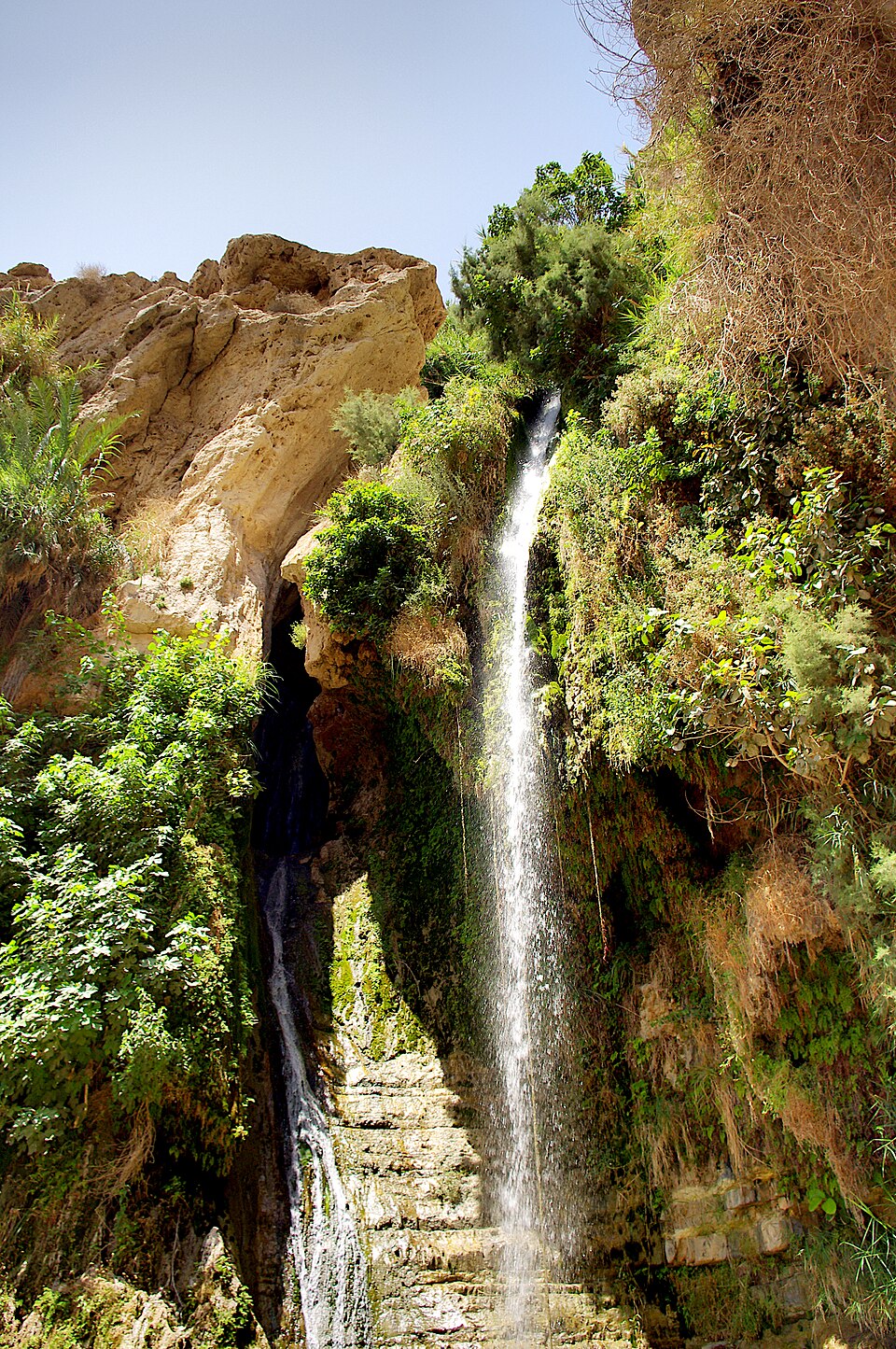
The main Yehudiya waterfall drops about 20 metres into a broad natural pool ringed with oleander, willow and fig — the set-piece of the route. Swimming is allowed. Jumping is not: people have been badly hurt and killed entering these pools blind. About 1 hour with a stop.
- The lower falls
Yehudiya waterfall pool ← Lower falls
Streambed scrambling, wet basalt
The canyon narrows again and the stream steps down through a series of lower falls and pools. Scrambling over slick basalt, more wading, more swimming depending on the flow. Slower than the map suggests. About 1 hour.
- The basalt columns and the climb out
Lower falls ← Lower reserve exit
Columnar basalt, climbing path
The walls here show the Golan's signature columnar jointing — ranks of polygonal pillars formed as the lava cooled and contracted, the same structure that makes the reserve's famous Hexagon Pool on the Meshushim. Above stand the remains of Yehudiya, the abandoned village that gave the stream its name. Then the climb out. About 1 hour.
التعليقات
سجّلوا الدخول للانضمام إلى النقاش.
لا توجد تعليقات بعد — كونوا أوّل المعلّقين.