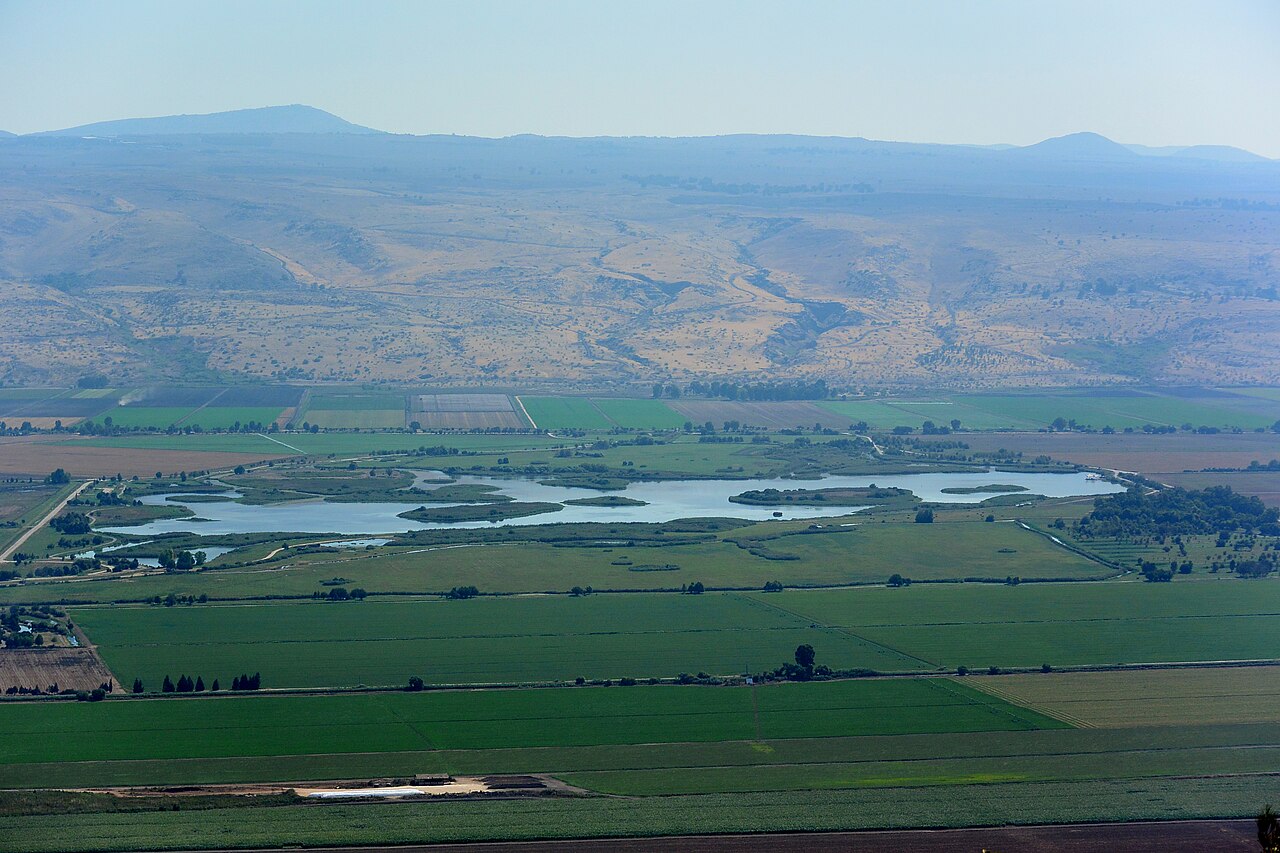
An easy gravel circuit from the visitor centre out along the open water, past the feeding fields where the cranes gather, into the covered hides, and back through the restored marsh.
مقاطع
- Out to the water
Visitor centre ← Northern shore
Flat gravel path
A level path leads out of the visitor centre through reed beds and eucalyptus to the open water. Herons, pelicans, egrets and cormorants work the shallows; the Naftali ridge stands to the west and Mount Hermon closes the valley to the north. About 45 minutes.
- The flyway and the islands
Northern shore ← Eastern shore
Lakeside track
The path runs the shore of the reconstructed lake — about a square kilometre of water with islands built deliberately for nesting. This valley is a bottleneck of the great Europe–Africa flyway, and an estimated 500 million birds cross it each year: raptors, storks, waterfowl, passerines, moving on a schedule older than the border. About 45 minutes.
- The feeding fields and the cranes
Eastern shore ← Crane fields
Field track
In winter this is the centre of it. Tens of thousands of common cranes gather on the fed fields — some 30,000–40,000 on a good day, birds that would once have carried on to Sudan and Ethiopia and now simply stay. From late November to late March a tractor delivers several tonnes of maize daily, a bargain that keeps them off the surrounding crops. Empty in summer. About 1 hour.
- The covered hides
Crane fields ← Southern hides
Boardwalk to screened hides
Screened wooden hides let you sit within metres of birds that would flush from an open path. Sit still, stay quiet, and watch the flocks come in at dusk — thousands of cranes dropping onto the water at once, calling the whole way down. The best half-hour of the day. About 45 minutes.
- The restored marsh and back
Southern hides ← Visitor centre
Boardwalk and gravel path
Close the loop through the re-flooded marsh — papyrus, reed and open peat, a deliberate patch of the wetland that the drainage of the 1950s erased. Somewhere in here lives the Hula painted frog, declared extinct in 1996 and rediscovered in 2011: the reason this fragment matters. About 30 minutes.
التعليقات
سجّلوا الدخول للانضمام إلى النقاش.
لا توجد تعليقات بعد — كونوا أوّل المعلّقين.