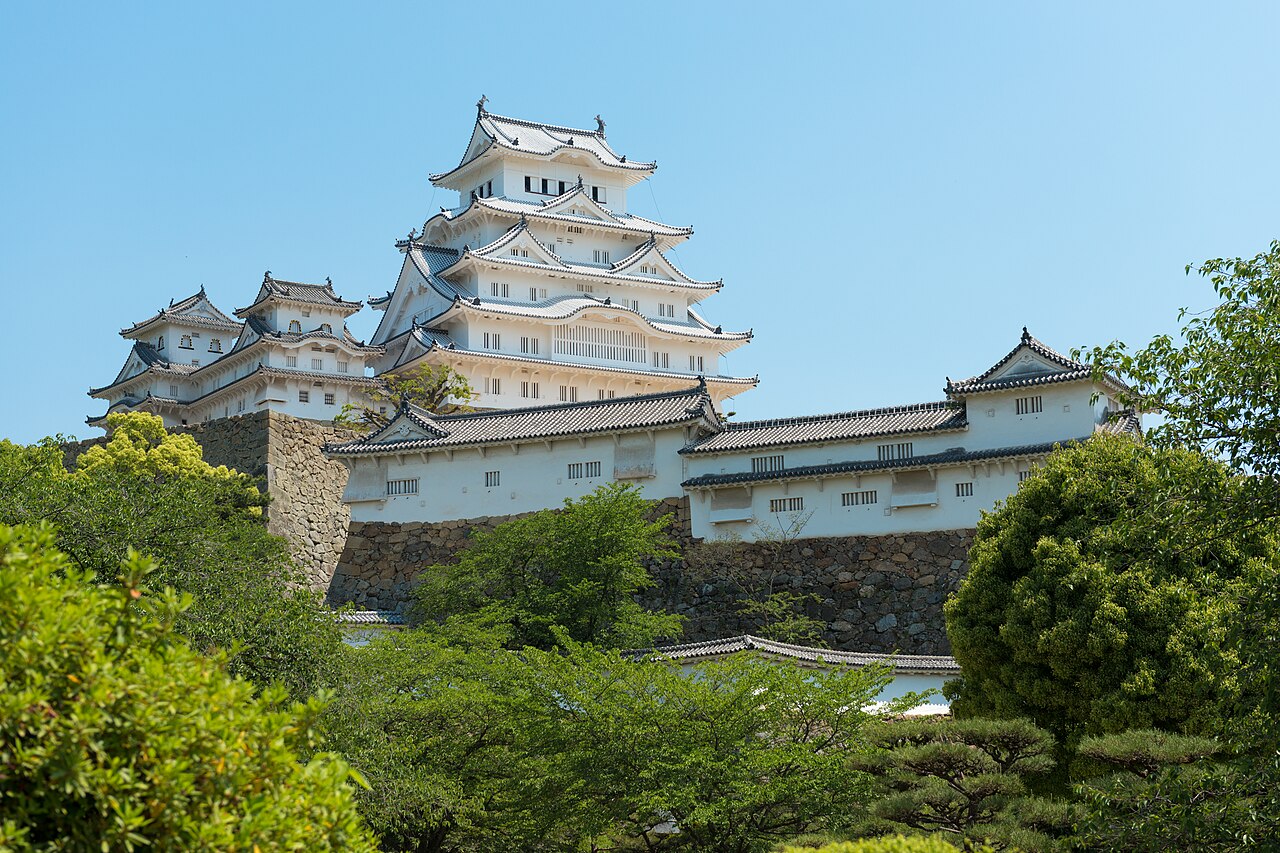
A straight walk up to the castle, a climb through its maze of gates to the top of the great keep, a quieter loop through the west bailey, and a cool-down in the garden next door.
مقاطع
- Ōtemae-dōri approach
JR Himeji Station (north exit) ← Ōtemon gate
Wide paved boulevard
A broad tree-lined boulevard runs straight from the station to the castle, the white keep floating ahead of you the whole way. It ends at the outer Ōtemon gate and the open Sannomaru lawn, the classic spot for a first full view.
- Into the baileys
Ōtemon gate ← Hishi Gate
Castle paths and gates
Pass the ticket gate and enter the fortified heart of the castle through the Hishi Gate, the grand entrance to the inner baileys, with white plastered walls pierced by loopholes for arrows and guns rising on either side.
- The defensive maze
Hishi Gate ← Base of the main keep
Steep walled lanes and gates
The path to the keep deliberately twists back on itself through a series of narrow gates and walled courtyards, designed to slow, expose and confuse any attacker. Curving stone walls, tight turns and stone-drop chutes line the climb.
- The main keep
Base of the main keep ← Top floor of the keep
Steep internal wooden stairs
Climb the great keep floor by floor up steep wooden staircases, past weapon racks and interior pillars, to a top-floor shrine and a wide view over Himeji. The keep sits on a hill above the plain, so the outlook reaches far.
- Nishi-no-maru & Princess Sen's corridor
Main keep ← Nishi-no-maru
Wooden gallery and bailey lawns
The west bailey, Nishi-no-maru, was the residence of Princess Sen, granddaughter of the shogun Tokugawa Ieyasu. A long wooden defensive gallery, the Hyakken-rōka or 'hundred-ken corridor', runs along its wall, with small rooms once used by her ladies-in-waiting and framed views back to the keep.
- Kōko-en garden
Nishi-no-maru ← Kōko-en
Garden paths
Just west of the moat, Kōko-en is a set of walled Edo-style gardens laid out on the site of former samurai residences, with ponds, a stream, a tea house and the castle walls as a backdrop — a calm place to finish the walk.
التعليقات
سجّلوا الدخول للانضمام إلى النقاش.
لا توجد تعليقات بعد — كونوا أوّل المعلّقين.