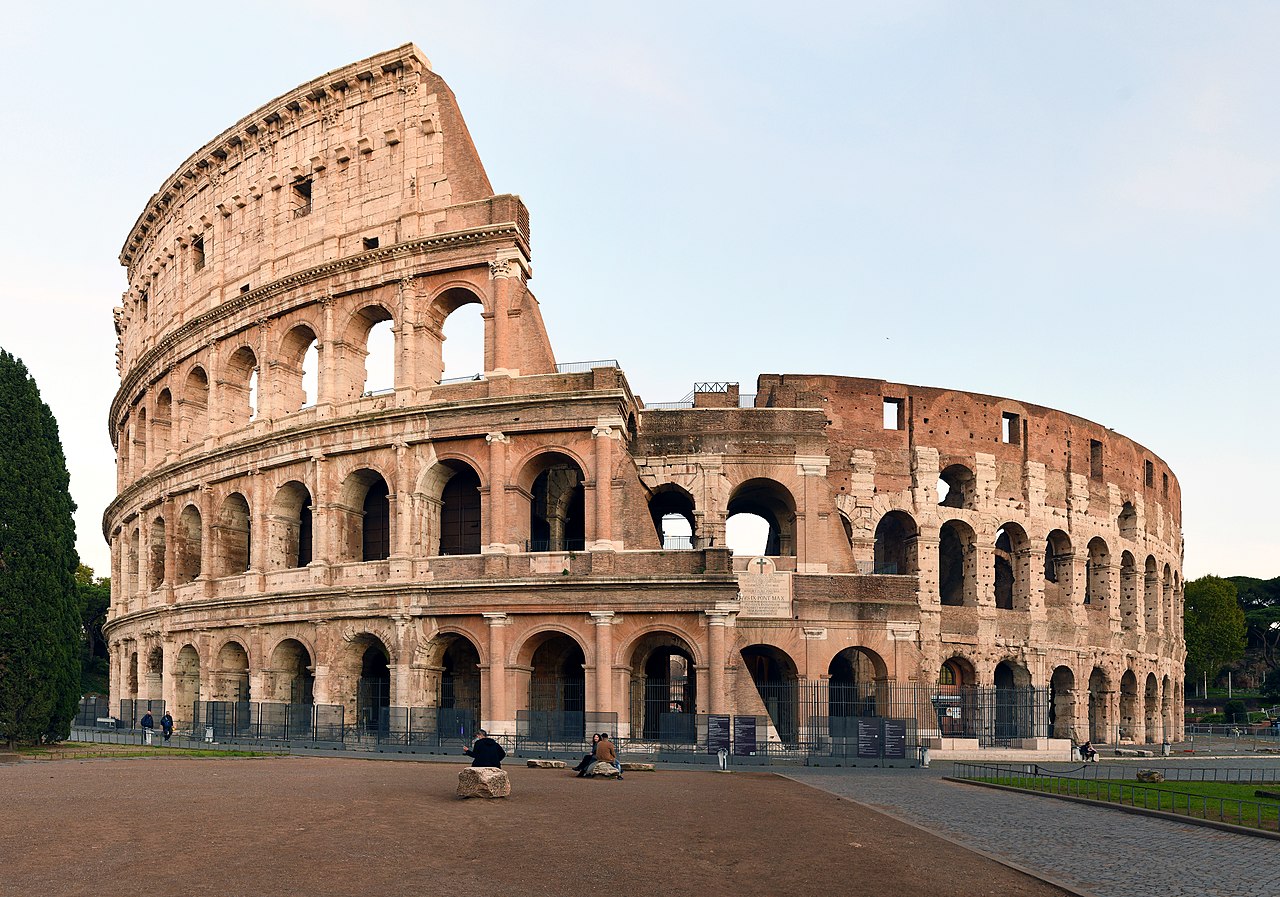
A single continuous line through the oldest part of the city, from the Colosseum to Piazza Navona.
Segments
- The Colosseum
Colosseo metro station → Colosseum interior
City streets
Begin inside the Flavian Amphitheatre, finished in AD 80 and still the largest ever built. Walk the tiered stands, look down into the arena, and picture the crowds of fifty thousand. The Arch of Constantine stands right alongside. Allow about 75 minutes.
-
 Roman Forum & Palatine Hill
Colosseum → Via dei Fori Imperiali
Ancient paving and gravel paths
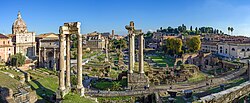
Follow the Via Sacra through the political and religious heart of the empire — the Arch of Titus, the Temple of Saturn and the Senate house — then climb the Palatine, the hill where Rome was said to have been founded. Around 90 minutes.
About this place
The Roman Forum, also known by its Latin name Forum Romanum, is a rectangular forum (plaza) surrounded by the ruins of several important ancient government buildings at the centre of the city of Rome. Citizens of the ancient city referred to this space, originally a marketplace, as the Forum Magnum, or simply the Forum.
Read more on Wikipedia Photo: This Photo was taken by Wolfgang Moroder. Feel free to use my photos, but please mention me as the author and send me a message. This image is not in the public domain. Please respect the copyright protection. It may only be used according to the rules mentioned here. This specifically excludes use in social media, if applicable terms of the licenses listed here not appropriate. Please do not upload an updated image here without consultation with the Author. The author would like to make corrections only at his own source. This ensures that the changes are preserved.Please if you think that any changes should be required, please inform the author.Otherwise you can upload a new image with a new name. Please use one of the templates derivative or extract. · CC BY-SA 3.0 -
 To the Trevi Fountain
Roman Forum → Trevi Fountain
City streets
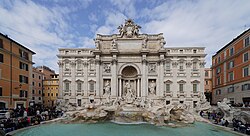
Cross Piazza Venezia beneath the vast white Vittoriano, then wind through side streets to Rome's grandest Baroque fountain. Toss a coin over your shoulder to guarantee a return. About 45 minutes including the walk.
About this place
The Trevi Fountain is an 18th-century fountain in the Trevi district in Rome, Italy, designed by Italian architect Nicola Salvi and completed by Giuseppe Pannini in 1762. Standing 26.3 metres (86 ft) high and 49.15 metres (161.3 ft) wide, it is the largest Baroque fountain in the world and one of the most famous fountains in the world.
Read more on Wikipedia Photo: NikonZ7II · CC BY-SA 4.0 -
 To the Pantheon
Trevi Fountain → Piazza della Rotonda
City streets
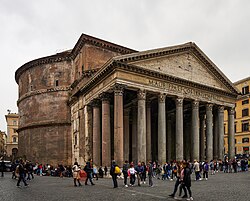
Step into the best-preserved building of ancient Rome. Its unreinforced concrete dome, open to the sky through a single oculus, has stood for nearly nineteen centuries and shelters the tomb of the painter Raphael. About 30 minutes.
About this place
The Pantheon is an ancient temple in Rome, Italy, originally built under emperor Augustus and reconstructed under Hadrian (117–138); since AD 609, it is a Catholic church called the Basilica of St. Mary and the Martyrs. It is perhaps the most famous, and architecturally most influential, rotunda.
Read more on Wikipedia Photo: NikonZ7II · CC BY-SA 4.0 -
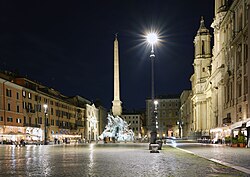 To Piazza Navona
Pantheon → Piazza Navona
City streets
End in a piazza shaped like the ancient stadium it was built over, centred on Bernini's theatrical Fountain of the Four Rivers with the church of Sant'Agnese in Agone behind it. A perfect place to stop for a coffee and watch the city.
About this place
Piazza Navona is a public open space in Rome, Italy. It is built on the site of the 1st century AD Stadium of Domitian and follows the form of the open space of the stadium in an elongated oval. The ancient Romans went there to watch the agones ("games"), and hence it was known as "Circus Agonalis".
Read more on Wikipedia Photo: NikonZ7II · CC BY-SA 4.0
Comments
Sign in to join the conversation.
No comments yet — be the first.